

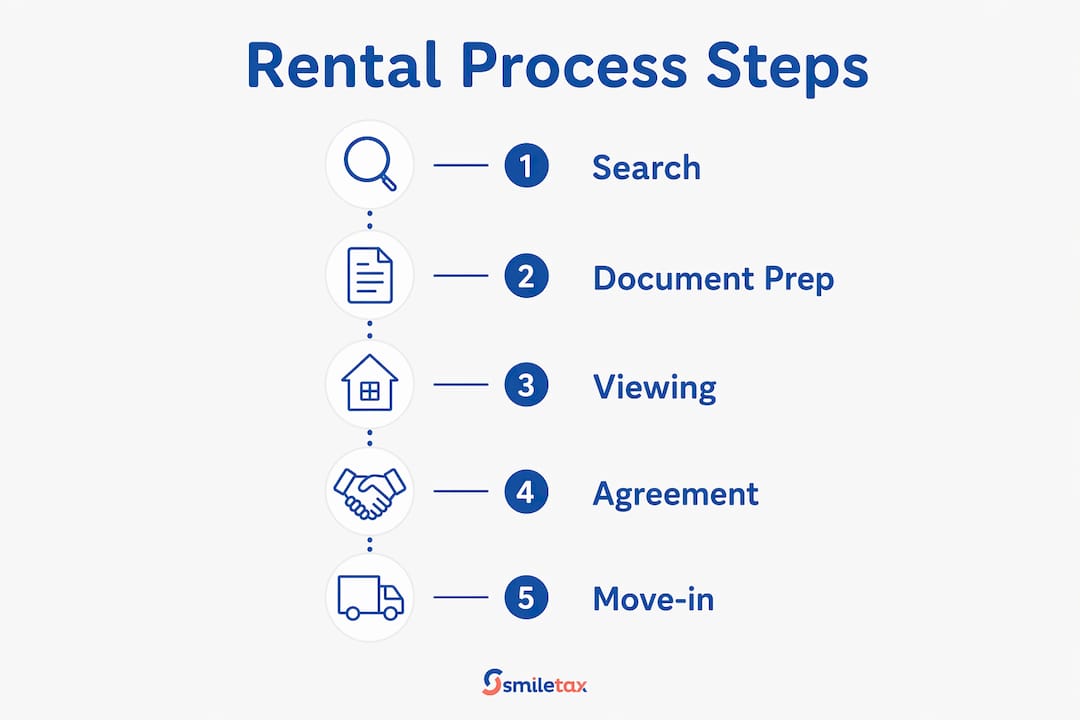
Renting an apartment abroad for the first time follows a clear sequence: land short-term, scout neighborhoods in person for 14–28 days, assemble your document pack, then sign a long-term lease only after you know the area. Americans who skip that sequence and sign from home carry the highest risk of landing in the wrong place at the wrong price. The good news is that the process is learnable, and with the right preparation, you can move through it confidently.
Here is the core checklist before you commit to anything long-term:
- Book short-term accommodation (a hotel or vacation rental) for your first two to four weeks
- Scout two to five candidate neighborhoods on foot, at different times of day
- Assemble your full document pack before contacting landlords
- Search listings on local-language platforms, Airbnb, VRBO, and local Facebook Groups
- Read every lease clause carefully, ideally with a local lawyer or licensed agent
- Budget for upfront costs that can reach 4–6 months’ rent in some markets
- Never pay a deposit before viewing a property in person and verifying ownership
Tip: Keep a cash buffer of six months’ rent in liquid funds, separate from your short-term rental budget. Underestimating upfront costs is one of the most common reasons relocations go wrong.
Where can you find apartment listings abroad safely?
The internet is your starting point, not your finishing line. Airbnb and VRBO are useful for short-term landing pads while you scout, but they are rarely the right tool for finding a long-term lease. For longer stays, local real estate platforms tend to carry more authentic inventory at prices closer to what residents actually pay.

Facebook Groups are genuinely useful here. Search for expat communities in your target city and you will find groups where landlords post directly, departing renters transfer leases, and locals share leads that never appear on major listing sites. These groups also give you a real-time read on what a fair price looks like in a specific neighborhood.
The most competitive deals rarely make it online at all. Grocery store bulletin boards, local-language newspaper classifieds, and word-of-mouth through a trusted local contact can surface apartments priced for the local market rather than the expat premium. A rental sourced through an English-language agency website can cost two or three times more than one found through a local connection.
- Airbnb / VRBO: Best for short-term landing; useful for flexibility while you scout
- Local real estate portals: Idealista (Spain/Portugal), SeLoger (France), Immobilienscout24 (Germany), and equivalent country-specific sites
- Facebook Groups: Search “[City name] expats” or “[City name] housing” for direct landlord posts
- Bulletin boards and classifieds: Local grocery stores, community centers, and local-language newspapers
- Licensed local agents: Useful for navigating paperwork and language barriers, though fees apply
Tip: Search in the local language to access listings priced for residents, not tourists. “Se Alquila” in Spanish markets, “À Louer” in French-speaking countries, and “Para Alugar” in Portuguese-speaking ones will surface a different tier of listings entirely.
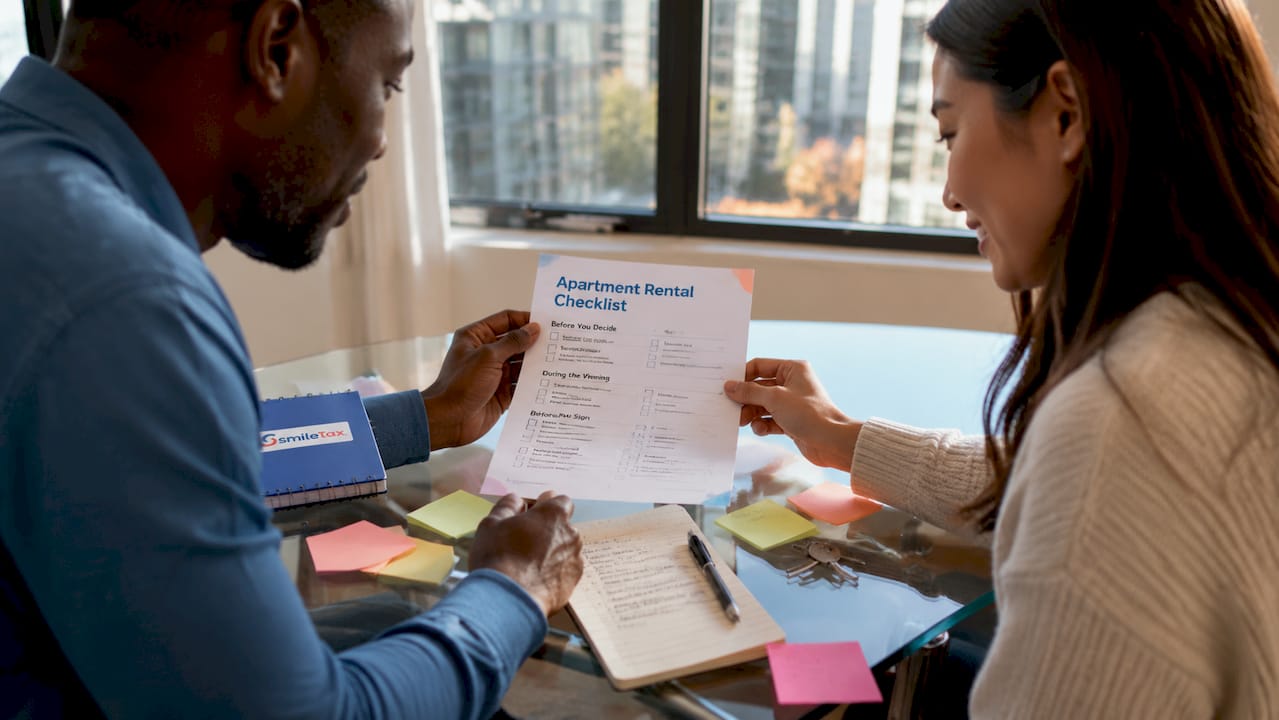
How do rental agreements work when renting abroad?
Lease structures vary more by country than most Americans expect. In Spain, the standard residential lease runs five years under the 2023 housing law reform. In France, unfurnished leases typically run three years, while furnished ones run one year. In Japan, two-year leases are standard, often with renewal fees attached. Knowing the norm in your target country before you sit down to negotiate puts you in a much stronger position.
Several clauses deserve close attention regardless of where you are renting. Rent indexation clauses allow landlords to increase rent annually, often tied to a local inflation index. Early termination clauses set the penalty for leaving before the lease ends, which can be steep. Subletting restrictions are common and, in some countries, subletting without explicit permission is illegal. Read these sections word by word, not just the headline rent and dates.
Negotiation is standard practice in most international markets, unlike many parts of the US. Rent reductions of 5–12% are achievable on leases over six months in most productive markets. You can also negotiate deposit structure, lease length, and which party covers specific maintenance costs. None of that happens if you do not ask.
- Furnished leases often carry shorter minimum terms and slightly higher rents
- Unfurnished leases typically offer more tenant protections and longer terms
- Rent indexation: Confirm which index applies and how often increases can occur
- Early termination: Understand the notice period and any financial penalty
- Subletting: Assume it is prohibited unless the lease explicitly allows it
Tip: Pay particular attention to the rent indexation clause. In high-inflation periods, an uncapped annual increase can make a lease that looks affordable today significantly more expensive by year two.
What documents do landlords require from American renters?
The structural challenge for Americans renting abroad is that landlords cannot run a local credit check on you. To compensate, they ask for a comprehensive document pack that proves identity, financial stability, and rental history. A well-prepared pack clears the majority of long-term lease applications in productive markets within five working days of submission.
Assemble these documents before you contact a single landlord:
- Passport: The non-negotiable baseline in every market
- Visa or residence permit: Most long-term leases in Spain, Portugal, France, Germany, Japan, and the UAE require proof of legal residency status; non-EU nationals must distinguish between Schengen short-stay and national long-stay visa tracks
- Proof of income: Twelve months of bank statements showing salary or self-employed deposits, plus your most recent tax return; many landlords require monthly income above three times the rent
- Employer reference letter: A signed letter confirming employment, salary, and contract duration; self-employed renters substitute an accountant’s letter plus client invoices
- Prior landlord reference: A signed letter covering rental history, payment punctuality, and condition on departure
- Local fiscal number: Portugal requires an NIF, Spain an NIE, Italy a codice fiscale, France a numéro fiscal, Germany a Steuer-ID; these must be obtained before the lease application, not after
If any of your documents are in English, check whether the destination country requires certified translations. Many do, and getting translations done takes time, so start early. Compile everything into a single PDF you can send to landlords immediately when a good listing appears.
Furnished vs. unfurnished apartments: what to expect abroad
“Unfurnished” does not mean the same thing everywhere. In the US, an unfurnished apartment typically has floors, kitchen cabinets, and light fixtures. In France and Germany, unfurnished can mean bare walls, no lighting fixtures, and sometimes no kitchen appliances at all. In some markets, tenants who install flooring take it with them when they leave. That is not unusual; it is simply the local norm.
A furnished apartment abroad typically includes a bed, table, chairs, storage, basic kitchen appliances (stove, microwave, refrigerator), cookware, tableware, and cleaning tools. The lease should include a written inventory listing every item. Check that inventory against what is actually in the apartment before you sign, and note any discrepancies in writing.
For first-timers, furnished apartments offer a faster, simpler start. You arrive, unpack your bags, and begin your life without sourcing a sofa or a washing machine. The trade-off is a higher monthly rent and, in many countries, shorter lease terms with fewer tenant protections than unfurnished equivalents.
- Furnished: Higher rent, faster setup, shorter minimum terms, fewer protections in some markets
- Unfurnished: Lower rent, longer terms, stronger tenant protections, but potentially significant setup costs
- Always check: Does “unfurnished” include a stove? Light fixtures? Flooring? Ask explicitly before viewing
- Inventory walkthrough: Complete and sign a written inventory at key handover; photograph everything
What are the typical upfront costs when renting abroad?
Upfront costs abroad can be significantly higher than what Americans are used to at home. In Japan, the total at lease signing can reach 4–6 months’ rent, combining a security deposit, key money (a non-refundable gift to the landlord), an agency fee, and the first month’s rent. Even in more moderate markets, the cash requirement at signing is rarely less than two months’ rent.
A country-by-country snapshot of deposit structures:
- Portugal: Two months’ security deposit plus one month’s advance rent at signing (three months total)
- Spain: One month’s deposit plus one month’s advance rent for unfurnished; two months’ deposit for furnished
- Italy: Three months’ deposit plus one month’s advance rent
- France: One month’s deposit for unfurnished, two months’ for furnished, plus an agency fee of approximately one month’s rent
- Germany: Three months’ deposit (held in a separate bank account) plus one month’s advance rent
- Japan: One to two months’ deposit, one to two months’ key money (non-refundable), one month’s agency fee, one month’s advance rent
Beyond deposits, budget for agency fees, utility connection costs, internet installation, renter’s insurance, and any furnishing gaps if you choose an unfurnished apartment. The hidden costs of moving abroad catch many first-timers off guard. Currency exchange adds another layer: rates fluctuate, and transferring large sums for deposits at an unfavorable rate can meaningfully increase your real cost.
Tip: Open a local bank account as early as possible. Many landlords in Europe require rent paid by local bank transfer, and some will not accept international wire transfers at all.
How to spot and avoid rental scams abroad
Rental scams targeting foreigners are common in high-demand cities and expat-heavy markets. The most frequent schemes involve fake listings with stolen photos, landlords who claim to be abroad and ask for a deposit before any viewing, and unauthorized sublets where the person renting to you has no legal right to do so.
The red flags are consistent across markets:
- Pressure to pay quickly: Any landlord who insists you transfer a deposit within 24 hours before viewing is a red flag
- No written lease: A handshake deal may feel friendly, but it leaves you with no legal protection
- Cash only, no paper trail: Legitimate landlords in most countries accept bank transfer and provide receipts
- Evasive communication: If the landlord avoids direct questions about ownership, fees, or the lease, stop there
- Too-good-to-be-true pricing: A well-located apartment priced well below the neighborhood average almost always has a reason
Verify ownership before you pay anything. In many countries, property ownership records are publicly accessible through the local land registry. A licensed local agent can run this check for you. Never transfer money via Western Union, MoneyGram, or cryptocurrency to a landlord you have not met in person and whose ownership you have not confirmed.
Tip: Before any viewing, search the listing photos using a reverse image search tool. Scammers frequently reuse photos from legitimate listings or real estate sites. If the same image appears under multiple addresses or landlord names, walk away.
Expert tips for securing a rental abroad safely
Relocation professionals consistently recommend the same foundational approach: land short-term, scout in person, then sign. Long-term leases signed from abroad without prior in-person scouting carry the highest failure rate of any relocation strategy. The cost of a few extra weeks in a short-term rental is almost always less than the cost of breaking a lease or living somewhere that does not work for your daily routine.
The 30-day arrival playbook works like this:
- Days 1–7: Short-term landing. Get a local SIM card, initiate a local bank account, and compile your full document pack into a single PDF ready to send.
- Days 8–14: Neighborhood scouting. Walk your two to five candidate neighborhoods at different times of day. Morning, afternoon, and evening visits reveal noise levels, foot traffic, and safety patterns that photos never show.
- Days 15–21: Viewings. Schedule 12–18 viewings across your top two neighborhoods. Fewer than eight viewings gives you too small a sample to read the local rent line accurately.
- Days 22–28: Lease negotiation. Submit applications on your top three picks. Negotiate on rent, deposit structure, and lease length. Have a local lawyer or licensed agent review the lease before signing.
- Day 29: Signing and key handover. Complete and sign the inventory walkthrough.
- Day 30: Initiate utility transfers and schedule internet installation.
Your document pack is your competitive advantage. Landlords across every productive market face the same concern with foreign applicants: no local credit history, no local employment proof, no local guarantor. A complete, well-organized pack that addresses each of those concerns directly puts you ahead of other applicants. Pair that with a willingness to negotiate thoughtfully and you will close a good lease faster than most first-timers expect.
What are your rights as a tenant in a foreign country?
Tenant protections vary enormously by country, and assuming your US rights apply abroad is a mistake that costs renters real money. In France and Germany, tenant protections are strong: landlords face strict limits on deposit deductions, mandatory notice periods before eviction, and regulated rent increase mechanisms. In other markets, protections are lighter and enforcement is inconsistent.
Before you sign any lease, research the tenant rights framework in your specific country and city. Key questions to answer:
- How long does the landlord have to return your deposit after you move out?
- What deductions from the deposit are legally permitted?
- What notice period is required before the landlord can terminate your lease?
- Are there rent increase caps, and if so, what index do they follow?
- Who is legally responsible for structural repairs?
Local tenant unions, expat legal aid organizations, and official government housing portals are the most reliable sources for this information. In some countries, your legal address also affects your access to healthcare, banking, and residency registration, so an informal or unregistered rental arrangement can create problems well beyond the apartment itself.
How to handle language barriers during rental negotiations
Language is one of the most underestimated obstacles in a foreign rental process. A lease written in a language you do not read fluently is a legal document you are signing blind, regardless of how confident the landlord seems or how straightforward the terms appear to be.
The practical solutions are straightforward. Hire a certified translator to review the lease before you sign. In markets with large expat communities, bilingual real estate agents are common and often worth the fee specifically for this reason. If you have a trusted local contact who is fluent in the language, ask them to walk through the document with you clause by clause.
For negotiations, simple written communication in the local language goes a long way. Prepare a short cover letter in the local language introducing yourself, your income, and your rental history. Many landlords respond more warmly to a foreign applicant who has made the effort than to one who expects everything in English. Translation apps like Google Translate have improved significantly and can help you navigate day-to-day conversations, but do not rely on them for legal documents.
Setting up utilities and internet in a foreign apartment
Utilities abroad are rarely as simple as calling one provider and being done in an afternoon. In many countries, electricity, gas, water, and internet are managed by separate providers, each with its own registration process, and some require proof of residency or a local bank account before they will open an account in your name.
Start the process on the day you get your keys. Ask the landlord which providers currently service the apartment and whether any accounts need to be transferred to your name or opened fresh. In some markets, the landlord retains the utility contracts and bills you directly; in others, you take over the accounts entirely.
Internet installation is often the longest wait. In cities with high demand, installation appointments can be scheduled two to four weeks out. If remote work is part of your life, factor that timeline into your move-in planning and have a mobile data backup ready. Co-working spaces near your neighborhood can bridge the gap while you wait.
Cultural differences in renting etiquette and expectations
Rental culture abroad reflects broader social norms that Americans may not immediately recognize. In Japan, the relationship between landlord and tenant is formal and hierarchical; showing up to a viewing casually dressed or arriving late signals disrespect that can cost you the apartment. In France, landlords expect a thick dossier of financial documents as a matter of course, not as a sign of distrust. In Latin American markets, personal relationships and referrals carry more weight than paperwork.
Payment expectations also differ. In much of Europe, rent is paid by direct bank debit on a fixed date each month, and missing that date by even a day can damage your standing with the landlord. In some markets, rent is paid quarterly. In others, the landlord expects cash delivered in person. Ask explicitly how and when payment is expected, and confirm it in writing in the lease.
Building rules around noise, guests, and modifications to the apartment tend to be stricter abroad than in the US. Many European apartment buildings have quiet hours that residents take seriously. Drilling into walls, repainting, or even hanging heavy items may require the landlord’s written permission. Read the house rules document as carefully as the lease itself.
How long does the rental process typically take abroad?
The timeline from starting your search to holding your keys varies by market, but a realistic planning window is four to eight weeks from arrival in the country. Markets like Lisbon and Barcelona move quickly; a strong apartment in a desirable neighborhood can receive multiple applications within 48 hours of listing. Markets like Tokyo move at a more deliberate pace but involve more paperwork at each stage.
A practical timeline for most productive markets:
| Phase | Duration | Key actions |
|---|---|---|
| Short-term landing and orientation | Days 1–7 | Secure temporary housing, get a local SIM, begin document pack |
| Neighborhood scouting | Days 8–14 | Walk candidate areas at multiple times of day |
| Active viewings | Days 15–21 | Schedule 12–18 viewings across top two neighborhoods |
| Application and negotiation | Days 22–28 | Submit applications, negotiate terms, have lease reviewed |
| Signing and move-in | Day 29–30 | Sign lease, complete inventory, collect keys |
| Utility and internet setup | Week 5–8 | Transfer or open utility accounts, schedule internet installation |
The most common reason the process takes longer than expected is an incomplete document pack. Landlords will not hold an apartment while you track down a missing bank statement or wait for a certified translation. Having everything ready before you start viewing is the single most effective way to compress the timeline.
Living abroad is more than finding an apartment
Americans living overseas manage a full set of practical responsibilities that go well beyond the lease. SmileTax was built specifically for US citizens abroad who want expert support without the complexity of a large firm or the uncertainty of DIY software. Whether you are an international school teacher, an NGO professional, or a long-term expat settling into a new country, SmileTax offers straightforward help for Americans living overseas who want their affairs handled properly and without drama. Visit smile.tax to learn more about how SmileTax supports expats at every stage of life abroad.
Key Takeaways
Renting abroad as a first-timer is manageable when you follow a structured sequence: short-term landing, in-person scouting, a complete document pack, and a carefully reviewed lease before you sign anything.
| Point | Details |
|---|---|
| Land short-term first | Book temporary housing for 14–28 days to scout neighborhoods before committing to a long-term lease. |
| Prepare a full document pack | Passport, visa, proof of income, employer reference, prior landlord reference, and local fiscal number clear 92% of long-term lease applications within five days in productive markets. |
| Budget for upfront costs | Upfront costs can reach 4–6 months’ rent in markets like Japan; keep a six-month cash buffer in liquid funds. |
| Negotiate rent and terms | A 5–12% reduction is achievable on leases over six months in most international markets. |
| SmileTax supports expats abroad | SmileTax helps Americans living overseas manage life abroad with expert, personal support at smile.tax. |