

Choosing where to raise your children is one of the most personal decisions you will ever make. When that choice involves crossing an international border, the stakes feel even higher. Many American families assume that moving abroad with kids is simply too complicated, too risky, or too disruptive. The reality is quite different. The best countries for American families moving abroad offer outstanding schools, excellent healthcare, strong safety records, and welcoming expat communities that make the transition far smoother than most families expect. This guide cuts through the noise and gives you a clear, honest look at what actually matters.
Table of Contents
- Key takeaways
- Best countries for American families moving abroad
- Education systems and international schools abroad
- Healthcare quality and safety for families
- Cost of living and lifestyle quality overseas
- Visas, expat communities, and relocation tips
- What the data does not tell you
- Moving abroad? SmileTax is here to help
- FAQ
Key takeaways
| Point | Details |
|---|---|
| Top-ranked destinations | Portugal, Spain, and the Netherlands consistently lead family-friendly rankings for education, safety, and healthcare in 2026. |
| Education options matter | International schools with American or IB curricula exist in most top destinations and ease the academic transition for children. |
| Cost varies significantly | Monthly budgets for a family of four range from around $2,000 in Southeast Asia to over $4,500 in Western Europe. |
| Visa pathways are accessible | Countries like Portugal and Mexico offer family-friendly visa options with manageable income or savings requirements. |
| Child well-being goes deeper | Mental health outcomes, physical health, and academic skills matter more than infrastructure alone when evaluating a country for your kids. |
Best countries for American families moving abroad
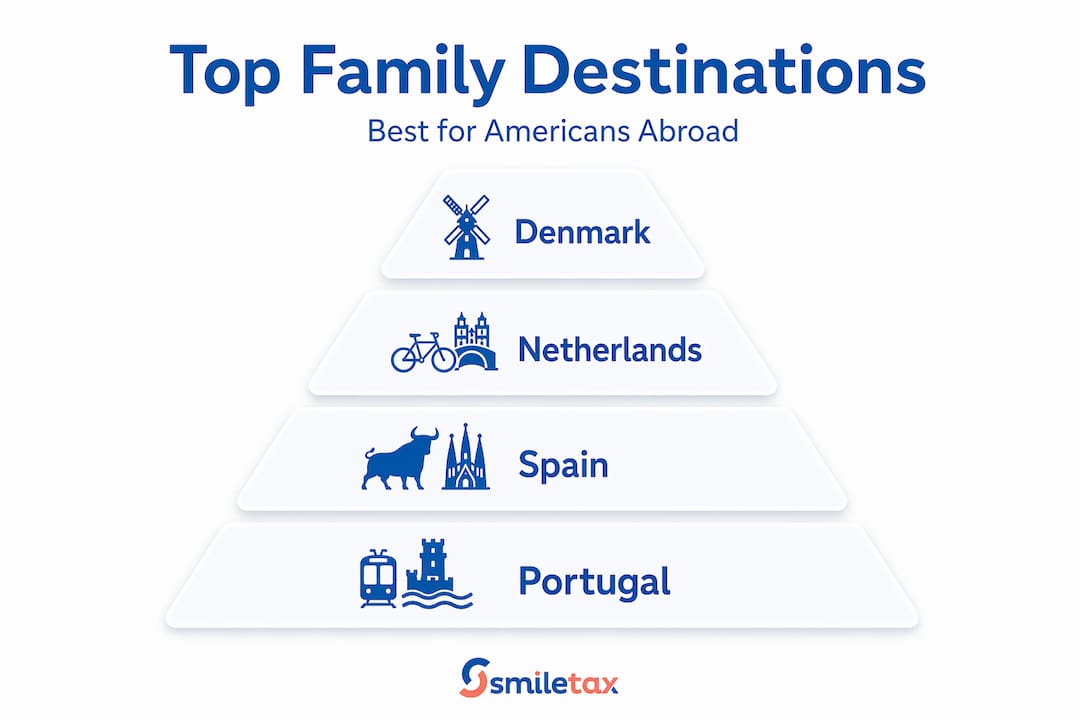
Portugal, Spain, and the Netherlands top the 2026 family-friendly rankings based on a combination of education quality, healthcare access, safety infrastructure, and overall family support systems. These are not just good countries to visit. They are places where American families are genuinely thriving.
Here is a snapshot of the leading destinations and what sets each one apart:
- Spain ranks first in the Remitly family-friendly index for 2026, scoring high on parental leave policies, childcare affordability, and access to international schools. Cities like Valencia, Barcelona, and Madrid have large American expat communities and excellent year-round weather.
- Portugal draws families with its relaxed pace of life, low crime rates, and the accessible D7 passive income visa. Lisbon and Porto both have growing international school networks, and the cost of living remains lower than most of Western Europe.
- The Netherlands stands out for its child-centered urban design. Safe cycling infrastructure, walkable neighborhoods, and world-class pediatric care make it a top pick for families prioritizing safety and healthcare. Amsterdam and The Hague have particularly strong international school options.
- Germany offers a highly structured education system and excellent public healthcare. The country’s international school network is extensive, especially in cities like Berlin, Munich, and Frankfurt. Bureaucracy can be a hurdle, but the stability and quality of life are hard to match.
- Canada appeals to families who want proximity to the US without fully leaving the familiar behind. English-speaking, culturally similar, and with strong public schools, it is often the lowest-friction option for families not ready for a full cultural leap.
- Costa Rica and Mexico lead in Latin America. Both offer warm climates, lower costs, and well-established American expat communities. Mexico City and the Riviera Maya region have seen significant growth in international school availability over the past five years.
Tip: The factor families most often overlook is community. A country with a strong, active expat network dramatically reduces the isolation that can derail an otherwise well-planned move. Before committing to a location, connect with local expat Facebook groups or forums to gauge how welcoming and active the community actually is.
Education systems and international schools abroad
For most American families, schooling is the single biggest logistical concern when moving abroad with kids. The good news is that the top destinations all have solid options, though the right choice depends on your children’s ages, your budget, and how long you plan to stay.
| Country | Public school quality | International school availability | Language of instruction |
|---|---|---|---|
| Netherlands | Very high (PISA top 10) | Extensive, especially in major cities | Dutch (public), English (international) |
| Spain | Good | Strong in urban areas | Spanish (public), English/IB (international) |
| Portugal | Good and improving | Growing rapidly in Lisbon and Porto | Portuguese (public), English/IB (international) |
| Germany | Very high | Strong in Berlin, Munich, Frankfurt | German (public), English/IB (international) |
| Canada | Very high | Widely available | English/French |
| Mexico | Variable by region | Strong in Mexico City and coastal expat hubs | Spanish (public), English (international) |
The Netherlands, Denmark, and France rank among the top OECD countries for child well-being, with strong outcomes in mental health, physical health, and academic skills. That is a meaningful distinction. A country can have impressive school buildings and still deliver mediocre outcomes for children. Always look at results, not just resources.
International schools offering American or IB curricula provide the smoothest academic transition for expat children. Singapore, the Netherlands, and Germany have particularly expansive international school networks. Tuition typically ranges from $10,000 to $30,000 per year depending on the country and school, which is a significant budget item families often underestimate.
Tip: Visit school websites directly and request to speak with the admissions coordinator before your move. Ask specifically about the percentage of American students enrolled, the college counseling program for older students, and how the school handles mid-year transitions. Schools that are experienced with expat families will have clear, practiced answers.
Healthcare quality and safety for families
Access to reliable pediatric care is non-negotiable for most parents. The good news is that many of the top destinations for American families offer universal or near-universal healthcare coverage that includes children from the moment residency is established.
The countries that stand out most for pediatric infrastructure include:
- Netherlands and Denmark: Both rank among the global leaders in pediatric care, with well-funded children’s hospitals, short wait times for specialist appointments, and strong preventive care programs.
- Germany: The public health system (GKV) covers the entire family once a primary earner is enrolled. Pediatric specialists are widely available even outside major cities.
- Spain and Portugal: Both offer universal public healthcare to legal residents. Quality is generally high in urban areas, though rural regions can have longer wait times for specialists.
- Canada: Provincial healthcare covers children comprehensively. Wait times for non-emergency specialist care can be longer than in Europe, but the system is reliable and well-organized.
- Mexico and Costa Rica: Private healthcare is the preferred route for most American expat families. The cost is a fraction of US prices, and private hospitals in major cities meet international standards.
Safety is equally important, and it goes beyond crime statistics. The Netherlands and Japan lead globally in child safety infrastructure, including safe walking and cycling routes, secure public transit, and child-friendly urban planning. In practical terms, this means your kids can walk to school or ride a bike independently at younger ages than would feel comfortable in most American cities.
Tip: Before your move, ask your current pediatrician for a complete copy of your children’s vaccination records, growth charts, and any specialist referral notes. Many countries require specific documentation formats, and having thorough records from day one prevents gaps in care.
Cost of living and lifestyle quality overseas
Budget reality is where many family relocation plans either succeed or fall apart. Monthly costs for a family of four vary dramatically by destination:
| Country | Est. monthly budget (family of 4) | Childcare cost (monthly) | Lifestyle highlights |
|---|---|---|---|
| Thailand | $2,000–$3,500 | $300–$600 | Warm climate, outdoor lifestyle, strong expat hubs |
| Mexico | $2,500–$4,000 | $400–$800 | Proximity to US, diverse regions, large expat community |
| Portugal | $2,800–$4,500 | $500–$900 | Safe, relaxed, growing international school network |
| Netherlands | $4,500–$7,000 | $1,000–$1,800 | Top-tier education, excellent safety, cycling culture |
| Spain | $3,000–$5,000 | $500–$1,000 | Warm climate, rich culture, strong family-friendly policy |
| Canada | $4,000–$6,500 | $800–$1,500 | English-speaking, culturally familiar, strong public schools |
Portugal offers one of the best value propositions in Europe. You get Western European quality of life, excellent safety, and a growing international school scene at a cost that is roughly 35 to 40 percent lower than the Netherlands or Germany. For families on tighter budgets, Latin American destinations like Mexico and Costa Rica provide genuine quality of life at a fraction of European costs.
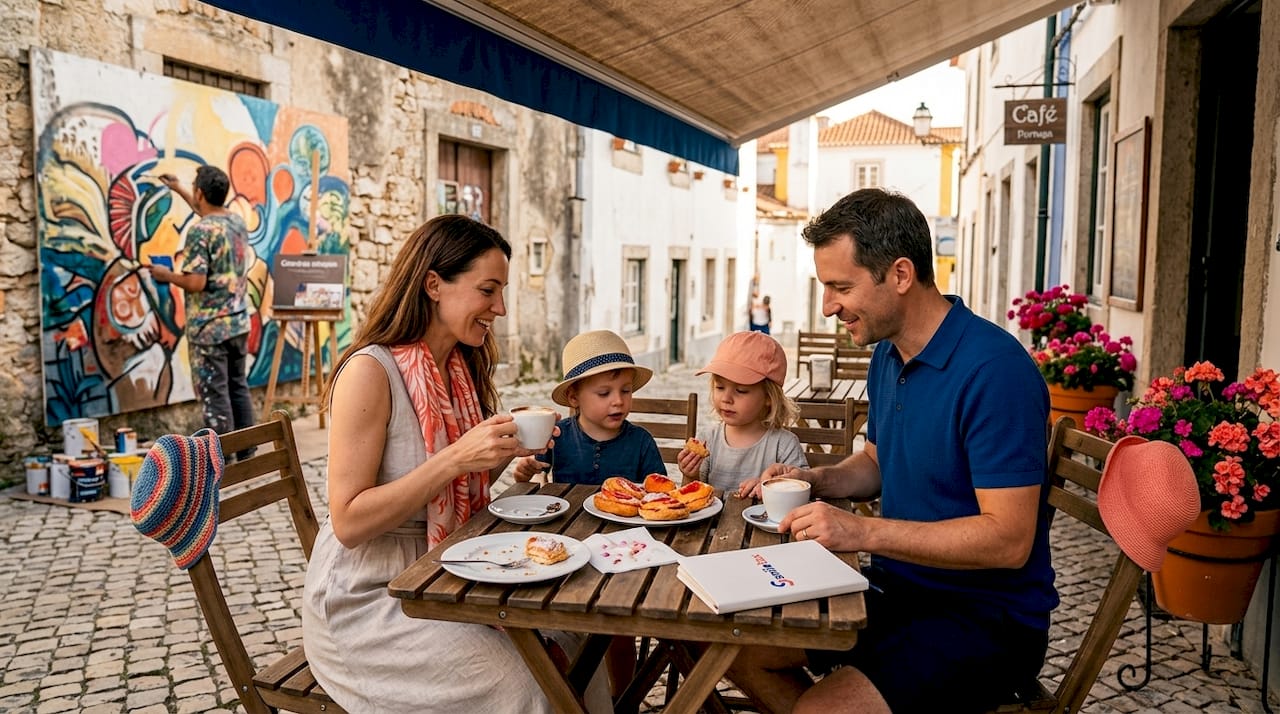
Lifestyle factors matter too. Spain’s Mediterranean climate means outdoor family life is possible year-round. The Netherlands offers unmatched urban livability. Mexico and Costa Rica deliver natural beauty and adventure alongside the practical comforts most American families expect.
Tip: Local expat forums on Facebook and platforms like Internations are gold mines for realistic budget estimates. Search for threads from families of a similar size in your target city and ask specific questions about grocery costs, school fees, and utility bills. National averages rarely tell the full story.
Visas, expat communities, and relocation tips
Getting your family legally settled is the foundation everything else rests on. Here is a practical overview of how to approach this stage:
- Research visa options early. Portugal’s D7 visa and Mexico’s temporary resident visa are among the most accessible family pathways, with income or savings thresholds that many American families can meet. Germany and the Netherlands require employment or enrollment in a recognized program for most family residence permits.
- Apply as a family unit from the start. Most countries allow a primary applicant to include a spouse and dependent children on a single application. Applying separately or adding dependents later creates unnecessary delays and paperwork.
- Connect with expat communities before you arrive. Groups like InterNations and country-specific Facebook communities give you access to families who have already navigated the process. Their practical knowledge about local bureaucracy, school waitlists, and neighborhood choices is invaluable.
- Plan for language integration. Even in countries with strong English-speaking expat communities, children who learn the local language integrate faster and thrive more fully. Enroll kids in language classes before departure and look for schools that offer structured language support for new arrivals.
- Give yourself a six-month runway. Visa processing, school applications, housing searches, and shipping logistics all take longer than expected. Families who plan ahead consistently report smoother transitions than those who try to compress the timeline.
What the data does not tell you
Rankings and statistics are useful starting points. They are not the whole picture. Family-friendly rankings combine policy features with on-the-ground realities, and those two things do not always match. A country can score well on paper and still feel like a poor fit for your specific family.
The families who make the best choices are the ones who visit their shortlisted destinations before committing. Walking the neighborhood where you plan to live, sitting in on a school open day, and talking to other American parents already there will reveal things that no ranking system captures. Visiting local schools during an exploratory trip often surfaces discrepancies between national data and local reality, particularly around language immersion and healthcare access for dependents.
Europe and Latin America lead as preferred destinations for American families, and for good reason. But the right country is ultimately the one that fits your family’s priorities, not the one that tops a generic list. Weigh the data carefully, then trust what you learn from the people already living the life you are considering.
Moving abroad? SmileTax is here to help
Relocating your family overseas is exciting and complex in equal measure. Once you have settled on your destination, one reality that does not go away is your US tax filing obligation. Every American abroad, regardless of where they live, is still required to file a US tax return each year.
SmileTax was built specifically for Americans living and working overseas. Whether you are teaching at an international school, employed locally, or working remotely, SmileTax connects you directly with an experienced US tax professional who understands expat realities. No generic software. No handoffs to unknown preparers. Just clear, accurate support from someone who knows your situation. Explore SmileTax’s expat services and get your US taxes handled with confidence from wherever in the world you call home.
FAQ
Which country is best for American families moving abroad?
Spain, Portugal, and the Netherlands consistently rank as the top destinations for American families in 2026, based on education quality, healthcare access, safety, and expat community support.
How much does it cost to live abroad as a family of four?
Monthly costs range from around $2,000 to $3,500 in Thailand, $2,500 to $4,000 in Mexico, and $4,500 to $7,000 in the Netherlands, depending on lifestyle and schooling choices.
Do American children need to attend international schools abroad?
Not necessarily. Some families enroll children in local public schools for full immersion, but international schools offering American or IB curricula provide the smoothest academic transition and are widely available in top expat destinations.
What visa options are available for American families?
Portugal’s D7 visa and Mexico’s temporary resident visa are among the most accessible options for American families, with manageable income or savings requirements and straightforward family inclusion policies.
Is healthcare abroad safe for children?
Yes. Countries like the Netherlands, Germany, Spain, and Canada offer universal or near-universal healthcare that covers resident children, with pediatric care quality that meets or exceeds US standards in most cases.