

The best countries for Americans to retire abroad are defined by four measurable factors: cost of living well below US averages, accessible private or public healthcare, clear residency visa pathways, and established expat communities. The 2026 Overseas Retirement Index from Live and Invest Overseas ranks destinations across 14 criteria, including safety, climate, and English-speaking populations, to identify where American retirees genuinely thrive. Americans over 65 spent roughly $5,119 per month in 2024 inside the US. The destinations below cut that figure by 34% to 71%, which translates to tens of thousands of dollars saved every year.
1. Boquete, Panama
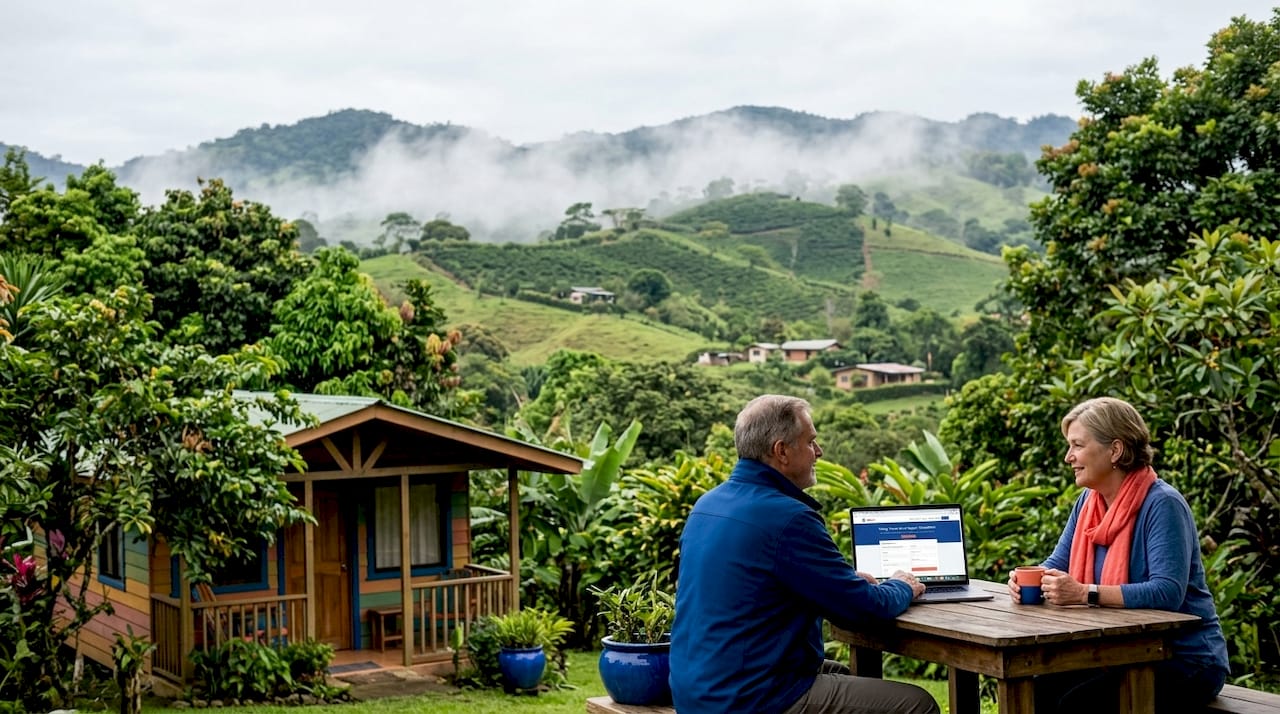
Boquete sits in Panama’s highlands at roughly 3,900 feet, which gives it a spring-like climate year-round while the coast bakes. Monthly costs average $2,400 per household, covering rent, groceries, and utilities. Panama’s Pensionado visa is one of the most retiree-friendly programs in the world, offering discounts on healthcare, restaurants, hotels, and utilities for anyone receiving at least $1,000 per month in pension income. The US dollar is Panama’s official currency, which removes currency exchange risk entirely.
2. Algarve, Portugal
The Algarve is Portugal’s southern coastal region and consistently ranks among the top places for retirement because of its mild Atlantic climate, modern infrastructure, and large English-speaking expat population. Portugal’s public healthcare is free upon registration with a health card, and GP visits cost between EUR 5 and EUR 10. Private insurance for retirees over 80 runs approximately EUR 100 to EUR 300 per month, a fraction of comparable US premiums. Portugal’s D7 Passive Income Visa requires proof of at least EUR 920 per month in passive income, making it one of the more accessible entry points in Western Europe.
3. Puerto Vallarta, Mexico
Puerto Vallarta offers the combination most American retirees want: Pacific Ocean beaches, a mature expat infrastructure, direct flights to US cities, and a cost of living that is roughly 50% lower than the US average. Private hospitals in Puerto Vallarta, including Amerimed and CMQ Premiere, are accustomed to treating American patients and accept international insurance plans. Mexico’s Temporary Resident Visa converts to permanent residency after four years and requires demonstrating a monthly income of approximately $1,400 or savings above a set threshold. The proximity to the US also makes it easy to return for specialist care or family visits.
4. Gascony, France
Gascony, in southwest France, is one of Europe’s most underrated affordable retirement destinations. Property prices run significantly lower than Paris or the Côte d’Azur, and the rural lifestyle appeals to retirees seeking quiet villages, local markets, and world-class cuisine. France’s public healthcare system is rated among the best globally, and legal residents gain access after three months of residency. The trade-off is language: French is the dominant language in rural Gascony, so retirees who invest in basic French before arriving report a far smoother transition.
5. Crete, Greece
Crete averages $1,830 per month for a comfortable retirement, covering rent in a two-bedroom apartment, food, and transport. Greece’s Mediterranean diet, warm climate, and relaxed pace of life contribute to some of the highest longevity rates in Europe. Greece introduced a flat 7% income tax rate for foreign retirees who transfer their tax residency to Greece, which has attracted a growing wave of American retirees. Private healthcare in Heraklion and Chania is modern and affordable, with specialist consultations typically costing between $40 and $80.
6. Tarragona, Spain
Tarragona sits on Spain’s Costa Daurada, south of Barcelona, and offers Roman ruins, Mediterranean beaches, and a cost of living roughly 40% below Madrid or Barcelona. Spain’s Non-Lucrative Visa requires approximately $2,800 per month in passive income, placing it at the higher end of European retirement visa requirements. That threshold reflects Spain’s appeal: excellent public healthcare for residents, a well-developed transport network, and a climate that draws retirees from across northern Europe. Retirees who qualify report that Spain’s public health system, once enrolled, is genuinely world-class.
7. Santa Familia, Belize
Belize is the only Central American country where English is the official language, which removes one of the most common barriers for American retirees. The Qualified Retired Persons program requires just $2,000 per month in income from outside Belize and grants permanent residency with significant import duty exemptions. Healthcare infrastructure is more limited than in Panama or Portugal, so most retirees carry international private insurance and travel to Mexico or the US for complex procedures. The draw is lifestyle: Caribbean coastline, low population density, and a genuine sense of community among expats.
8. Hua Hin, Thailand
Hua Hin is Thailand’s most established retiree beach town, favored over Phuket for its calmer atmosphere and lower costs. Monthly expenses average $1,442, making it one of the cheapest countries to live in retirement on this list. Thailand’s Retirement Visa (Non-Immigrant O-A) requires either 800,000 Thai baht in a Thai bank account or a monthly income of 65,000 baht. Private hospitals in Hua Hin, including Bangkok Hospital Hua Hin, offer internationally accredited care at costs that are 60% to 80% lower than equivalent US procedures. For a deeper look at visa options and day-to-day life, the American retiree guide to Thailand covers the specifics in detail.
9. Kotor, Montenegro
Montenegro is one of Europe’s newest and most affordable retirement destinations, with Kotor’s medieval old town offering a dramatic Adriatic setting at a fraction of the cost of Croatia or Italy. Monthly budgets of $1,500 to $2,000 cover comfortable living, including dining out regularly. Montenegro is a candidate for EU membership, which adds long-term residency stability for those planning a decade or more abroad. Healthcare is improving but still developing, so private insurance and occasional medical travel to neighboring countries remain standard practice for most expats.
10. Las Terrenas, Dominican Republic
Las Terrenas on the Samaná Peninsula attracts a large French and European expat community alongside a growing number of Americans. The Dominican Republic’s retirement visa program, known as the Pensionado, requires $1,500 per month in pension income and provides tax exemptions on imported household goods. Monthly costs sit between $1,800 and $2,500 for a comfortable lifestyle with beachfront access. Healthcare in Las Terrenas is adequate for routine care, with more advanced facilities available in Santo Domingo, roughly three hours away.
How cost of living and healthcare shape your decision
Monthly costs abroad run 34% to 71% lower than the US average, but the savings calculation only holds if healthcare costs are factored in correctly. Medicare does not cover care outside the US, which means every retiree abroad must independently arrange coverage. The three main options are enrolling in the local public health system (available in Portugal, France, Spain, and Greece after meeting residency requirements), purchasing international private insurance, or paying out of pocket for routine care while carrying emergency coverage.
International private insurance averages close to $18,000 per year for Americans, though costs vary significantly by age, health status, and the country of coverage. European destinations like Portugal and Greece, where public healthcare is accessible to legal residents, offer the most cost-effective path for retirees willing to meet residency requirements. In contrast, destinations like Belize and Montenegro require private coverage as the primary solution, which affects the true monthly budget.
Safety and expat community size also influence long-term satisfaction in ways that cost comparisons miss. Retirees in established expat hubs like Puerto Vallarta, Algarve, and Hua Hin report faster social integration and easier access to English-language services, from doctors to legal advisors. Destinations with smaller expat communities can offer a more authentic local experience but require greater language preparation and self-sufficiency.
Tip: Build your monthly retirement budget with three line items beyond rent and food: healthcare premiums or expected out-of-pocket costs, a 10% buffer for unexpected expenses, and annual travel back to the US. Retirees who skip the buffer consistently report financial stress in year two.
Understanding residency visas for American retirees
Retirement visa income requirements range from $800 to $2,500 per month depending on the country, and the structure of each program affects far more than just entry. Residency status determines access to public healthcare, local banking, property ownership rights, and in some countries, local tax obligations.
Key visa pathways worth knowing:
- Portugal D7 Passive Income Visa: Requires EUR 920 per month in passive income. Grants access to public healthcare after registration. Portugal’s 183-day rule triggers tax residency, which has financial planning implications worth discussing with an advisor before you commit.
- Spain Non-Lucrative Visa: Requires approximately $2,800 per month in passive income. Does not permit working in Spain. Provides access to Spain’s public health system after enrollment.
- Panama Pensionado Visa: Requires $1,000 per month in pension income. One of the easiest and most benefit-rich programs in the world for retirees.
- Thailand O-A Retirement Visa: Requires 800,000 baht in a Thai bank account or 65,000 baht per month in income. Renewed annually.
- Dominican Republic Pensionado: Requires $1,500 per month in pension income. Comes with import duty exemptions on household goods.
Golden Visa programs in countries like Portugal and Greece offer residency through real estate investment, typically starting at EUR 250,000 to EUR 500,000. These programs suit retirees who want residency without meeting monthly income thresholds. Start the visa process at least 12 to 18 months before your intended move date. Document gathering, apostilles, and appointment backlogs at consulates routinely extend timelines beyond initial estimates.
Tip: Coordinate your visa application timeline with your healthcare coverage start date. A gap between losing US-based coverage and gaining access to local healthcare abroad is one of the most common and avoidable problems American retirees face.
Comparing top retirement destinations at a glance
Social integration and visa structure weigh as heavily as affordability in determining long-term retiree satisfaction, which is why a side-by-side comparison across multiple factors is more useful than cost alone.
| Destination | Est. Monthly Cost | Healthcare Access | Residency Ease | English Widely Spoken |
|---|---|---|---|---|
| Boquete, Panama | $2,400 | Private + good private hospitals | Very easy (Pensionado) | Moderate |
| Algarve, Portugal | $2,200 | Public (after registration) + private | Moderate (D7 Visa) | Yes |
| Puerto Vallarta, Mexico | $2,000 | Private hospitals, international-friendly | Moderate | Yes (expat areas) |
| Hua Hin, Thailand | $1,442 | Excellent private hospitals | Moderate (annual renewal) | Moderate |
| Crete, Greece | $1,830 | Public + private | Moderate | Moderate |
| Kotor, Montenegro | $1,700 | Developing, private recommended | Relatively easy | Limited |
| Las Terrenas, Dominican Republic | $2,000 | Routine local, advanced in capital | Easy (Pensionado) | Limited |
Currency risk is a real factor for destinations outside the dollar zone. Panama eliminates it entirely. Mexico’s peso fluctuates but remains manageable. European destinations carry euro exposure, which can work in a retiree’s favor or against them depending on dollar strength. Retirees on fixed Social Security income should model their budget at both current and a 15% weaker dollar scenario before committing.
Key takeaways
The best countries for Americans to retire abroad combine low monthly costs, accessible healthcare for non-Medicare holders, clear residency visa pathways, and established expat communities that ease the transition.
| Point | Details |
|---|---|
| Cost savings are real but conditional | Monthly costs run 34% to 71% lower than the US, but only if healthcare is planned correctly. |
| Medicare does not travel with you | Every retiree abroad needs a separate healthcare plan: public enrollment, private insurance, or both. |
| Visa income thresholds vary widely | Requirements range from $1,000/month in Panama to $2,800/month in Spain. Match your income to the right program. |
| Start the visa process early | Allow 12 to 18 months for document preparation, consulate appointments, and processing delays. |
| Ranked lists are starting points | Use the Live and Invest Overseas Index as a filter, then research each destination against your personal health and lifestyle needs. |
What the rankings don’t tell you
Retirement destination rankings are genuinely useful tools, but they compress complex personal decisions into a single score. A destination that ranks highly on affordability and climate may still be a poor fit for a retiree managing a chronic condition that requires specialist care every three months. The criteria behind top retirement indexes include affordability, housing, visas, healthcare, governance, climate, and social factors, but those weights are averaged across a hypothetical retiree, not calibrated to your specific situation.
Healthcare planning deserves more attention than most retirees give it before moving. Visa eligibility alone does not guarantee healthcare access. In Portugal, you must register with a local health center and receive a health card before accessing public care. In Thailand, the public system is available but most expats choose private hospitals for the language and quality advantages. In Belize, private insurance is the only realistic option. These distinctions matter enormously and rarely appear in headline rankings.
The social dimension is also underweighted in most guides. Retirees who report the highest satisfaction abroad consistently cite community, not cost, as the deciding factor. A destination with a thriving expat social scene, local language classes, and volunteer opportunities will outperform a cheaper but isolated alternative for most people within two years. Treat any ranked list, including this one, as a starting point for tailored research that matches your health profile, social needs, and financial reality.
Living abroad comes with ongoing US obligations
Retiring abroad does not end your relationship with US financial and administrative requirements. Americans living overseas continue to file US tax returns regardless of where they live, and managing that correctly while also handling local residency paperwork, foreign bank accounts, and healthcare enrollment requires careful organization. SmileTax works specifically with Americans living abroad, including retirees, who need their US obligations handled accurately and without the complexity of large accounting firms. If you are planning your move and want to understand what ongoing US compliance looks like in practice, the SmileTax resources hub is a practical place to start. For retirees still working through the financial planning side of an international move, this guide on building a retirement income plan covers sequencing finances and healthcare before departure.
FAQ
Which country is easiest for Americans to retire in?
Panama is widely considered the easiest country for Americans to retire in, thanks to the Pensionado visa’s low income threshold of $1,000 per month, the use of the US dollar, and a well-established expat infrastructure in cities like Boquete and Panama City.
Does Medicare cover healthcare abroad?
Medicare does not cover healthcare outside the United States. American retirees abroad must arrange coverage through local public health systems (where residency qualifies them), international private insurance, or out-of-pocket payments for routine care.
How much money do I need to retire abroad comfortably?
Monthly costs in top retirement destinations range from approximately $1,442 in Hua Hin, Thailand, to $2,400 in Boquete, Panama. A realistic budget should also include healthcare coverage, an emergency buffer, and annual travel costs back to the US.
What is the cheapest country for Americans to retire abroad?
Hua Hin, Thailand, offers the lowest average monthly cost among top-ranked destinations at approximately $1,442 per month, followed by Kotor, Montenegro, at around $1,500 to $1,700 per month for a comfortable lifestyle.
How long does it take to get a retirement visa abroad?
The process typically takes 12 to 18 months from start to finish, accounting for document preparation, apostille certification, consulate appointment availability, and in-country processing times. Portugal and Spain tend to have longer wait times due to high demand.