

Abu Dhabi is the UAE’s federal capital and the city that most Americans living in the Emirates never fully explore. While Dubai draws the headlines, Abu Dhabi offers a quieter pace, deeper cultural roots, and a job market anchored in government, energy, and education sectors. For American expats and international school staff weighing their options in the Gulf, understanding what Abu Dhabi actually delivers, beyond the glossy comparisons to its flashier neighbor, makes all the difference.
Beyond Dubai: how Abu Dhabi differs for American expats
Abu Dhabi operates at a fundamentally different rhythm than Dubai. The city is the seat of the UAE federal government and home to Abu Dhabi National Oil Company (ADNOC), one of the world’s largest energy producers. That economic foundation shapes everything: the residents, the social scene, and the pace of daily life. You will find fewer tourists, less spectacle-driven development, and a stronger emphasis on cultural institutions.
Abu Dhabi prioritizes cultural infrastructure like the Louvre Abu Dhabi and the upcoming Guggenheim, signaling a city investing in refinement rather than spectacle. That distinction matters for expats who want substance alongside comfort.
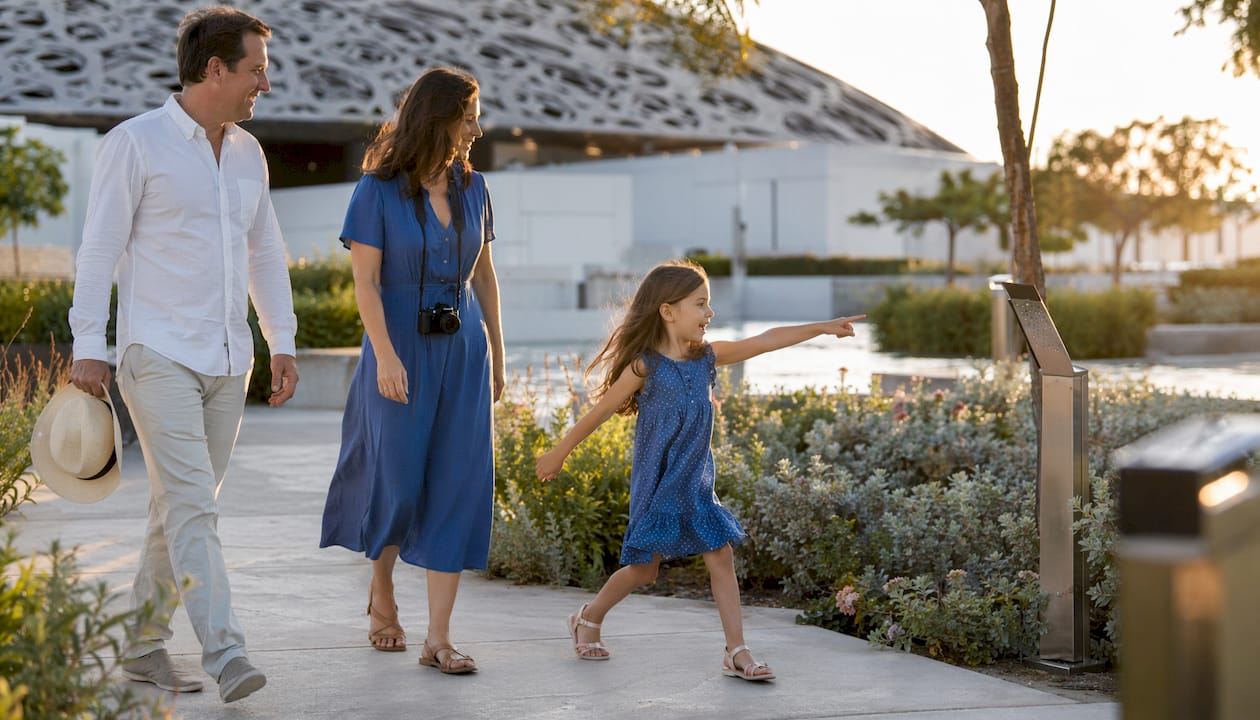
The social scene reflects this difference directly. Abu Dhabi’s evening culture leans toward home gatherings, hotel restaurants, and community events rather than the nightlife circuit Dubai is known for. Americans who prefer a quieter social life often find Abu Dhabi a better fit. Those who want a packed calendar of bars and clubs may find it limiting.
Key lifestyle contrasts worth knowing before you commit:
- Tourist density: Abu Dhabi sees far fewer tourists than Dubai, which means shorter queues, calmer public spaces, and a more local feel day to day.
- Professional environment: Government ministries, sovereign wealth funds, and energy companies dominate the employer landscape.
- Social norms: Public behavior expectations are more conservative. Alcohol is available in licensed venues but is not as visible in daily life.
- Cultural depth: The Sheikh Zayed Grand Mosque, Qasr Al Hosn, and the Louvre Abu Dhabi offer cultural experiences that Dubai simply does not replicate.
Tip: If you are considering both cities, spend a long weekend in Abu Dhabi before signing any employment contract. The atmosphere difference is real and not something a website can fully convey.
What are the visa and residency requirements for Americans?
Most American citizens receive a visa on arrival at Zayed International Airport, valid for 30–90 days depending on entry category. That covers short visits and initial job-hunting trips. Long-term residency requires employer sponsorship through a work visa, which is the standard path for Americans joining international schools, energy companies, or government-linked organizations.
The work visa process follows a clear sequence:
- Receive a job offer from a UAE-registered employer. The employer initiates the visa application on your behalf.
- Complete a medical fitness test in the UAE, which includes blood work and a chest X-ray. This is mandatory for all residency applicants.
- Submit biometric data at an authorized typing center or government service center.
- Receive your Emirates ID, which serves as your primary identification document for everything from banking to healthcare.
- Renew your residency permit every two or three years, depending on your employment contract terms. Most international school contracts align renewal with the academic year cycle.
International schools in Abu Dhabi are among the most active visa sponsors for Americans. Schools operating under American or British curricula typically handle the full visa process for teaching staff, which simplifies the transition considerably. Your employment contract is the anchor document for your entire residency status, so read it carefully before signing.
Housing and schooling options for American families in Abu Dhabi
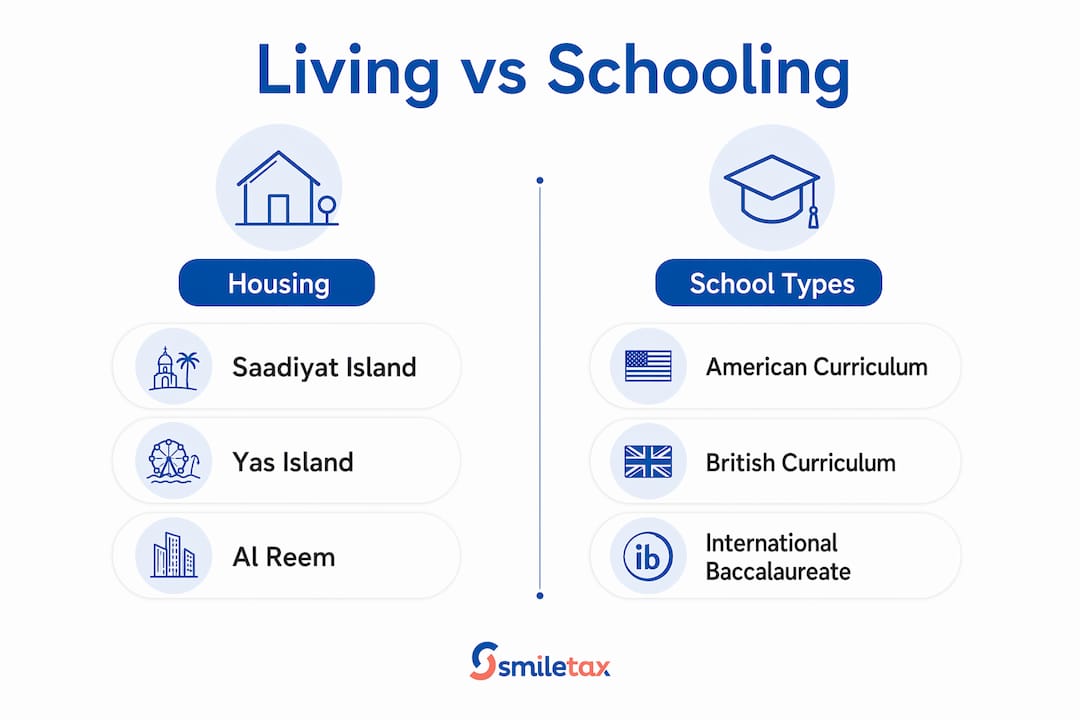
Housing in Abu Dhabi clusters around three neighborhoods that expats consistently prefer. Each offers a different balance of cost, lifestyle, and access to schools.
- Corniche: The most central option, with waterfront apartments and walkable access to restaurants and parks. Ideal for professionals without children or couples who want urban convenience.
- Saadiyat Island: The cultural and educational hub. International schools and expat families concentrate here, and the neighborhood sits close to the Louvre Abu Dhabi and pristine beaches. Housing costs are higher but the quality of life is consistently rated among the best in the city.
- Yas Island: The entertainment-focused choice, home to theme parks, a Formula 1 circuit, and a growing residential community. Families with older children who want activity options nearby tend to favor this area.
Housing costs vary significantly by neighborhood and unit size. Saadiyat Island commands a premium. Yas Island offers more mid-range options. Many employers, particularly international schools, include a housing allowance in the compensation package, which substantially offsets rental costs.
For families relocating with children, schooling is the central decision. Abu Dhabi has a well-developed international school sector:
| School type | Curriculum | Typical location |
|---|---|---|
| American curriculum schools | US Common Core or AP | Saadiyat Island, central Abu Dhabi |
| British curriculum schools | UK National Curriculum, IGCSEs | Corniche, Al Reem Island |
| IB schools | International Baccalaureate | Saadiyat Island, Khalidiyah |
The Abu Dhabi Department of Education and Knowledge (ADEK) regulates and inspects all private schools. ADEK inspection ratings are publicly available and give families an honest picture of school quality before committing to a neighborhood.
How do Americans adjust to Abu Dhabi’s climate and culture?
The climate is the single biggest adjustment for Americans moving to Abu Dhabi. Temperatures from may through september regularly exceed 104–113°F, with coastal humidity reaching 90%. Outdoor activity between 10:00 AM and 5:00 PM becomes genuinely difficult and sometimes dangerous during peak summer months.
Health advisories recommend drinking 3–4 liters of water daily and using SPF 50+ sunscreen during summer. That is not optional advice. Heat exhaustion is a real risk for newcomers who underestimate the conditions.
The outdoor social scene thrives in the cooler months from november through march. Residents plan outdoor activities, beach days, and community events almost entirely within that window. Summer life shifts indoors: malls, gyms, home gatherings, and air-conditioned restaurants become the default. Hotels offer discounts of 50–70% during summer months, which makes it a good time for visiting family to come if they can handle the heat.
Cultural adjustment requires genuine attention, not just surface-level awareness:
- Dress codes: Abu Dhabi enforces modest dress more strictly than Dubai. Women should cover shoulders and knees in public spaces. At religious sites like the Sheikh Zayed Grand Mosque, full coverage including hair is required. Abayas are provided free at the mosque for visitors who need them.
- Public displays of affection: These are legally restricted and culturally discouraged. Married couples should exercise discretion in public.
- Ramadan: The holy month changes daily rhythms significantly. Eating, drinking, and smoking in public during daylight hours is prohibited. Working hours shorten. Respecting these norms is both a legal and social obligation.
- Alcohol: Available in licensed hotel venues and some clubs, but not sold in supermarkets. Non-Muslim residents can obtain a personal alcohol license to purchase from licensed retailers.
Tip: Learning a handful of Arabic greetings goes a long way. “As-salamu alaykum” and “shukran” (thank you) signal respect and are always well received by Emirati colleagues and neighbors.
Getting around Abu Dhabi: transportation and daily logistics
Abu Dhabi is a car city. The absence of a metro and limited walkability make private vehicles or ride-hailing services a near-mandatory expense. High temperatures make walking impractical for most of the year, and the city’s layout does not support pedestrian commuting the way a European or American city might.
Jaywalking is strictly illegal and fines are enforced. Use designated crossings, even when the road looks empty.
| Transport option | Cost estimate | Notes |
|---|---|---|
| Ride-hailing (Careem, Uber) | AED 15–50 per trip | Most convenient for daily use |
| Monthly car rental | AED 80–150/day | Necessary for families or frequent travelers |
| Inter-city bus to Dubai | AED 25 per trip | Approximately 2 hours each way |
| Taxi to Dubai | AED 170–250 per trip | Approximately 90 minutes |
Travel between Abu Dhabi and Dubai is a regular part of life for many expats. There is no passenger train link between the two cities. The inter-city bus is the most affordable option at AED 25, though the journey takes around two hours. Taxis and ride-hailing services cut the time to roughly 90 minutes but cost significantly more. Many expats who work in Abu Dhabi but want occasional Dubai access budget for one or two taxi trips per month and use the bus for routine travel.
Expats consistently underestimate transportation costs when budgeting for Abu Dhabi. Factor in car rental or regular ride-hailing before finalizing your financial plan. The hidden costs of moving abroad often include exactly this category.
Key Takeaways
Abu Dhabi offers American expats a culturally rich, professionally stable alternative to Dubai, but success depends on realistic preparation for the climate, cultural norms, and car-dependent lifestyle.
| Point | Details |
|---|---|
| Abu Dhabi vs. Dubai | Abu Dhabi is quieter, more traditional, and government and energy-sector focused compared to Dubai. |
| Visa process | Americans need employer sponsorship for long-term residency; international schools are active sponsors. |
| Best neighborhoods | Saadiyat Island suits families; Corniche suits professionals; Yas Island suits entertainment-focused residents. |
| Climate reality | Summers exceed 104°F with 90% humidity; outdoor life concentrates in the november–march window. |
| Transportation costs | No metro exists; budget for ride-hailing or car rental as a fixed monthly expense. |
What living in Abu Dhabi actually teaches you
Abu Dhabi rewards patience. That is the honest summary after observing how Americans adapt to life there. The city does not hand you a social life or a sense of community. You build it deliberately, through workplace relationships, expat community groups, and the shared experience of surviving your first Gulf summer.
The cultural adjustment is real but manageable. Americans who approach local customs with genuine curiosity rather than reluctant compliance tend to integrate far more successfully. The Emirati community is warm toward expats who show respect, and that warmth opens doors that a transactional approach never would.
The professional opportunity is significant. Tax-free salaries, housing allowances, and school fee coverage for children make Abu Dhabi one of the most financially rewarding postings available to American teachers and professionals. The trade-off is the lifestyle adjustment, and it is worth taking seriously before you commit.
One thing that catches Americans off guard: the expat community in Abu Dhabi is tight-knit precisely because the city demands more intentional socializing. That creates genuine friendships faster than many people expect. The quieter pace, which initially feels like a drawback, often becomes the thing people miss most when they leave.
Americans in Abu Dhabi still file US taxes. SmileTax keeps it simple.
Living in Abu Dhabi means tax-free local income, but it does not mean freedom from US tax obligations. American citizens abroad remain subject to US filing requirements regardless of where they live or work. For international school staff and professionals in the UAE, that filing requirement is real and ongoing.
SmileTax works specifically with Americans living and working abroad, including teachers, NGO staff, and locally employed professionals. Every client works directly with an experienced US tax professional. No software handoffs, no generic forms, no guessing. If you want your US filing handled properly while you focus on building your life in Abu Dhabi, SmileTax expat tax services are built for exactly that situation.
FAQ
Do Americans need a visa to visit Abu Dhabi?
Most American citizens receive a visa on arrival at Zayed International Airport, valid for 30–90 days. Long-term stays require employer-sponsored residency visas.
Is Abu Dhabi safe for American expats?
Abu Dhabi has a low crime rate and is generally considered safe for daily life. The U.S. Embassy in Abu Dhabi currently advises Level 3: Reconsider Travel due to regional security conditions, so expats should monitor embassy alerts regularly.
How does Abu Dhabi compare to Dubai for families?
Abu Dhabi offers a quieter environment, strong international schools, and family-friendly neighborhoods like Saadiyat Island. Dubai has more entertainment options but higher tourist density and a faster pace.
What is the best time of year to arrive in Abu Dhabi?
Arriving between october and march gives new expats time to settle in during the most comfortable weather. Summer arrivals face extreme heat immediately, which adds stress to an already demanding transition.
Can Americans drive in Abu Dhabi?
Americans can drive using a US license for a short period after arrival, but most long-term residents convert to a UAE license. A car or regular ride-hailing service is effectively mandatory given the city’s layout and climate.