

Bringing your pet abroad is a structured process that requires microchipping, vaccination, health certification, and careful travel planning, all started months before your departure date. The USDA APHIS and international veterinary standards set the framework, but every destination country adds its own layer of rules on top. Get the sequence wrong and your pet could face quarantine, re-vaccination, or outright entry refusal. The good news is that with the right preparation, millions of Americans successfully relocate with their dogs, cats, and other animals every year. This guide covers the full process from first vet visit to arrival day.
What are the critical pet health and documentation requirements for international travel?
The single most important rule in international pet travel is this: the microchip must be implanted before the rabies vaccination. ISO-compliant 15-digit microchip implantation must happen first, or the vaccine record may be considered invalid for entry. The European Union, the United Kingdom, and dozens of other countries strictly enforce this sequence. Reversing the order forces owners to start the vaccination timeline over from scratch, adding months to the process.
After microchipping, your pet needs a rabies vaccination from a licensed veterinarian. Many countries require a 21-day wait after the rabies shot before your pet can travel. Some destinations, particularly in Europe and parts of Asia, also require a rabies antibody titer test to confirm immunity. That test adds another waiting period on top of the vaccination window.
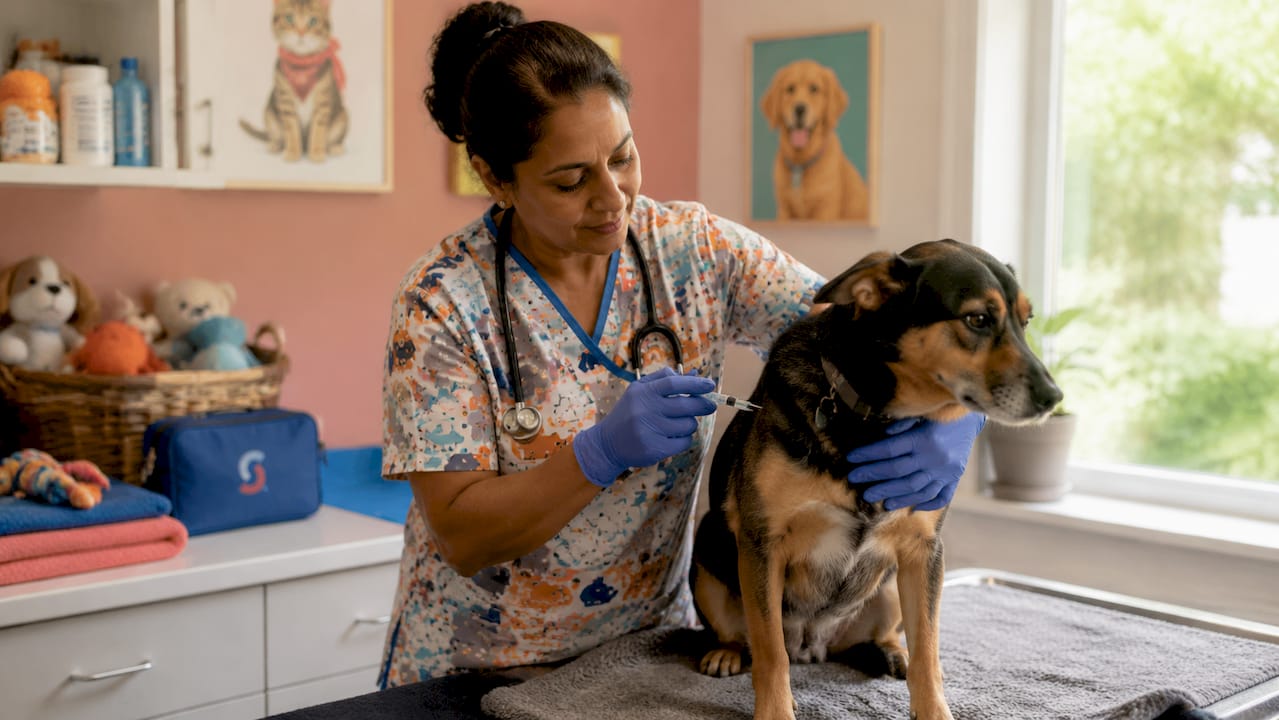
Once vaccinations are complete, you need a health certificate issued by a USDA-accredited veterinarian. Most international destinations require a USDA-endorsed health certificate issued within 10 days of your pet’s arrival at the destination. That 10-day window is tight. Health certificates must be issued within destination-specific timing windows, sometimes tied to the arrival date rather than the departure date, which matters a lot for multi-leg itineraries.
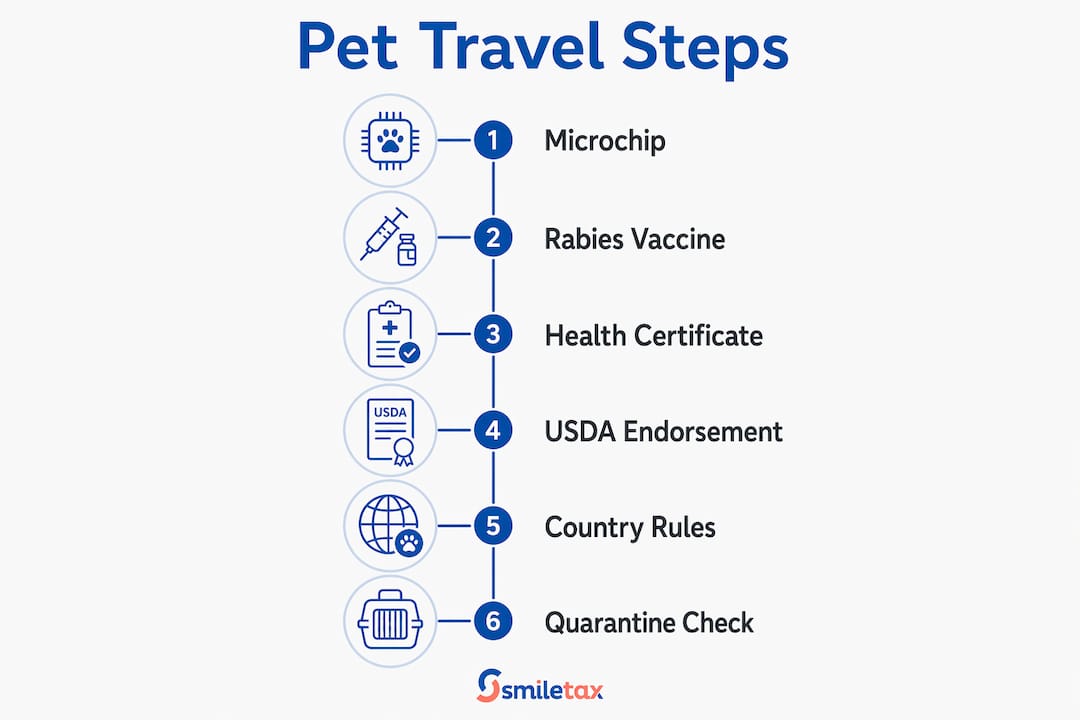
Here is a summary of the core documentation steps:
- Microchip implantation: ISO 11784/11785 compliant, 15-digit chip, implanted before any rabies vaccination
- Rabies vaccination: Administered by a licensed vet after microchipping; wait periods apply
- Titer test: Required by some countries to confirm rabies antibody levels; results take 2–4 weeks
- USDA-accredited vet health check: Full physical exam and completion of the official health certificate form
- USDA endorsement: The completed health certificate must be submitted to USDA APHIS for official endorsement before travel
Tip: Book your USDA endorsement appointment as soon as your vet signs the health certificate. Processing times vary by state and can take several days, which cuts into your 10-day window.
How do country-specific pet import rules and quarantine requirements vary?
No two countries treat pet imports the same way. Some accept a standard health certificate and a quick border check. Others require months of preparation, import permits, and mandatory quarantine on arrival. Countries like Japan, Australia, and New Zealand require long mandatory quarantine periods post-arrival, which is why planning 12–18 months ahead is the standard recommendation for those destinations. Australia’s quarantine facility in Mickleham, Victoria, for example, requires a minimum 10-day stay and pre-approval that must be secured well before travel.
Beyond quarantine, many countries restrict specific breeds or species entirely. Certain dog breeds classified as “dangerous” are banned outright in the United Kingdom, Germany, and several other European nations. Some countries prohibit the import of specific exotic birds, reptiles, or rodents regardless of health status. Checking breed and species restrictions early prevents a painful surprise at the border.
The table below shows how requirements differ across common expat destinations:
| Destination | Quarantine required | Titer test required | Import permit needed | Advance planning window |
|---|---|---|---|---|
| European Union | No | No (for vaccinated pets) | No | 4–6 months |
| United Kingdom | No (approved routes) | No | No | 4–6 months |
| Japan | Yes (up to 180 days) | Yes | Yes | 12–18 months |
| Australia | Yes (minimum 10 days) | Yes | Yes | 12–18 months |
| New Zealand | Yes (10 days minimum) | Yes | Yes | 12–18 months |
| Mexico | No | No | No | 1–2 months |
Always verify current rules directly on the USDA APHIS pet travel portal before making any decisions. Country rules change, and generic checklists found online often lag behind official updates.
What should American pet owners know about airline pet travel options?
Airline pet policies split into two categories: cabin travel and cargo travel. Cabin travel is limited to small pets, typically under 20 pounds including the carrier, and the pet must fit under the seat in front of you. Cargo travel applies to larger animals and uses the temperature-controlled hold beneath the passenger cabin. Cabin travel eligibility depends on airline policies, pet size, and health; cargo holds require sturdy, compliant kennels and pre-introduction to reduce travel refusal or panic.
Every airline that accepts pets in cargo requires an IATA-compliant kennel that allows the pet to stand, turn, and lie down comfortably. IATA stands for the International Air Transport Association, and its Live Animals Regulations set the global standard for pet transport containers. A kennel that does not meet IATA specifications will be rejected at check-in.
Key points to know before booking:
- Book early: Many airlines cap the number of pets per flight. Spots fill quickly, especially on popular expat routes.
- Check breed restrictions: Brachycephalic breeds (flat-nosed dogs and cats like Bulldogs and Persians) are banned from cargo on many airlines due to breathing risks at altitude.
- Confirm at every leg: If your trip involves a connection, each airline on the itinerary must accept your pet under its own policy.
- Avoid peak summer travel: Cargo holds can exceed safe temperatures during summer months, and some airlines suspend pet cargo service seasonally.
Tip: Start acclimating your pet to the travel kennel at least 4–6 weeks before departure. Leave it open in your home with familiar bedding inside. Pets that are comfortable in their kennel before travel show significantly less stress during the flight.
How can pet relocation services help with moving pets internationally?
Pet relocation involves complex logistics beyond paperwork, comparable to diplomatic missions, requiring careful timing of multiple health checks, permits, and airline-specific approvals. Professional pet relocation companies exist specifically to manage this complexity. They handle documentation preparation, USDA endorsement coordination, airline booking, and in some cases, quarantine facility arrangements at the destination.
Using a relocation specialist makes the most sense when you are moving to a high-requirement destination like Japan or Australia, when your pet has special health needs, or when your own schedule does not allow for the detailed coordination the process demands. For straightforward moves to countries with minimal requirements, many owners handle the process themselves with guidance from their USDA-accredited vet.
When evaluating a pet relocation company, work through these steps:
- Verify membership in IPATA. The International Pet and Animal Transportation Association is the industry’s professional body. Member companies follow a code of conduct and carry appropriate insurance.
- Ask for a written quote. Costs vary widely based on destination, pet size, and services included. Get itemized pricing so you know exactly what is covered.
- Confirm they handle USDA endorsement. Some companies only assist with paperwork but leave endorsement to you. Clarify the full scope of their service.
- Check their experience with your destination. A company that regularly ships pets to Germany will know the current rules far better than one that handles it occasionally.
- Read recent client reviews. Focus on reviews from the past 12 months, since regulations and airline policies change frequently.
The hidden costs of moving abroad often catch expats off guard, and pet relocation fees are a significant one. Professional services can range from a few hundred dollars for documentation assistance to several thousand dollars for full-service moves to quarantine destinations. Budget for this early.
Key takeaways
Successful pet relocation abroad requires starting the microchip, vaccination, and documentation process at least 4–6 months before departure, and up to 18 months for strict quarantine destinations like Australia, Japan, and New Zealand.
| Point | Details |
|---|---|
| Microchip before vaccination | The ISO-compliant microchip must be implanted before the rabies shot, or the vaccine may be invalid. |
| Plan your timeline early | Most destinations need 4–6 months of preparation; Australia, Japan, and New Zealand need 12–18 months. |
| Health certificate timing | USDA-endorsed certificates are typically valid for 10 days from arrival, so timing is critical. |
| Know your airline rules | Confirm IATA kennel compliance and breed restrictions with every airline on your itinerary. |
| Verify rules at the source | Always check destination requirements directly on USDA APHIS, not third-party checklists. |
What We’ve learned from watching expats move abroad with pets
The pet owners who have the smoothest relocations share one habit: they treat the process like a project with a firm deadline and work backward from it. They do not wait until the visa is approved or the job offer is signed. They start the vet conversation the moment the move becomes a real possibility.
The most common mistake is assuming the process is similar to domestic travel. It is not. A road trip to another state requires nothing more than a carrier and a water bowl. Moving a dog to Japan requires a government-endorsed health certificate, a titer test, a pre-approved quarantine booking, and an import permit, all coordinated within specific date windows. Missing one step can mean your pet travels separately, weeks later, at significant additional cost.
The second most common mistake is trusting outdated information. Rules change. A country that accepted pets without a titer test last year may require one this year. The USDA APHIS export guidance is the authoritative source, and it is updated regularly. Cross-reference it with the destination country’s official agriculture or biosecurity ministry website.
Finally, do not underestimate the emotional side of this for your pet. Arriving pets need a quiet home base in the new residence to manage stress and adjustment. Set up a familiar space with their bed, toys, and water before they arrive. Give them time to settle before introducing them to the wider home or neighborhood. The logistics are the hard part for you. The adjustment is the hard part for them.
Planning your broader move abroad
Relocating with a pet is one piece of a much larger puzzle. Americans moving overseas also need to think through visa and residency options, housing, healthcare, and the full financial picture of life in a new country. SmileTax supports Americans living and working abroad with clear, professional guidance on the expat experience. The SmileTax resources page is a good starting point for practical tools and country-specific information. For Americans abroad, SmileTax offers dedicated US tax support at smile.tax/
FAQ
How far in advance should I start planning my pet’s international move?
Start planning 4–6 months ahead for most countries. For Australia, Japan, and New Zealand, begin 12–18 months before your intended travel date.
Does my pet need a microchip before traveling internationally?
Yes. An ISO-compliant 15-digit microchip must be implanted before the rabies vaccination. If the vaccination comes first, it may be considered invalid by the destination country.
What is a USDA-endorsed health certificate?
A USDA-endorsed health certificate is an official document issued by a USDA-accredited veterinarian and stamped by USDA APHIS. Most destinations require it to be valid within 10 days of your pet’s arrival.
Can my pet fly in the cabin with me on an international flight?
Small pets that fit in an approved carrier under the seat may qualify for cabin travel, depending on airline policy. Larger pets travel in the temperature-controlled cargo hold in an IATA-compliant kennel.
Do I need a professional pet relocation service?
A relocation specialist is worth considering for high-requirement destinations or complex itineraries. For simpler moves, a USDA-accredited vet and careful personal research through USDA APHIS may be sufficient.