

For most Americans, Thailand delivers a comparable or better quality of life at significantly lower monthly costs than the United States, according to Western Union’s cost comparison. A single person can live comfortably on a range of monthly costs depending on city and lifestyle. Couples typically need $1,500 to $2,800. Retirees aiming for a private condo, regular dining out, and private health coverage generally have higher budgets to account for those preferences.
The two biggest levers on that range are rent and dining habits. A condo two BTS stops from central Bangkok can cost double the same unit ten minutes farther out, and eating Western food every night can triple a grocery bill built around local markets.
- Rent swings your total more than any other single line item, especially in Bangkok and the islands.
- Dining style (street food versus imported Western meals) can shift your monthly food budget by several hundred dollars.
One widely cited baseline: Wise reports a single person spends around $1,131 a month on average nationwide, with rent around $500 and groceries near $226. City and lifestyle choices move that number substantially in either direction, which the sample budgets and city breakdowns below spell out.
Key Takeaways
Thailand costs Americans substantially less than comparable U.S. living, with a realistic single-person budget between $900 and $1,700 a month depending on city and dining habits.
| Point | Details |
|---|---|
| City choice drives cost | Chiang Mai offers the best value; Bangkok and the islands carry rent and logistics premiums. |
| Dining habits swing budgets | Local meals cost $1.50 to $3; Western dining can run $9 to $36 per meal. |
| Healthcare is a fraction of U.S. pricing | GP visits run $25 to $60 versus $100 to $200 in many U.S. markets. |
| Upfront costs add up fast | Budget roughly three months’ rent for deposits plus a move-in fund for household items. |
| Visa thresholds shape planning | LTR and retirement visa proof-of-funds requirements often exceed monthly living costs. |
Table of Contents
- Sample Monthly Budgets: What $1,000, $2,000, and $3,000 Buys
- How Much Does It Cost to Live in Bangkok vs. Chiang Mai vs. the Islands?
- What Does Each Cost Category Actually Look Like Month to Month?
- What Does Healthcare Cost for Americans Living in Thailand?
- What Upfront Costs Should You Budget Before You Move?
- How Do Thailand’s Costs Compare to the United States?
- How Were These Cost Estimates Built?
- Where to Verify These Numbers
- Frequently Asked Questions
- Sources
Sample Monthly Budgets: What $1,000, $2,000, and $3,000 Buys
Three real spending patterns illustrate how far a dollar stretches at different comfort levels.
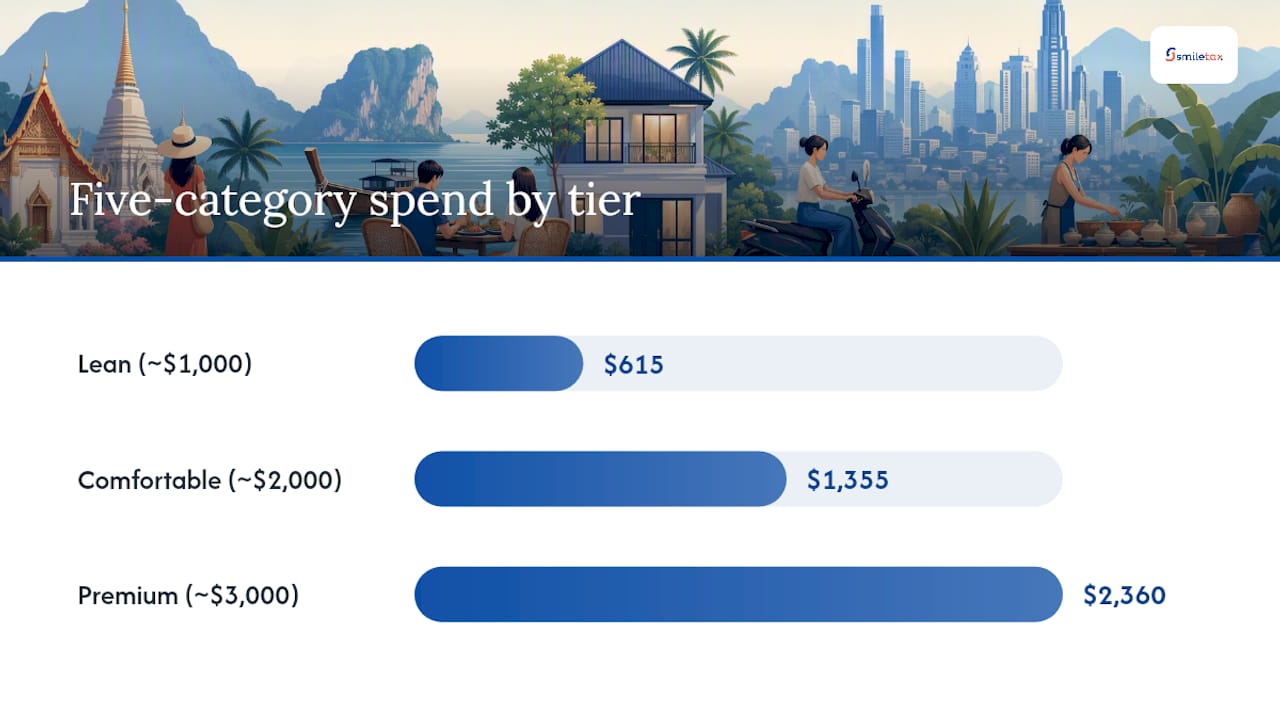
A lean budget around $1,000/month works for a single digital nomad in Chiang Mai or a smaller town, renting a basic studio, cooking and eating local food most days, and using a motorbike or songthaew for transport. A comfortable budget around $2,000/month fits a single person or frugal couple in Bangkok, Chiang Mai, or Phuket, with a one-bedroom condo, a mix of local and Western dining, and a gym membership or two. A premium budget around $3,000/month covers a couple or retiree wanting a modern condo with a pool, private health insurance, weekly Western dining, and regular taxis or Grab rides instead of public transport.
| Line Item | Lean (~$1,000) | Comfortable (~$2,000) | Premium (~$3,000) |
|---|---|---|---|
| Rent | $300 | $600–900 | $1,000–1,500 |
| Groceries | $120 | $200 | $280 |
| Dining out | $50–100 | $200 | $400–600 |
| Transport | $30–60 | $80–150 | $200 |
| Health insurance | Minimal / pay as you go | $80–150 | $150–300 |
| Utilities & internet | $60–90 | $90 | $130 |
| Entertainment | $30–60 | $100–200 | $200 |
A meal of pad krapow at a local shop runs $1.50 to $3, while the same evening at a Western-style restaurant chain can hit $10 to $20 per person, according to The Thaiger’s 2026 cost breakdown.*
These figures assume a baht-to-dollar exchange rate that can move a few percent month to month. Build your budget in baht first, then convert, so a currency swing doesn’t quietly erode your dollar-denominated plan.
How Much Does It Cost to Live in Bangkok vs. Chiang Mai vs. the Islands?
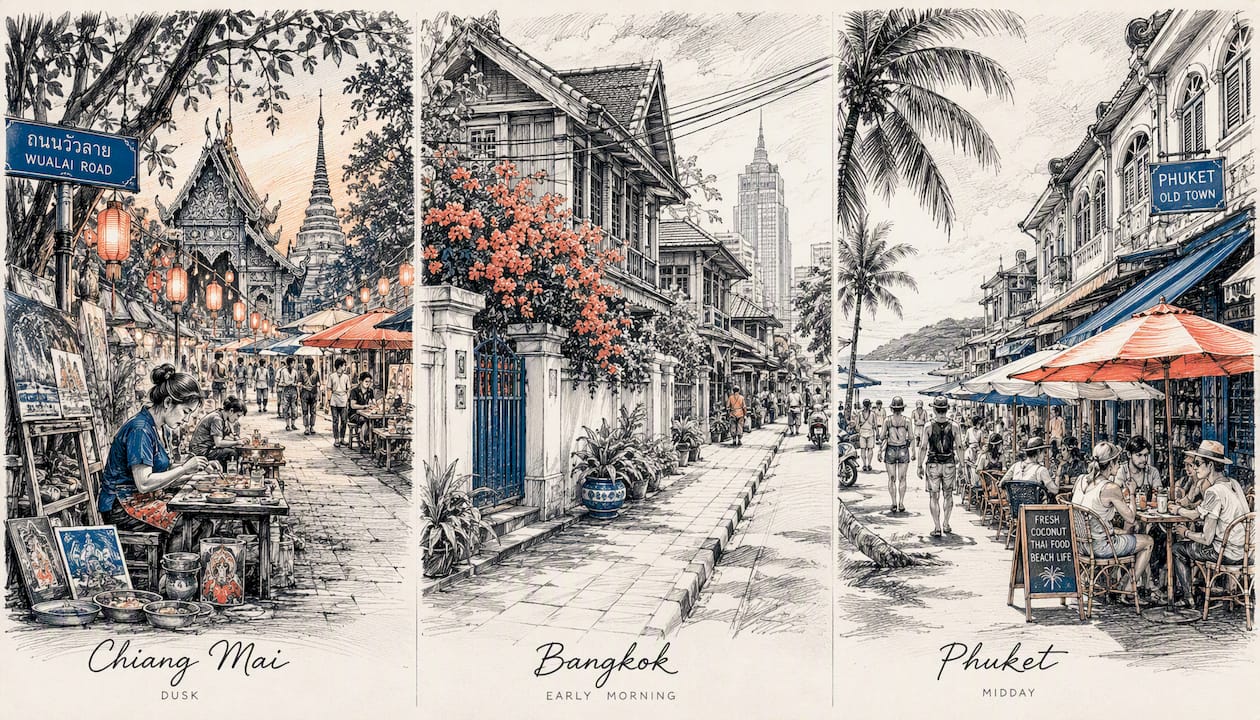
City choice changes your monthly total more than almost any other decision you’ll make. Bangkok offers the most infrastructure but charges a premium for BTS/MRT proximity. Chiang Mai remains the value leader for expats wanting walkable neighborhoods and lower rent. The islands, Phuket and Koh Samui especially, carry a logistics tax on everything from produce to furniture because so much gets shipped in.
| City/Region | 1BR Rent (City Center) | 1BR Rent (Outside Center) | Single Budget | Couple Budget | Retiree Budget |
|---|---|---|---|---|---|
| Bangkok | $600–1,200 | $600 | $1,750 | $3,000 | $2,000 |
| Chiang Mai | $600 | $250–400 | $1,000 | $2,000 | $1,200 |
| Phuket/Koh Samui | $500–1,000 | $700 | $2,000 | $1,700 | $2,000 |
| Pattaya | $700 | $250 | $900–1,700 | $1,750 | $2,000 |
Baht-based figures from VisitThailandToday’s 2026 budget guide put Chiang Mai at roughly ฿28,500 to ฿51,000 monthly, Bangkok at ฿40,500 to ฿77,000, and Phuket at ฿38,000 to ฿70,000, depending on lifestyle.
- Bangkok: rent near a BTS or MRT station commands a real premium, but it buys you a shorter commute and skip-the-taxi convenience.
- Chiang Mai: consistently the best value for the money among major expat hubs, with lower rent and cheaper everyday goods.
- Phuket/Koh Samui: island logistics push up imported groceries and furniture; expect seasonal rent spikes during high tourist months.
- Pattaya: near-beach living without full island pricing, making it one of the more affordable coastal options.
Most rentals get negotiated through Facebook groups or local agents rather than fixed online listings, and prices posted online often have some room to move once you show up in person with cash or a signed lease ready to go.
What Does Each Cost Category Actually Look Like Month to Month?
Housing is the single largest and most flexible line in any Thailand budget. A furnished one-bedroom condo outside the city center runs $250 to $600 in most regions; the same unit near a BTS station in Bangkok or beachfront in Phuket can run $600 to $1,500. Utilities average around $83 a month according to Wise, though air conditioning use during hot season can push that closer to $120 to $150 for a well-cooled condo. Internet typically runs about $19 a month for fiber connections, which is fast and reliable in most cities.
Food is where lifestyle choice matters most. A street food meal costs roughly ฿40 to ฿90 ($1.50 to $3), a casual local restaurant meal runs ฿80 to ฿150 ($2.50 to $4.50), and a Western-style dinner at an international restaurant lands anywhere from ฿300 to ฿1,200 ($9 to $36) depending on the city and cuisine. Grocery bills track the same pattern: shopping at wet markets and local supermarkets like Big C or Tesco Lotus keeps monthly grocery spend around $150 to $226, matching Wise’s national average, while shopping at import-heavy stores like Villa Market for cheese, wine, and specialty items can double that.

Transport ranges widely by mode. A motorbike rental runs $50 to $80 a month, or you can buy a used one for $600 to $1,200 outright. Bangkok’s BTS and MRT fares run ฿16 to ฿62 ($0.50 to $1.90) per trip. Grab rides (Thailand’s rideshare app) cost roughly $2 to $6 for most in-city trips. Long-distance travel is remarkably cheap: a bus from Bangkok to Chiang Mai runs $15 to $25, while a domestic flight on the same route often costs $30 to $60 if booked a few weeks ahead.
Entertainment and lifestyle costs vary the most by personal habit. A gym membership runs $30 to $70 a month depending on the chain and city. A movie ticket costs around $5 to $7. A round of golf, popular among American retirees, runs $30 to $80 including caddy fees.
- Rent and dining out together typically make up 55 to 70% of a total monthly budget.
- Air conditioning use is the single biggest swing factor in utility bills, especially April through June.
- Imported groceries versus local markets can double or triple your food spend on identical calorie counts.
- Island rent often spikes 20 to 40% during high season (December through February).
What Does Healthcare Cost for Americans Living in Thailand?
Private healthcare in Thailand costs a fraction of comparable U.S. care, which is part of why so many American retirees choose the country. A GP consultation at a private clinic runs $25 to $60, and a specialist visit typically costs $60 to $120, according to cost estimates from EscapeFromUSA’s 2026 guide. Private hospitals in Bangkok and Chiang Mai, including internationally accredited facilities, deliver care at a fraction of U.S. list prices for everything from MRIs to dental work.
- Basic dental cleaning: roughly $20 to $40 versus $100 to $200 in many U.S. markets.
- GP visit: $25 to $60 versus a typical U.S. copay or cash rate of $100 to $200.
- Comprehensive blood panel: often under $50, well below typical U.S. lab pricing.
Coverage options split into two tiers. Local Thai insurance plans run cheaper, often $50 to $150 a month depending on age, but offer more limited network access. International expat plans designed for Americans cost more, typically $100 to $400 a month depending on age and coverage limits, but provide broader hospital access and evacuation coverage. Some long-term visa categories carry minimum insurance requirements, so check the visa-specific rules before assuming pay-as-you-go coverage will qualify. For a deeper look at balancing premiums against coverage, SmileTax’s guide to health insurance abroad for American expats walks through the tradeoffs in more detail.
What Upfront Costs Should You Budget Before You Move?
Moving to Thailand carries one-time costs on top of your monthly budget, and underestimating them is one of the most common planning mistakes new arrivals make.
- Security deposit: landlords customarily require two months’ rent as a deposit plus the first month upfront, so budget roughly three months’ rent before you even move in.
- Move-in essentials: many furnished condos skip small household items like extra kitchenware, bedding, or a good desk chair, so plan a modest one-time fund to fill the gaps.
- Flights and shipping: a one-way flight from the U.S. typically runs $600 to $1,200, and shipping a few boxes of personal items adds several hundred dollars more depending on volume and speed.
On the banking side, ATM withdrawals in Thailand carry a flat fee (often around ฿220, roughly $6.50 to $7) per transaction charged by the Thai bank, on top of whatever your U.S. bank charges. Withdrawing larger amounts less often, rather than frequent small withdrawals, cuts that fee bite significantly. Once your visa status allows it, opening a Thai bank account lets you receive transfers and pay rent without repeated card fees. SmileTax’s guide on opening a bank account abroad walks through the practical steps.
Visa category matters for your budget too. The Long-Term Resident (LTR) visa and retirement visa routes both carry proof-of-funds requirements that often exceed your simple monthly living costs, so factor that threshold into your overall financial planning well before your move date. SmileTax’s complete guide to retiring in Thailand covers visa categories and lifestyle planning in more depth.
💡 Tip: Consolidate ATM withdrawals into fewer, larger transactions, and set up a Thai bank account as soon as your visa permits. It typically saves $50 to $100 a year in fees alone.
How Do Thailand’s Costs Compare to the United States?
| Line Item | Bangkok/Chiang Mai | Mid-Tier U.S. City |
|---|---|---|
| 1BR rent (city center) | $1,200 | $1,750 |
| Groceries (monthly) | $150 | $350–500 |
| Doctor visit (private/cash) | $25–60 | $100–250 |
| Internet (monthly) | ~$19 | $50–80 |
The percentage savings are largest in housing and healthcare, where Western Union’s comparison puts Thailand at roughly 45 to 65% cheaper depending on the city pair and category measured. Where Thailand costs more than expected: imported wine and cheese, foreign cars, and anything shipped internationally, since import duties and logistics add up fast on non-local goods.
How Were These Cost Estimates Built?
These figures combine baht-denominated data from VisitThailandToday, national averages from Wise, and lifestyle-driven ranges from The Thaiger, cross-checked against crowd-sourced indexes like Numbeo and expat-focused resources including International Living and BrightTax.
- Baht figures serve as the primary reference; USD conversions are secondary and shift with exchange rates.
- Ranges reflect low, average, and high spending patterns rather than a single fixed number.
- Island and high-season pricing (December through February) can push totals 20 to 40% above off-season baselines.
Exchange-rate movement of even a few percent changes your dollar-based budget meaningfully over a year, so revisit your numbers periodically rather than locking in a single conversion rate.
Thailand’s affordability holds up whether you’re renting a Chiang Mai studio on a remote salary or settling into island life on a fixed retirement income, but the actual monthly number always depends on your city, your dining habits, and how much rent premium you’re willing to pay for location.
Once you’ve settled into your new budget and routine, the paperwork that follows you from the U.S. doesn’t have to be complicated. SmileTax works specifically with Americans living abroad, including retirees and remote professionals in Thailand, who want their U.S. filing handled by a real tax professional instead of generic software or a firm that doesn’t know their situation. Learn how SmileTax keeps U.S. filing simple for Americans in Thailand.
Where to Verify These Numbers
- Wise’s Thailand cost of living data for national baseline averages.
- VisitThailandToday’s 2026 city budget guide for baht-based city ranges.
- The Thaiger’s 2026 cost breakdown for dining and lifestyle spend patterns.
- Royal Thai Embassy in Washington D.C. for retirement visa requirements.
- Thailand LTR visa official page for proof-of-funds thresholds.
Treat baht figures as the primary reference throughout and USD amounts as converted values that shift with the exchange rate.
Frequently Asked Questions
Is Thailand actually cheap for Americans in 2026?
Yes, for most spending categories. Rent, food, transport, and healthcare all run substantially below U.S. prices, though imported goods and Western dining narrow that gap.
What’s a realistic monthly budget for a single American in Thailand?
Between $900 and $1,700 covers a comfortable single life in most cities, with Chiang Mai on the lower end and Bangkok or the islands on the higher end.
How much does a couple need to live comfortably in Thailand?
Most couples budget $1,500 to $2,800 a month, depending on city choice and how often they eat out at Western restaurants.
Can retirees live well in Thailand on Social Security alone?
Many retirees manage on $1,400 to $2,500 a month, which covers rent, private health insurance, and regular dining out, though visa proof-of-funds requirements should factor into that math separately.
Which city in Thailand offers the best value for Americans?
Chiang Mai consistently ranks as the best value among major expat hubs, with lower rent and cheaper everyday goods than Bangkok or the islands.
This article is general information, not a substitute for advice from a qualified financial advisor. Consult a qualified financial professional about your own circumstances before acting on anything here.
Sources
- Cost of Living in Thailand – Wise
- How much does it cost to live in Thailand in 2026 — The Thaiger
- Cost of Living in Thailand (2026): Real Monthly Budgets — VisitThailandToday
- Thaievisa
- The cost of living in Thailand vs the United States — Western Union blog