

Moving abroad is defined by a financial gap between what Americans plan to spend and what they actually spend, with total relocation costs for budget-conscious expats ranging from $5,000 to $15,000 before they even settle in. The visible expenses, flights, first month’s rent, and shipping boxes, account for only a fraction of that figure. The real budget pressure comes from more than 23 frequently overlooked expense categories: visa fees, apostilles, international health insurance, housing deposits, currency conversion losses, and administrative time costs that compound quickly. Resources like WhereNext, The Black Expat, and StartAbroad have documented these patterns across hundreds of expat moves, and the picture is consistent. Americans who plan only for the obvious costs routinely find themselves short within the first 90 days.
What are the major hidden costs when moving abroad?
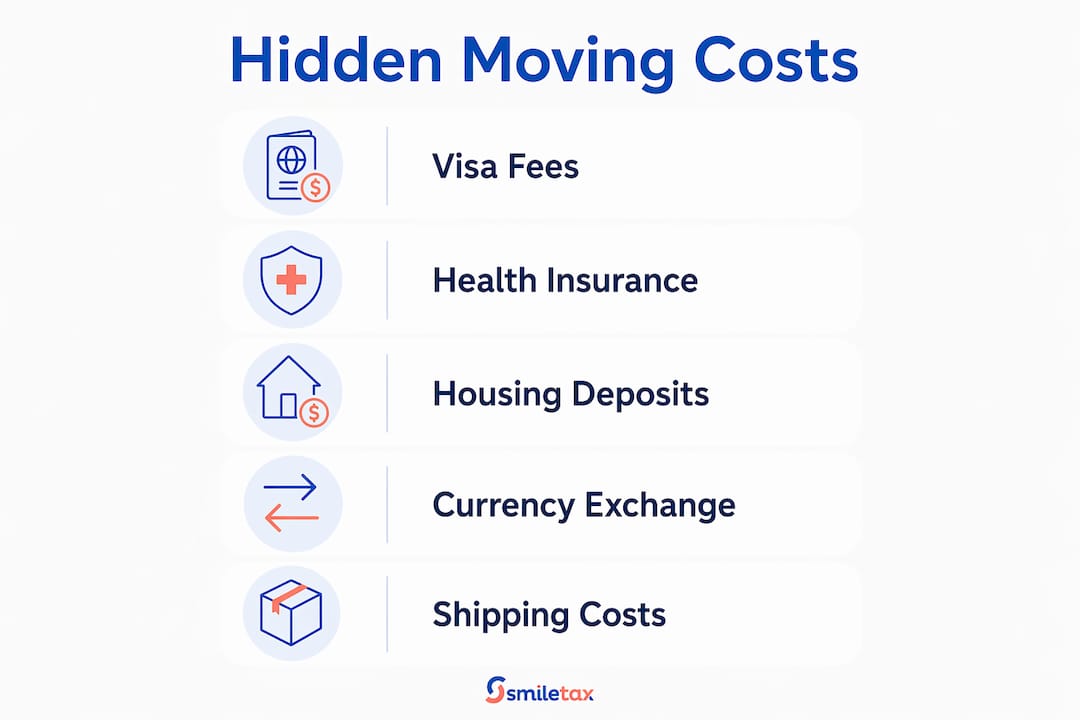
The hidden costs of moving abroad that most Americans don’t budget for fall into five clear categories, each capable of adding thousands to your relocation total before you feel settled.
Visa and residency fees are the first surprise. Visa application fees range from $50 to over $2,000 depending on the country and visa type. Beyond the application itself, you will likely need document apostilles and authentication, which typically cost $200 to $500 per document set. If your documents require certified translation, add another $100 to $300 per document. These fees are non-refundable even if your application is delayed or denied.

International health insurance is consistently underestimated. Private expat health coverage can cost from a few thousand to over $10,000 annually depending on your age, coverage level, and provider. Many Americans choose the cheapest available plan, then discover it excludes pre-existing conditions, emergency evacuation, or maternity care. Comprehensive coverage is expensive, but the gap between a cheap plan and an adequate one is where most expats get hurt financially.
Shipping and pet relocation costs frequently double initial online quotes. Shipping a small container internationally runs $1,500 to $5,000, but door-to-door service, customs clearance, storage, packing materials, and insurance push that figure significantly higher. Pet transport adds $1,000 to $4,000 depending on the animal, destination country, and required veterinary certifications.
Currency conversion losses are silent and ongoing. Each international transfer loses 1 to 3% to unfavorable exchange rate margins, costing hundreds to over a thousand dollars annually if you rely on standard bank transfers. That loss compounds over time without most expats noticing it.
- Visa application fees: $50 to $2,000+
- Document apostilles and authentication: $200 to $500
- International health insurance: $3,000 to $10,000+ annually
- Shipping a small container: $1,500 to $5,000 before add-ons
- Pet relocation: $1,000 to $4,000
- Currency conversion leakage: 2 to 4% per transfer
Tip: Request itemized quotes from at least three international shipping companies. The base rate rarely reflects the final invoice once customs, insurance, and local delivery are added.
How does administrative bureaucracy add unexpected costs to your move?
Administrative friction is one of the most underestimated financial pitfalls of expat life. Expats spend 50 to 80 hours annually on visas, banking issues, legal requirements, and related paperwork. That time has a direct dollar value, particularly for freelancers and remote workers billing by the hour.
Here is how the bureaucratic cost stack typically builds:
Visa and residency renewals. Most long-term visas require annual or biennial renewal. Each renewal cycle brings new fees, updated documentation, and often a fresh round of apostilles. Some countries require in-person appointments at consulates located in major cities, meaning you may need to book travel and accommodation just to submit paperwork.
Consular appointment logistics. Consular appointments often require travel to major urban centers, adding transportation, hotel, and lost work costs that are rarely factored into initial budgets. A single visa appointment trip in a country like Brazil or Indonesia can cost $200 to $500 once travel is included.
Document notarization and apostilles. Birth certificates, marriage certificates, academic transcripts, and background checks all require apostilles for use abroad. Expedited apostille services from the US State Department cost more and still take days. Factor in courier fees if you are already overseas.
Banking access challenges. FATCA compliance requirements cause many foreign banks to refuse American applicants outright. Those that do accept Americans often charge higher maintenance fees and impose stricter transaction limits. Finding a workable banking solution can take weeks and involve multiple failed applications.
Professional advisor fees. Navigating dual-jurisdiction financial obligations typically requires at least one specialized advisor. Expat families budget $3,000 to $7,000 annually for professional preparation of US filings, with individual costs ranging from $300 to $800 depending on complexity.
Tip: Start the apostille process for key documents at least 60 days before your move date. State-level apostilles are faster than federal ones, and many documents can be processed simultaneously to save time.
Why initial housing costs almost always exceed expectations
Housing is where the gap between budget and reality tends to be widest. The monthly rent figure you see in an online listing is almost never the true cost of securing that apartment.
Security deposits are the first shock. Many countries require one to three months’ rent as a security deposit, with Germany requiring up to three months and Dubai sometimes demanding a full year’s rent paid in advance. Portugal typically requires two months. On a $1,500 per month apartment, that means $3,000 to $4,500 tied up before you move in, on top of the first month’s rent.
Agency fees add another layer. In many markets, the tenant pays the real estate agent’s commission, which can equal one to two months’ rent. In cities like Lisbon, Barcelona, and Kuala Lumpur, this is standard practice and non-negotiable.
The period before you sign a long-term lease is expensive on its own. Most expats spend two to six weeks in short-term furnished accommodation while scouting neighborhoods, which carries a significant premium over standard rental rates. Airbnb and serviced apartments in desirable expat areas can run 40 to 80% more per night than the equivalent monthly rent.
| Expense | Typical Cost Range |
|---|---|
| Security deposit | 1 to 3 months’ rent |
| Agency or admin fee | 1 to 2 months’ rent |
| Short-term housing during scouting | 40 to 80% premium over monthly rent |
| Furnishing an unfurnished apartment | $2,000 to $8,000 |
| Utility setup and connection fees | $100 to $500 |
| Local SIM and phone plan setup | $30 to $100 upfront |
Furnishing an unfurnished apartment is a cost many Americans don’t anticipate because most US rentals come with appliances at minimum. Abroad, unfurnished often means bare walls and no kitchen appliances. Budget $2,000 to $8,000 to make a space livable, depending on the country and your standards.
How currency exchange quietly drains your budget
Currency management is one of the most overlooked areas of moving abroad financial planning, yet it affects every dollar you spend from day one.
Standard bank wire transfers carry exchange rate margins of 1 to 3% above the mid-market rate. On a $50,000 transfer to fund your initial relocation, that margin costs $500 to $1,500 in a single transaction. Most Americans don’t see this as a fee because it’s embedded in the exchange rate rather than listed as a charge. Specialist services like Wise and Revolut reduce that margin to 0.3 to 0.5%, which translates to thousands saved over the course of a multi-year relocation.
ATM withdrawals abroad carry their own hidden fees. Your US bank may charge a flat foreign transaction fee of $3 to $5 per withdrawal, plus a 1 to 3% currency conversion fee, plus the local ATM operator’s own charge. Three ATM withdrawals per week adds up to $500 to $1,000 annually in fees alone.
Currency fluctuation is a longer-term risk. If the US dollar weakens against your host country’s currency, your purchasing power drops without any change in your spending habits. Expats living in eurozone countries, the UK, or Japan have experienced this directly during periods of dollar weakness.
- Use Wise or Revolut for large transfers to minimize conversion costs
- Open a local bank account as quickly as possible to reduce ATM dependency
- Monitor exchange rates with tools like XE.com before making large transfers
- Keep a USD reserve for US-based obligations like student loans or insurance premiums
- Avoid airport currency exchange counters, which carry the worst rates available
Tip: Transfer larger amounts less frequently rather than small amounts often. Each transfer carries a fixed cost component, so consolidating transfers reduces total fees significantly.
What lifestyle expenses do Americans consistently underestimate abroad?
Lifestyle replacement costs are the category that most surprises Americans who moved abroad expecting to save money. Lower rent and cheaper groceries are real, but they are offset by expenses that simply don’t exist in the same form back home.
Here is where the surprises tend to hit hardest:
International school fees. Families with children face one of the steepest hidden costs in expat life. International schools in cities like Bangkok, Nairobi, or Mexico City charge $10,000 to $30,000 per child annually. Local public schools are free but teach in the local language, which creates an immediate barrier for children who don’t speak it. Many families budget for one child’s tuition and are blindsided by the second.
Health insurance transition gaps. Overlapping health coverage during the transition period raises out-of-pocket costs significantly. Your US plan may lapse before your international plan activates, leaving a window of uninsured exposure. Bridging that gap with short-term travel insurance adds $100 to $400 per month.
Language classes and tutors. Adults and children both need language support in non-English-speaking countries. Group language classes cost $50 to $200 per month; private tutors run $20 to $60 per hour. Families with multiple children in tutoring can spend $500 to $1,000 monthly on language support alone.
Trips back to the US. Most expats underestimate how often they return home. Holidays, family emergencies, and medical appointments all create round-trip airfare costs of $800 to $2,500 per person. A family of four returning once annually spends $3,200 to $10,000 on flights alone.
Local registration fees and municipal costs. Many countries require foreigners to register with local authorities, pay annual residency fees, or contribute to municipal services like garbage collection. These costs are small individually but collectively add $200 to $800 per year in fees most Americans never anticipate.
Key takeaways
Budgeting for an international move requires planning for 25 to 40% higher spending in the first 90 days, plus ongoing hidden costs across housing, health, currency, administration, and lifestyle.
| Point | Details |
|---|---|
| Budget for transition overspend | Plan for 25 to 40% more than your projected monthly budget during the first 90 days abroad. |
| Housing costs go beyond rent | Security deposits, agency fees, and furnishing costs can add $5,000 to $15,000 before you settle in. |
| Currency fees are invisible but real | Standard bank transfers lose 1 to 3% per transaction; use Wise or Revolut to reduce this significantly. |
| Administrative time has a dollar cost | Visas, banking, and legal tasks consume 50 to 80 hours annually, with direct financial consequences. |
| Lifestyle costs offset savings | International school fees, language tutoring, and return flights can eliminate expected cost-of-living savings. |
The financial reality most relocation guides skip
Most relocation content focuses on the exciting parts of moving abroad: lower rent, better weather, and a slower pace of life. The financial reality is more nuanced, and the gap between expectation and experience is where most Americans struggle.
The expat savings rate trap is real. Americans abroad lose access to 401(k) matching, HSAs, and other US-specific savings vehicles, creating an estimated $15,000 to $25,000 annual gap in wealth accumulation compared to staying in the US. Lower rent doesn’t close that gap on its own.
The expats who navigate this best share one habit: they did a scouting trip before committing. Spending two weeks in your target city before signing anything reveals the true cost of housing, the quality of available health insurance, and the practical reality of daily expenses. That trip costs $1,500 to $3,000 but routinely saves far more by preventing poor housing decisions and unrealistic budget assumptions.
The mindset shift that matters most is treating financial surprises as a normal part of the transition rather than a sign that something went wrong. Every expat encounters unexpected costs. The ones who handle it well are the ones who built a buffer into their plan from the start, typically three to six months of projected expenses held in reserve before the move begins.
— James
Managing your US obligations while living abroad
Living abroad doesn’t end your US financial and administrative obligations, and those obligations carry their own costs. SmileTax works specifically with Americans overseas, including international teachers, NGO professionals, retirees, and long-term expats who need their US filing handled accurately and without the complexity of large accounting firms. The team at SmileTax understands the practical realities of expat life and provides direct, personal service rather than routing clients through generic software. If you want to understand your ongoing US obligations and get them handled properly, explore SmileTax’s expat resources to see how straightforward professional support can be.
FAQ
How much should Americans budget for hidden moving costs?
Total hidden costs for an international relocation typically range from $5,000 to $15,000 beyond obvious expenses like flights and first month’s rent. Budget an additional 25 to 40% above your projected monthly spending for the first 90 days.
What are the biggest overlooked expenses when moving abroad?
The most commonly missed costs include international health insurance premiums, housing security deposits of one to three months’ rent, document apostilles, currency conversion losses, and international school fees for families with children.
How can expats reduce currency conversion costs?
Using specialist transfer services like Wise or Revolut reduces exchange rate margins from 1 to 3% down to 0.3 to 0.5% per transfer. Opening a local bank account quickly also reduces reliance on costly ATM withdrawals.
Do Americans still have financial obligations in the US after moving abroad?
Yes. Americans living abroad retain US financial and administrative obligations regardless of where they live. Professional support from a firm like SmileTax helps manage those obligations accurately and on time.
How long does the expensive transition period typically last?
Most expats experience elevated spending for the first 60 to 90 days while covering deposits, setup costs, and short-term housing. Planning a dedicated transition budget separate from your ongoing monthly budget prevents this period from derailing your longer-term finances.