

International school hiring operates on a structured annual recruitment cycle tied directly to academic year start dates, with the majority of positions beginning in August or September and a smaller cohort starting in January. Understanding this cycle is the single most important factor in how international school hiring really works and when schools recruit. US teachers who apply without knowing the timeline often miss the best roles entirely. Platforms like Search Associates, ISS EDUrecruit, and TES are where most hiring actually happens, and knowing when and how to use them separates successful candidates from those who wait too long.
How international school hiring works: the recruitment process
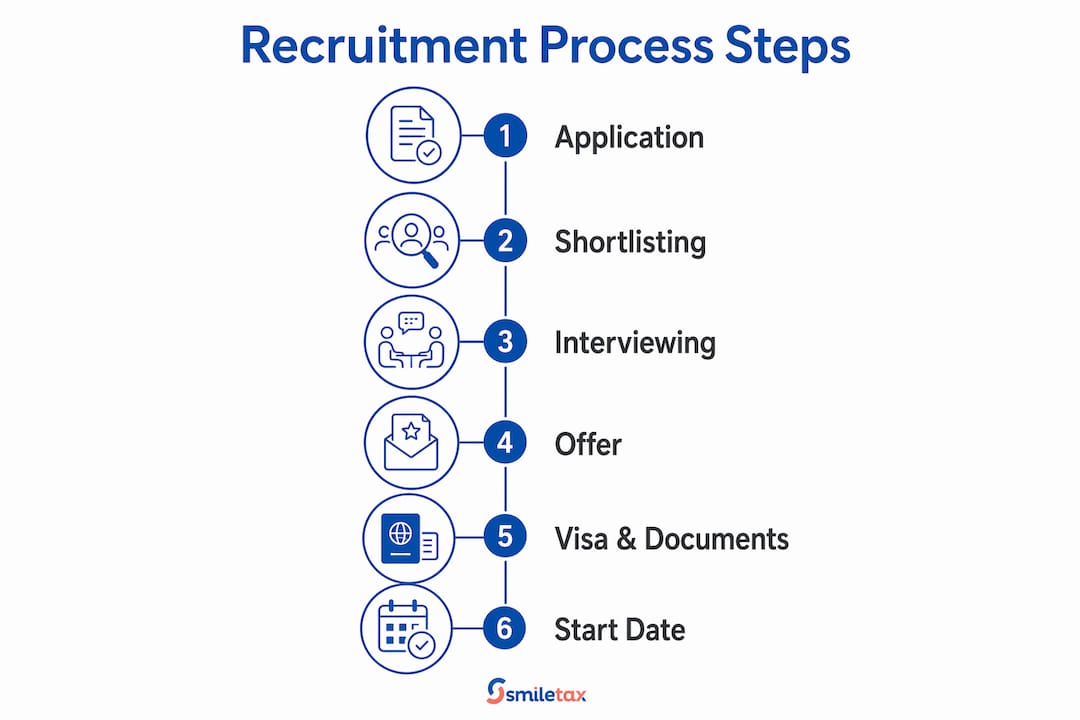
The international school recruitment process often follows six defined stages: application and screening, shortlisting, interview, reference checks, offer and contract, and finally visa and document processing. Each stage has a predictable rhythm, and the process typically runs four to six months from first application to confirmed start date. That timeline means a teacher targeting an August start should begin their search no later than the previous October.
The application and screening stage is where most candidates are filtered out. Schools receive dozens of applications per role, and recruiters spend very little time on each profile during the first pass. A generic CV submitted to ten schools simultaneously rarely advances. Schools are looking for curriculum-specific experience, recognized teaching credentials, and evidence of cultural adaptability from the very first document they read.

Shortlisted candidates move to interviews, which are increasingly conducted via video platforms like Zoom or Microsoft Teams. Some schools conduct two rounds: a general interview followed by a subject-specific or teaching demonstration round. Reference checks follow the interview stage and are handled confidentially. Confidential references submitted directly by current employers through secure platforms are the industry standard. Candidate-held recommendation letters are viewed with skepticism by most international school hiring managers.
Once an offer is accepted, visa and document processing begins. This stage surprises many US applicants. Visa processing can add weeks or months to the timeline depending on the destination country, and schools expect candidates to arrive with pre-authenticated degrees and background checks already completed. Candidates who have these documents ready before they even apply move through final hiring stages noticeably faster.
Tip: Get your degree apostille, FBI background check, and teaching license certified before you start applying. Schools in countries like the UAE, China, and South Korea require these documents before issuing a visa, and delays on your end can cost you the offer.
When do international schools post jobs and begin hiring?
The peak hiring window for August and September start dates runs from October through March, with the highest concentration of interviews happening between January and March. After April, the field of available roles thins considerably, and the best packages are typically already filled. This is not a soft guideline. It is the operating reality of teacher recruitment in international schools.
Here is how the hiring calendar breaks down across the year:
- October to November: Schools begin posting roles and reviewing early applications. Leadership and specialist positions often appear first.
- December to January: Recruitment fairs hosted by Search Associates and ISS EDUrecruit take place. On-the-spot offers are common at these events.
- February to March: Peak interview season. Most mid-tier and classroom teaching roles are filled during this window.
- April to June: Remaining vacancies are posted, often for harder-to-fill subjects or schools with late budget approvals.
- July to August: Last-minute openings from unexpected departures. Roles are filled quickly and with less negotiation room.
Regional differences matter significantly. The Middle East, particularly the UAE, Qatar, and Saudi Arabia, recruits with far less seasonal rigidity. Many international schools in the Gulf post roles year-round and hire on rolling timelines. European schools, especially in Germany, Belgium, and France, tend to follow stricter academic-year cycles aligned with local labor law.
| Region | Peak hiring period | Year-round hiring? |
|---|---|---|
| Middle East (UAE, Qatar) | October to February | Yes |
| Southeast Asia | November to February | Partially |
| Europe | November to March | Rarely |
| Latin America | November to February | Occasionally |
| East Asia (China, South Korea) | October to February | No |
Where and how do schools recruit teachers internationally?
Most international school jobs are posted on specialized platforms rather than general job boards. ISS EDUrecruit, Search Associates, and TES are the three platforms that dominate the market. Each operates slightly differently. Search Associates is membership-based and connects candidates directly with school recruiters. ISS EDUrecruit uses a verified profile system through its EDU Passport tool, which allows schools to review credentials quickly. TES functions more like a traditional job board but has strong international school coverage.
Recruitment fairs are where the process accelerates dramatically. Both Search Associates and ISS EDUrecruit host annual fairs in cities like London, Bangkok, Boston, and Dubai. Candidates who attend in person can complete multiple interviews in a single day and receive verbal offers before leaving the venue. Virtual iFairs, which expanded significantly after 2020, now offer similar speed for candidates who cannot travel. The key advantage of fairs is direct access to decision-makers rather than HR intermediaries.
- EDU Passport verified profiles allow schools to confirm credentials digitally, which speeds up the screening stage.
- Minimum experience requirements at most international schools are two years of post-qualification classroom teaching.
- Subject specialists in mathematics, science, and special education consistently see higher demand and faster hiring timelines.
- School mission alignment is assessed early. Schools affiliated with the International Baccalaureate or Cambridge Assessment International Education look for specific curriculum experience in every application.
Tip: Create your profile on at least two specialized platforms before recruitment season opens in October. A complete, verified profile on ISS EDUrecruit or Search Associates signals professionalism and gets you in front of recruiters before the fair season begins.
How qualifications and application materials impact hiring success
Most international schools require a recognized teaching qualification, such as a US state teaching license, a PGCE, or equivalent certification, combined with at least two years of classroom experience. Schools affiliated with the International Baccalaureate Organization place additional weight on IB training or experience. Cambridge-affiliated schools prioritize A-Level or IGCSE familiarity. Listing curriculum-specific knowledge clearly in your CV is not optional. It is the primary filter at the screening stage.
Tailoring your CV to highlight international curriculum experience and including a professional photo in international format improves recruiter impressions and speeds the screening process. This surprises many US applicants, since professional photos are not standard on American resumes. In international school hiring, a photo is expected and its absence can read as unfamiliarity with the sector.
Strong applications share several consistent characteristics:
- Curriculum specificity: Name the frameworks you have taught. IB PYP, MYP, Diploma Programme, Common Core, and Cambridge IGCSE are all distinct and should be listed explicitly.
- Professional photo: A current, professional headshot in business attire. Not a vacation photo or a cropped group image.
- Nationality and visa eligibility: Many schools need to confirm sponsorship requirements early. State your citizenship and current location clearly.
- Confidential references: List two or three referees who will submit references directly through the platform. Do not attach reference letters to your application.
Recruiters value clarity and professionalism in applications, and leveraging verified digital profiles speeds hiring decisions. A disorganized or generic application signals to a recruiter that the candidate has not done their research on the school or the sector.
Tip: Write a tailored cover letter for each school that references their specific mission statement or curriculum model. A sentence like “I am drawn to your school’s commitment to the IB Diploma Programme and inquiry-based learning” takes two minutes to write and immediately separates your application from generic submissions.
What are regional differences and uncommon hiring scenarios to consider?
Not every international school hire follows the October-to-March playbook. Mid-year vacancies arise from unexpected teacher departures, school expansions, or funding changes, and these roles are filled quickly and often outside the standard recruitment platforms. STEM teachers and special education specialists are particularly likely to find off-cycle opportunities because demand for these roles consistently outpaces supply.
The Middle East operates by its own rules. Schools in Dubai, Abu Dhabi, Doha, and Riyadh recruit throughout the year, partly because of higher teacher turnover and partly because school expansion in the region has been rapid. A US teacher who misses the main European or Asian hiring window can often find strong opportunities in the Gulf from April through August, when other regions have closed their searches.
| Scenario | Best strategy | Typical timeline |
|---|---|---|
| Standard August start | Apply October to January | 4 to 6 months |
| January start | Apply July to October | 3 to 5 months |
| Mid-year vacancy | Monitor platforms weekly | 2 to 6 weeks |
| Middle East year-round | Keep profile active always | 4 to 10 weeks |
Visa and sponsorship differences between regions also affect planning. Some countries, like China and South Korea, require the school to initiate the work visa process, which means the school carries more administrative burden and tends to move more slowly after an offer is made. Countries in the EU may require US teachers to obtain a visa before arrival, which adds time before the contract start date. Understanding these differences before you accept an offer prevents unpleasant surprises in your first weeks abroad.
Key takeaways
International school hiring follows a predictable annual cycle, and candidates who start early, prepare their documents in advance, and apply through specialized platforms consistently secure better roles and packages.
| Point | Details |
|---|---|
| Start your search early | Begin applications 6 to 12 months before your target start date to access the best roles. |
| Use specialized platforms | Search Associates, ISS EDUrecruit, and TES are where most international school jobs are posted. |
| Prepare documents in advance | Apostilled degrees and background checks speed up visa processing after an offer is made. |
| Tailor every application | CVs that name specific curricula and align with school missions advance past generic submissions. |
| Know regional differences | The Middle East hires year-round; Europe and Asia follow strict seasonal cycles. |
Positioning yourself for international school hiring success
The most common mistake US teachers make when entering the international school market is treating it like a domestic job search. They apply in March for an August start, submit a standard American resume without a photo, and list references who are not prepared to submit confidential forms through a third-party platform. Then they wonder why they are not getting interviews.
The teachers who land strong positions at schools like the Singapore American School or the International School of Brussels are not necessarily more qualified. They are better prepared. They started their document authentication process months before applying. They built complete profiles on Search Associates and ISS EDUrecruit before October. They attended a recruitment fair, even virtually, and they wrote cover letters that referenced the school’s specific curriculum model.
The international school recruitment process rewards preparation over talent more than most hiring systems do. A highly skilled teacher who applies late with a generic CV will lose to a competent teacher who applied early with a polished, targeted application. That is the uncomfortable truth about this market. The good news is that preparation is entirely within your control. Start earlier than you think you need to, get your documents authenticated before you need them, and treat every application as if it is the only one you are submitting.
Teaching abroad and your US obligations
Landing a role at an international school is an exciting step. Once you are settled into your new position abroad, there is one aspect of life as a US citizen overseas that does not pause: your US tax filing obligations. Americans working internationally remain subject to US tax law regardless of where they live or work. SmileTax was built specifically for this situation. The team works directly with US expats abroad, including international school teachers, offering clear, professional support without the complexity or cost of large accounting firms. If you are heading overseas to teach, it is worth getting your US tax situation sorted before you go.
FAQ
When is the best time to apply for international school jobs?
The best time to apply is between October and January for August or September start dates. Applications submitted early access the widest range of roles and the strongest compensation packages before the field thins after April.
What platforms do international schools use to recruit teachers?
Most international schools post positions on Search Associates, ISS EDUrecruit, and TES. Recruitment fairs hosted by these organizations, both in-person and virtual, are where many offers are made directly to candidates.
How long does the international school hiring process take?
The full process from first application to confirmed start date typically takes four to six months. Visa and document processing after an offer is accepted can add additional weeks depending on the destination country.
Do international schools hire teachers outside the main recruitment season?
Yes. Mid-year vacancies arise from unexpected departures and school expansions, and STEM and special education roles are often available off-season. The Middle East in particular recruits year-round with less seasonal restriction.
What qualifications do US teachers need for international school positions?
Most schools require a recognized teaching license, such as a US state certification, plus a minimum of two years of classroom experience. Schools following the IB or Cambridge curriculum place additional value on direct experience with those specific frameworks.