

Making friends abroad is a practical process of building social networks through focused, repeated engagement in local and expatriate communities tailored to your personal interests. For new expats, friendship rarely happens by accident. Research confirms that structured social mapping and facilitator-supported connection to local activities measurably improve social involvement and reduce loneliness over time. The good news: friendship building abroad is a repeatable skill, not a personality trait. Whether you are an international school teacher in São Paulo, an NGO professional in Nairobi, or a retiree settling in Lisbon, the same core principles apply. Intentional planning, cultural awareness, and consistent local engagement are the foundations of a real social life overseas.
How can new expats identify social opportunities that suit their interests?
The fastest route to a social network abroad is not random event attendance. Structured mapping plus place-based involvement consistently outperforms ad-hoc networking. That means starting with a clear picture of what you actually enjoy before you walk into any room.
Social network mapping is the foundational first step. Write down the activities, causes, and hobbies that gave you a sense of community back home. Running clubs, book groups, volunteer work, cooking classes, faith communities, sports leagues. That list tells you exactly where to look in your new city. Trying to socialize in contexts that bore you is a reliable way to meet people you will never see again.
Once you have your list, use local resources to find matching groups:
- Meetup.com lists recurring interest-based events in most major cities worldwide.
- Internations connects expats globally and organizes local chapter events by city.
- Facebook Groups remain one of the most active platforms for city-specific expat communities, neighborhood groups, and hobby clubs.
- Local community centers, municipal sports facilities, and cultural institutes (such as the Goethe-Institut, Alliance Française, or Instituto Cervantes) often run affordable classes open to residents.
- Notice boards at international schools, co-working spaces, and libraries frequently list local clubs and one-off events.
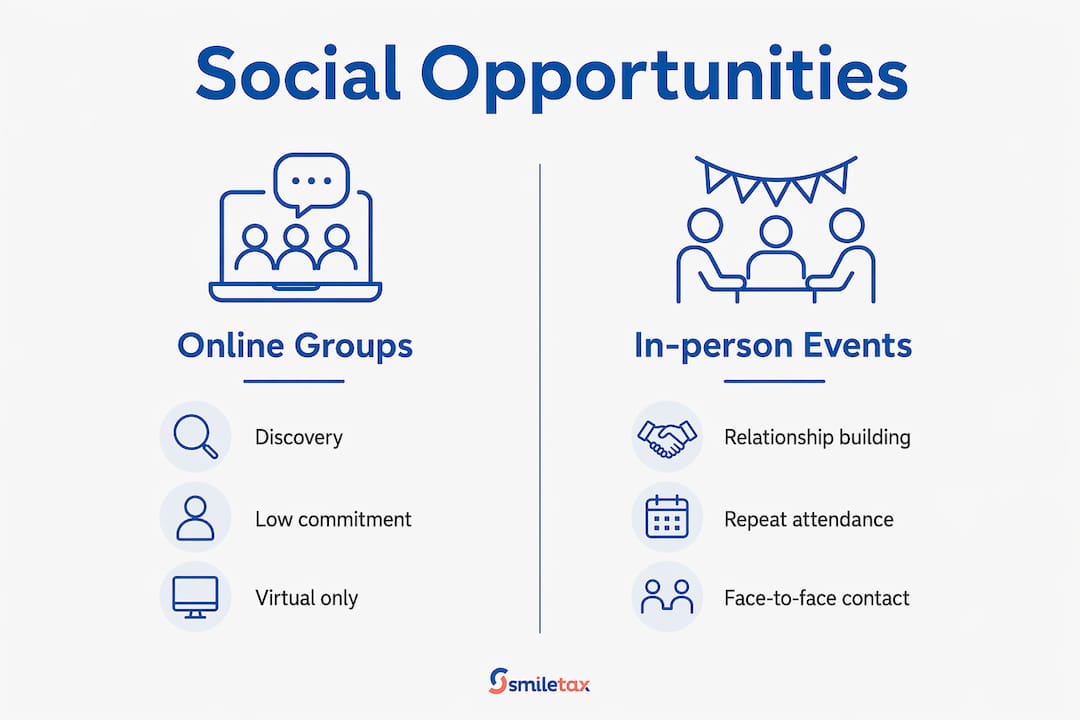
The key distinction is between online groups and in-person events. Online communities are useful for discovery, but host community engagement matters far more than virtual-only networks for sustained social adjustment. Use apps and Facebook groups to locate events, then show up in person.
Tip: Search for recurring weekly or monthly events rather than one-off gatherings. Repetition is what turns acquaintances into friends. A weekly running group beats a one-time welcome party every time.
What strategies and habits support building lasting friendships abroad?
Friendship abroad follows a predictable pipeline. The research is clear: repeated exposure to the same small group, low-stakes conversation, and scheduled follow-ups create the conditions for genuine connection. This is not about being extroverted. It is about being consistent.
Here is how to build that pipeline deliberately:
- Choose one or two recurring social contexts and commit to them for at least six weeks. A weekly volleyball game, a monthly book club, a Saturday language exchange. Consistency is what creates familiarity, and familiarity is what creates trust.
- Keep early conversations low-stakes. Ask about the activity itself, local recommendations, or how long someone has lived in the city. Deep personal disclosure too early can feel uncomfortable across cultures. Let conversations deepen naturally over multiple meetings.
- Follow up after the first meeting. Send a message on WhatsApp or through the group platform. Reference something specific from your conversation. This small step separates people who make friends from people who just attend events.
- Accept invitations, even imperfect ones. A casual coffee, a neighborhood walk, a group dinner where you only know one person. Early friendships abroad are built in exactly these low-pressure situations.
- Consider a buddy or facilitator. Many expat organizations, international schools, and community programs pair newcomers with established members. This kind of structured introduction removes the awkwardness of cold entry into an existing social group.
Language exchange programs deserve special mention. Platforms like Tandem and HelloTalk connect people who want to practice each other’s languages, creating a built-in reason to meet regularly. Volunteer organizations such as Habitat for Humanity, local food banks, or environmental groups provide recurring contact with both locals and other expats in a shared-purpose context.
Avoid the trap of treating online expat groups as your primary social outlet. Virtual-only networks do not produce the same integration outcomes as consistent in-person engagement. They are a starting point, not a destination.
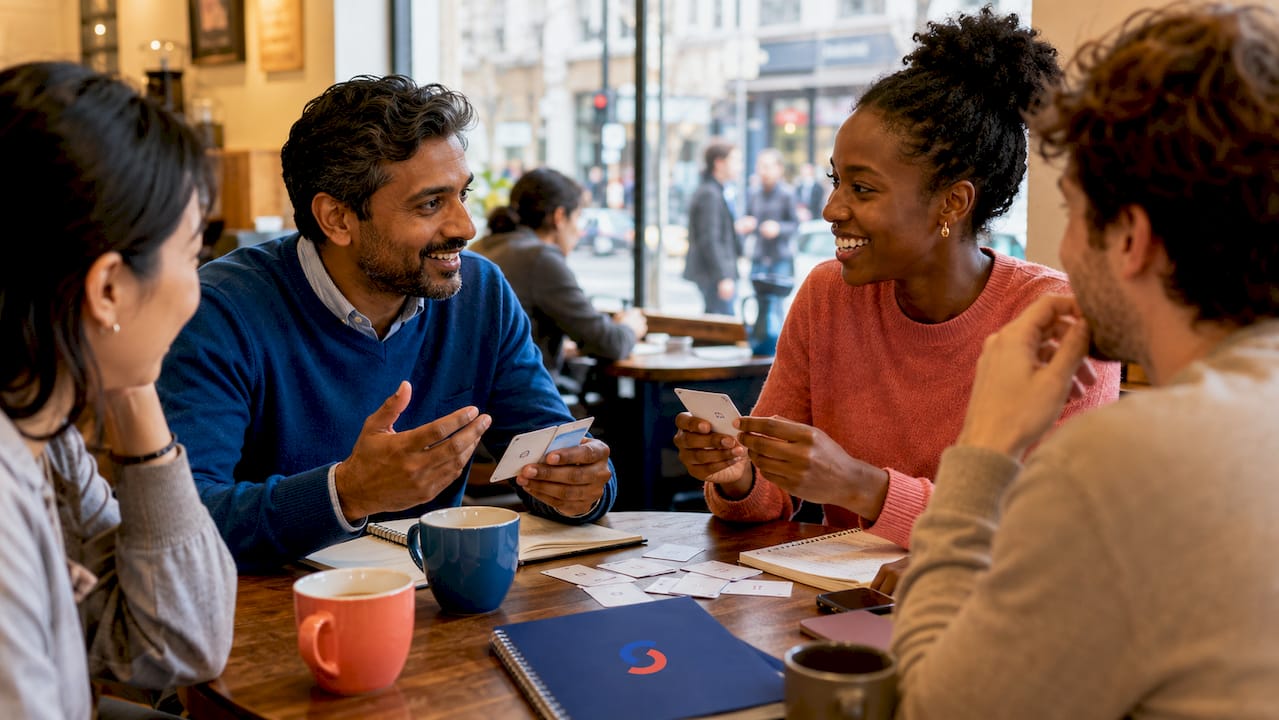
Tip: Plan for gradual relationship deepening. Friendships abroad often take longer to form than at home because you are navigating cultural and linguistic differences simultaneously. Give yourself and others time.
How to balance friendships with locals and fellow expats
Both types of friendships matter, and they serve different purposes. Understanding that distinction helps you build a social life that is both supportive and genuinely connected to your new home.
| Friendship type | Key benefits | Common challenges |
|---|---|---|
| Local friendships | Language improvement, cultural fluency, deeper sense of belonging, practical local knowledge | Language barriers, different social norms, slower trust-building |
| Expat friendships | Shared experience, emotional support, faster initial connection, practical relocation advice | Risk of creating an expat bubble, less cultural integration |
| Mixed social networks | Broadest support system, richer cultural understanding, stronger long-term adaptation | Requires more effort to maintain across different social contexts |
Research on expat adaptation confirms that local social interaction improves language skills, cultural intelligence, and comfort with the host environment. These are not soft benefits. They directly affect how settled and confident you feel in daily life. Knowing a local who can explain why a bureaucratic process works the way it does, or who invites you to a family celebration, accelerates your adjustment in ways no guidebook can replicate.
At the same time, other expats provide something locals often cannot: the shared experience of displacement. They understand the disorientation of a new healthcare system, the frustration of a language barrier on a bad day, or the particular homesickness that hits around major holidays. That kind of peer support is genuinely valuable, especially in the first year.
The risk is defaulting entirely to expat-only socializing. This creates a comfortable but insulated social world that limits cultural learning and can make you feel like a permanent outsider in your own neighborhood. Aim for a mixed network. Attend expat events for support and connection, but also pursue at least one recurring activity where you are the only foreigner in the room.
Social media plays a supporting role here. Platforms like WhatsApp, Instagram, and Facebook help maintain ties with both local friends and your home-country network. Hybrid cultural identity, the ability to hold onto your home culture while genuinely engaging with your host culture, supports belonging and psychological wellbeing. You do not have to choose between who you were and who you are becoming.
What community resources and activities sustain social wellbeing abroad?
Sustained social connection is not just good for your mood. It has measurable effects on mental and physical health. The Five Ways to Wellbeing framework, developed by the New Economics Foundation and widely used in community health programs, identifies five evidence-based actions: connect, be active, take notice, keep learning, and give. A six-week group program built around these principles produced significant improvements in social connection and mental health that held through 15 months of follow-up. That is a strong signal that structured, recurring community participation works.
| Five Ways to Wellbeing | Practical expat application |
|---|---|
| Connect | Join a recurring local group: sports team, book club, faith community |
| Be active | Sign up for a local gym class, running club, or hiking group |
| Take notice | Attend local markets, cultural events, or neighborhood festivals |
| Keep learning | Enroll in a language class, cooking course, or professional workshop |
| Give | Volunteer with a local NGO, school, or community organization |
Each of these activities does double duty. They support your wellbeing and create natural contexts for meeting people. A language class at a local community center, for example, puts you in a room with people who share your goal of cultural engagement. A volunteer shift at a local food bank connects you with residents who care about the same community you now live in.
Practical barriers are real. Cost, transport, and unfamiliarity with local systems can all slow down social participation, especially in the first few months. Start with free or low-cost options: public park sports groups, library events, free cultural festivals, and neighborhood walking tours. Many cities have expat welcome programs run by local governments or chambers of commerce that are specifically designed to reduce these barriers for newcomers. Checking with your employer’s HR department or your children’s school is often the fastest way to find these resources.
Key takeaways
Friendship building abroad is a structured, repeatable process that rewards consistency, cultural openness, and deliberate local engagement far more than spontaneous socializing.
| Point | Details |
|---|---|
| Map your interests first | Identify activities you genuinely enjoy before searching for social groups abroad. |
| Commit to recurring contexts | Attend the same group or event for at least six weeks to build familiarity and trust. |
| Balance local and expat friendships | Local ties build cultural fluency; expat ties provide emotional support. Both matter. |
| Use online groups as gateways | Digital communities help you find events, but in-person attendance drives real connection. |
| Apply the Five Ways to Wellbeing | Connect, be active, learn, notice, and give. Each action creates natural social opportunities. |
The part most expat guides skip
Most advice on making friends abroad focuses on tactics: join this app, attend that event, say this phrase. That advice is not wrong, but it misses the psychological layer that determines whether tactics actually work.
Acculturation research shows that expats follow distinct adjustment patterns, from those who resist cultural engagement to those who fully embrace it, and that pre-departure preparation and ongoing reflection shape which path a person takes. The expats who build the richest social lives abroad are not necessarily the most outgoing. They are the ones who approach the process with self-awareness and patience.
One of the most common mistakes is treating early social discomfort as evidence that friendship abroad is impossible. It is not. It is evidence that you are in the early stages of a process that takes time. Language, identity integration, and cultural intelligence all develop gradually through repeated social contact. You cannot shortcut that timeline, but you can accelerate it by showing up consistently.
The other underappreciated factor is identity. Expats who feel pressure to erase their home culture in order to fit in tend to struggle more with belonging. Hybrid identity, holding both cultures simultaneously rather than choosing between them, is associated with better social outcomes and psychological wellbeing. Bring your full self to your new social contexts. The friendships that form around your actual personality will be the ones that last.
For families, spousal and family support matters enormously. If one partner is socially isolated while the other has a built-in work community, the imbalance creates real strain. Treat social integration as a household priority, not just an individual one.
SmileTax supports expats beyond the paperwork
Living abroad involves far more than logistics. The social and lifestyle dimensions of expat life are just as important as the practical ones, and having the right resources makes a real difference. SmileTax is built specifically for Americans living and working overseas. For those navigating the broader realities of overseas life, the SmileTax resources hub covers a wide range of topics relevant to Americans living outside the US. SmileTax works with international teachers, NGO professionals, retirees, and long-term expats who want straightforward, personal support from people who understand how expat life actually works.
FAQ
How long does it take to make friends in a new country?
Most expats report that meaningful friendships take six months to a year to develop abroad. Consistent participation in recurring social activities significantly shortens that timeline.
What are the best apps for meeting people as an expat?
Meetup, Internations, and city-specific Facebook Groups are the most widely used platforms for expat social connection. Tandem and HelloTalk work well for language exchange and meeting locals.
Should expats focus on local friends or other expats?
Both serve different purposes. Local friendships build cultural fluency and a sense of belonging, while expat friendships provide shared-experience support. A mixed social network produces the strongest long-term adaptation outcomes.
How does language ability affect friendship building abroad?
Language proficiency and social networks are the two central mechanisms for social integration abroad. Even basic language skills signal respect and open doors that remain closed to those who rely entirely on English.
What is the Five Ways to Wellbeing framework?
The Five Ways to Wellbeing is an evidence-based framework from the New Economics Foundation that identifies five actions supporting mental health and social connection: connect, be active, take notice, keep learning, and give. Applied to expat life, each action maps directly onto practical social activities.