

Your U.S. student loans follow you overseas. Whether they’re federal or private, the debt remains legally owed the moment you land in another country, and interest keeps accruing regardless of where you live. The good news: with a few practical systems in place before you leave, you can stay in good standing from anywhere in the world.
Three things to do before your departure date:
- Update your servicer contact info with a reliable email address you check daily and a U.S. forwarding address if possible.
- Confirm a USD payment method — ideally a U.S. bank account with autopay enabled.
- Set calendar reminders for your next payment due date and annual recertification window.
Ignore these steps and the consequences are real. Federal collections tools attach wherever you have U.S. connections — tax refunds, federal benefits, and credit reports. Private lenders can pursue judgments in U.S. courts. Neither outcome is inevitable, and neither is hard to avoid.
💡 Tip: Go paperless with your servicer before you move. Physical mail sent to an old U.S. address is one of the most common reasons expats miss recertification deadlines.
Table of Contents
- What to complete before you leave: the pre-move checklist
- Do federal and private loans behave differently when you move abroad?
- How can you make reliable monthly payments from overseas?
- How does income-driven repayment recertification work from abroad?
- What happens if you miss payments while living abroad?
- Simple systems to manage your loans from anywhere in the world
- Key Takeaways
- The habit that actually keeps expats out of trouble
- SmileTax helps Americans abroad stay organized
- Useful sources and further reading
What to complete before you leave: the pre-move checklist
Getting organized in the weeks before departure takes less time than dealing with a missed payment from 9 time zones away.
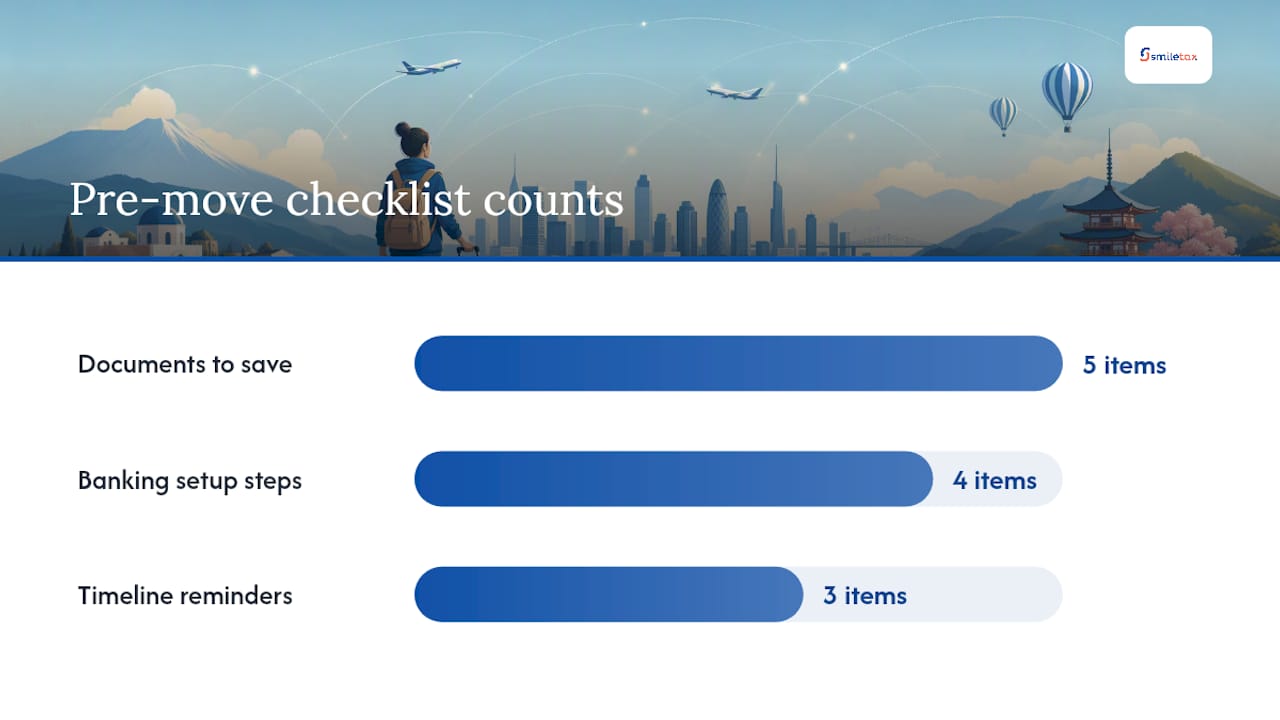
Documents to save digitally and in print:
- Servicer login credentials and account number
- Most recent loan statement showing balance and payment amount
- Last two years of U.S. tax returns (or transcripts)
- Recent pay stubs or employer income letter
- Proof of address options (U.S. forwarding address, trusted family contact)
Banking and payment setup:
- Keep your U.S. bank account open — most servicers process autopay most reliably from a domestic account.
- Enable autopay directly through your servicer’s portal to lock in any interest rate discount offered.
- If you’ll rely on international transfers, test at least one full payment cycle before you leave.
- Maintain a USD buffer in your U.S. account to cover at least one payment cycle.
Timeline reminders to set now:
- Monthly: funding date (2–3 days before payment due date to absorb transfer delays).
- Annual: IDR recertification window (note the month, not just the year).
- Contingency: a backup contact method if your primary email becomes unreachable.
Expat guides consistently recommend testing payment logistics and storing document copies as the highest-value pre-move steps.
Do federal and private loans behave differently when you move abroad?
Yes, and the differences matter for how you plan.
Neither federal nor private loans disappear when you relocate. StudentAid.gov confirms that interest continues to accrue and the full balance remains owed regardless of your country of residence. What changes is the enforcement picture.
Federal loans:
- Credit reporting to U.S. bureaus continues uninterrupted.
- Treasury offsets can intercept U.S. tax refunds and certain federal benefit payments.
- Access to income-driven repayment (IDR), forbearance, and forgiveness programs depends on maintaining good standing.
- Governments do not extradite for nonpayment of student debt — but your U.S. financial life remains exposed.
Private loans:
- No access to IDR plans or federal forbearance programs.
- Collections typically require litigation in U.S. courts; cross-border enforcement of a judgment varies by country.
- Refinancing federal loans into private loans permanently removes federal protections and IDR access — a trade-off worth weighing carefully.
Federal default occurs after 270 days of missed payments. At that point, the full balance becomes due immediately, credit damage is reported, and Treasury offset mechanisms activate.
How can you make reliable monthly payments from overseas?
A U.S. bank account with autopay is the simplest solution for most borrowers. Most servicers process domestic ACH transfers without issue, and autopay often comes with a small interest rate reduction.
When a U.S. account isn’t an option, international transfers can work — but they require more planning. Forbes Advisor notes that transfer fees and exchange-rate fluctuations are the two main risks for borrowers paying from abroad. Wire fees vary by bank and destination, and exchange rates shift daily, so the USD amount that leaves your foreign account may not match what arrives.
Practical steps for overseas payments:
- Use a global payment service that supports USD transfers and shows fees upfront before confirming.
- Check whether your servicer accepts international wire payments — policies differ.
- Schedule transfers 3–5 business days before your due date to absorb processing delays.
- Keep a USD buffer in your U.S. account as a safety net for months when transfers run late.
Fintech options for international student payments continue to expand, giving borrowers more ways to move money across borders with lower fees than traditional wire transfers.
💡 Tip: Banking holidays differ by country. A payment you schedule on a local holiday may not process until the next business day — which could push it past your due date. Build in extra lead time during holiday periods.
How does income-driven repayment recertification work from abroad?
IDR plans base your monthly payment on your reported income, and recertification is required every 12 months to keep that calculation current. Servicers vary in how they verify income — some pull data directly from the IRS, while others request alternative documentation like pay stubs, employer letters, or translated income records.
Some borrowers living abroad report qualifying for very low or even $0 monthly payments depending on their documented income level, though this outcome isn’t guaranteed and requires accurate annual recertification every year without exception.
Documents to keep organized for recertification:
- U.S. tax return transcript (most servicers prefer this over a copy of the return itself)
- Recent pay stubs or an employer income letter, translated into English if needed
- Bank statements showing income deposits if self-employed or freelancing
Timing matters. Recertifying shortly after your U.S. tax return has been processed increases the likelihood that your servicer can pull IRS data directly, which simplifies the process. If you recertify too early, the IRS data may not yet be available, and you’ll be asked for alternative documentation instead.
Keep your contact information current with your servicer. A missed recertification notice — sent to an old email or address — can trigger a payment recalculation that catches you off guard.
What happens if you miss payments while living abroad?
Missing payments doesn’t become less serious because you’re overseas. Federal loans enter delinquency immediately after a missed payment, and default is triggered at 270 days — roughly nine months of missed payments. At that point:
- The full remaining balance becomes due immediately.
- Negative marks are reported to all three major U.S. credit bureaus.
- Treasury can offset U.S. tax refunds and certain federal benefit payments.
- Passport referral for large federal debt balances is a possibility under existing law.
Private loan consequences follow a different path. Collections require a U.S. court judgment, and enforcing that judgment internationally depends on the laws of your host country. The process is slower, but a judgment can complicate your return to the U.S. — affecting employment background checks, future borrowing, and housing applications.
Simple systems to manage your loans from anywhere in the world
Consistency beats complexity. A predictable monthly routine removes most of the risk.
Monthly routine:
- Fund your U.S. account 3–5 days before the payment due date.
- Verify the payment posted in both your servicer portal and your U.S. bank.
- Check for any servicer messages or notices in your email.
Communication strategies:
- Call or email your servicer during U.S. business hours — note the time zone difference and plan accordingly.
- Follow up every phone call with a written email summary of what was agreed.
- Use a trusted U.S. family member’s address as a mailing contact only if your servicer allows it and you’ve confirmed it in writing.
Technology and security:
- Use a reliable VPN when logging into your servicer portal from abroad.
- Store all loan documents in a secure cloud service (Google Drive, Dropbox, or similar).
- Use a password manager to keep servicer login credentials accessible from any device.
💡 Tip: Keep a small USD emergency buffer — enough to cover at least one full payment — sitting in your U.S. account at all times. Transfer delays and exchange rate swings happen without warning, and that buffer is your first line of defense.
Key Takeaways
Moving abroad with student loan debt is manageable with the right systems — the single most important action is keeping your servicer contact information current and your USD payment method reliable before you leave.
| Point | Details |
|---|---|
| Loans don’t disappear abroad | Federal and private loans remain legally owed; interest accrues regardless of where you live. |
| Federal default threshold | Default triggers at 270 days of missed payments, activating credit reporting and Treasury offsets. |
| Autopay from a U.S. account | Keeping a U.S. bank account with autopay is the most reliable payment method for most servicers. |
| Recertify IDR annually | Annual recertification is required; timing it after IRS processing improves automatic verification chances. |
| SmileTax for expat paperwork | SmileTax supports Americans abroad with U.S. filing obligations and document organization at smile.tax. |
The habit that actually keeps expats out of trouble
The most common reason expats fall into delinquency isn’t a lack of money — it’s a breakdown in communication. An outdated email address, a missed recertification notice, a payment that bounced because the U.S. account ran dry. These are administrative failures, not financial ones, and they’re almost entirely preventable.
The expats who stay in good standing from abroad share one habit: they treat their loan account like a utility bill. They fund the account, verify the payment, and check for notices — every single month, without exception. That routine takes about ten minutes. The alternative, dealing with a default from overseas, can take months to resolve and leave lasting marks on a U.S. credit profile.
Living abroad doesn’t erase your obligations, but it doesn’t have to complicate them either. A reliable payment method, current contact information, and a simple monthly check-in are genuinely enough for most borrowers to stay in good standing indefinitely.
SmileTax helps Americans abroad stay organized
Living overseas comes with enough paperwork already. SmileTax works directly with Americans abroad — international teachers, digital nomads, NGO professionals, and retirees — helping them stay on top of their U.S. filing obligations with a real tax professional, not generic software. If you want your U.S. paperwork handled properly and without the back-and-forth, visit smile.tax to learn how SmileTax supports expats like you.
Useful sources and further reading
- StudentAid.gov
- Student Loans Abroad: Do You Still Have to Pay?
- How to pay off student loan debt (Forbes Advisor)
- What Happens to Student Loans If You Move Abroad
- Moving Overseas to Avoid Student Loans (Student Loan Planner)
- Moving Abroad with Debt | LottaLingo