

Living in Greece as an American means trading suburban commutes for seaside coffee, paying significantly less for rent than in most US cities, and navigating a visa system with three distinct pathways designed for different types of movers. Greece ranks among the most affordable countries in the European Union for expats, with monthly living costs for a single person in Athens running roughly €1,500 to €2,300. The lifestyle rewards are real. So are the bureaucratic hurdles. This guide covers both honestly, so you can plan with clear eyes.
What does living in Greece as an American actually cost?
Greece is genuinely affordable by Western European standards, but costs vary sharply by location, lifestyle, and whether you are renting on an island or the mainland. A single person living comfortably in Athens needs €1,500 to €2,300 monthly, covering rent, utilities, food, and transport. Couples typically budget €2,500 to €3,500 depending on their habits. Smaller cities like Patras, Larissa, or Ioannina run noticeably cheaper than Athens.
Rent is the biggest variable. A one-bedroom apartment in central Athens ranges from €490 to €1,400 per month, with the lower end found in outer neighborhoods and the higher end in Kolonaki or Glyfada. Utility bills average €120 to €200 monthly, covering electricity, water, and heating. Internet service is reliable in urban areas and costs around €25 to €40 per month.

Groceries are a genuine bright spot. Local markets in Athens and across the mainland sell fresh produce, olives, cheese, and fish at prices that feel almost absurdly low compared to New York or San Francisco. Dining out at a neighborhood taverna costs €10 to €20 per person for a full meal with wine. Specialty imported goods and international supermarkets like AB Vassilopoulos carry familiar American brands at a premium.
Here is how typical monthly expenses compare between Greece and major US cities:
| Expense | Athens, Greece | New York City, USA | Austin, Texas, USA |
|---|---|---|---|
| 1-bedroom rent (central) | €490–€1,400 | $3,000–$4,500 | $1,500–$2,200 |
| Monthly utilities | €120–€200 | $150–$250 | $130–$200 |
| Groceries (one person) | €200–€300 | $400–$600 | $350–$500 |
| Dining out (per meal) | €10–€20 | $25–$50 | $18–$35 |
| Internet | €25–€40 | $60–$90 | $50–$80 |
Tip: On popular Greek islands like Santorini and Mykonos, landlords shift to short-term tourist rentals in summer. Secure a 12-month lease before april to lock in a fair rate and avoid being priced out during peak season.
What visa options are available for American expats in Greece?
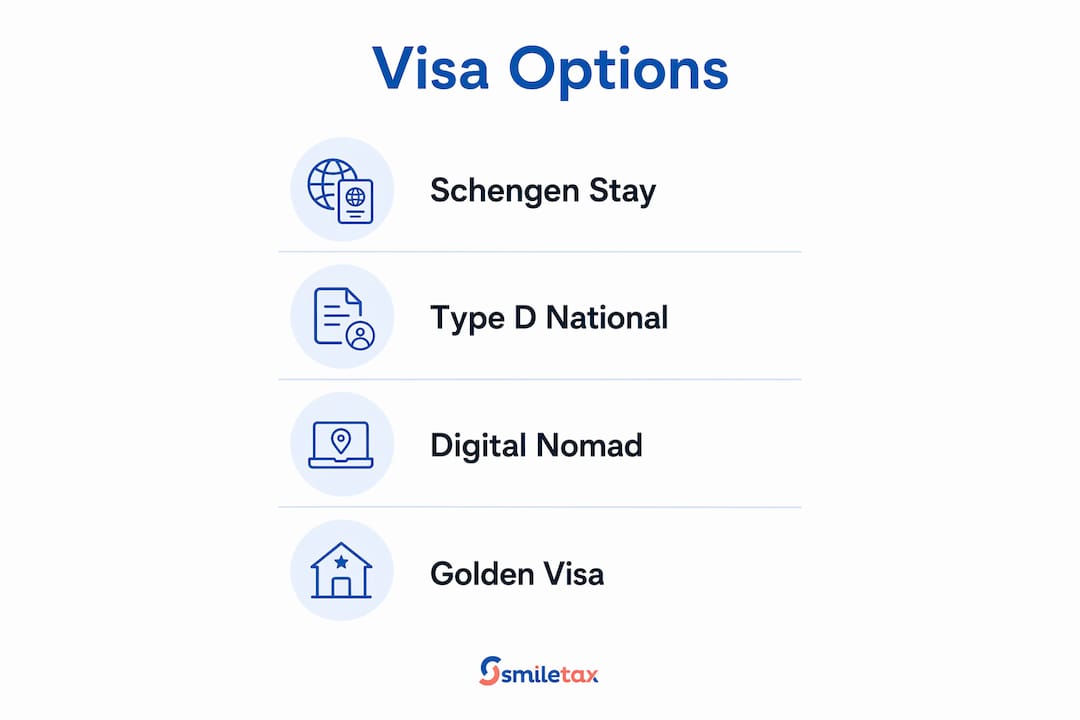
American citizens can stay in Greece visa-free for up to 90 days within any 180-day period under the Schengen Agreement. Staying longer requires a formal visa. Three main routes apply to most Americans considering a longer move.
1. Type D National Visa
The Type D visa is the standard long-stay option for Americans who want to live in Greece without a specific investment or remote work angle. You apply at the Greek consulate in your home state before departure. The visa covers stays over 90 days and is typically issued for one year. After arrival, US citizens must register with local authorities and apply for a residence permit within 90 days. The application requires proof of income, health insurance, and a clean criminal record.
2. Digital Nomad Visa
Greece launched its Digital Nomad Visa to attract remote workers employed by companies outside Greece. Eligibility requires proof of remote employment or freelance contracts with non-Greek clients, along with a minimum monthly income threshold. The visa allows a 12-month stay, renewable for another year. It does not grant the right to work for Greek employers. Athens, Thessaloniki, and Crete have become popular bases for digital nomads because of their infrastructure and international communities.
3. Golden Visa
The Golden Visa is Greece’s residency-by-investment program. It requires a minimum property investment of €250,000 in qualifying areas, though higher thresholds apply in Athens, Thessaloniki, and popular islands. The Golden Visa grants residency without requiring you to live in Greece full time, making it attractive for Americans who want a European base without committing to permanent relocation immediately. After five years of legal residency under any of these visa types, you become eligible to apply for permanent residency.
Practical realities of the application process
Greek bureaucracy moves slowly. Obtaining a Greek tax number (called an AFM) and opening a local bank account both require in-person visits, and English language support at government offices is limited. Many expats hire a local lawyer or relocation agent to handle paperwork. Budget extra time and patience for every official step.
Tip: Hire a bilingual Greek lawyer before you arrive. The cost is modest, typically €500 to €1,500 for standard relocation support, and it saves weeks of frustration at government offices.
How does everyday life in Greece differ from the US?
Greek culture runs on a slower, more community-centered rhythm than most Americans are used to. Lunch is the main meal of the day, shops close in the afternoon, and evenings revolve around long dinners with family and friends. This pace is one of the biggest draws for expats. It is also one of the biggest adjustments.
Greece’s expat appeal is strongest for people who genuinely embrace a Mediterranean lifestyle rather than expecting the efficiency of Northern European or American systems. Public services, government offices, and even some private businesses operate on timelines that feel unpredictable to Americans. Patience is not optional. It is a survival skill.
Healthcare is a practical concern worth planning carefully. Public healthcare is accessible for residents contributing to the Greek social security system, but many expats choose private health insurance for faster access and better quality care. Private GP visits typically cost $50 to $80 per session. Private hospitals in Athens and Thessaloniki offer good care at a fraction of US prices. Expats in rural areas or on smaller islands face more limited options.
A few practical realities that shape daily expat life in Greece:
- Language: Greek is the official language and English proficiency varies widely outside tourist areas. Learning basic Greek phrases builds goodwill and makes daily errands much easier.
- Socializing: Greeks are warm and hospitable, but social circles can take time to build. Expat communities in Athens, Thessaloniki, and Crete are active and welcoming.
- Bureaucracy: Expect delays for everything from utility connections to residence permit renewals. Build buffer time into every administrative plan.
- Seasonal rhythms: Life in Greece shifts dramatically with the seasons. Summers are hot, crowded, and expensive in tourist areas. Winters are mild but quiet, especially on islands.
Moving to Greece should be treated as a trial process. Extended visits of two to three months across different seasons give you a realistic picture of daily life before you commit to a full relocation.
Islands vs. mainland Greece: which suits American expats better?
The choice between island and mainland living defines the expat experience in Greece more than almost any other decision. Both have real advantages and genuine drawbacks.
Mainland advantages
Athens and Thessaloniki offer year-round services and connectivity that smaller islands simply cannot match. International airports, private hospitals, international schools, and a growing tech and startup scene make Athens the practical choice for families, professionals, and anyone who needs reliable infrastructure. Thessaloniki is smaller, cheaper, and has a vibrant university culture that keeps the city lively year-round.
Island tradeoffs
Island life delivers the postcard version of Greece: whitewashed villages, turquoise water, and a pace that feels genuinely restorative. The tradeoff is real. Island populations shrink dramatically outside tourist season, and with them go services. Healthcare access on smaller islands is limited. Ferry schedules become infrequent in winter. Some islands have no hospital at all, only a small clinic.
Key considerations when choosing between islands and the mainland:
- Healthcare needs: Families with children or older adults should prioritize mainland proximity to hospitals.
- Remote work: Reliable high-speed internet exists in major island towns but can be inconsistent in villages.
- Cost: Island rents spike in summer. Securing long-term leases before the tourist season is the single most effective way to control housing costs on popular islands.
- Community: Larger islands like Crete and Rhodes have established expat communities. Smaller islands can feel isolating in winter.
- Transport: Mainland cities connect easily by train, bus, and highway. Island travel depends on ferries and small airports with seasonal schedules.
Tip: Spend at least one full winter on your chosen island before signing a long-term lease. The off-season experience is dramatically different from what you see in summer.
Key takeaways
Living in Greece as an American is genuinely affordable and rewarding, but it requires honest preparation for bureaucratic delays, careful visa planning, and a clear-eyed choice between island charm and mainland practicality.
| Point | Details |
|---|---|
| Monthly cost in Athens | Singles need roughly €1,500–€2,300 monthly; couples typically budget €2,500–€3,500. |
| Visa options | Type D, Digital Nomad, and Golden Visa each suit different income levels and lifestyle goals. |
| Bureaucracy is slow | Hiring a bilingual Greek lawyer saves significant time on permits, tax numbers, and bank accounts. |
| Healthcare planning | Private health insurance is the practical choice for most expats, especially outside major cities. |
| Island vs. mainland | Islands offer lifestyle appeal but limited off-season services; mainland cities offer year-round reliability. |
What the brochures don’t tell you about Greece
Greece rewards a specific kind of person: someone who genuinely values the slower pace, the warmth of the culture, and the beauty of the place enough to tolerate real friction in the administrative side of life. The expats who struggle most are those who arrive expecting European efficiency alongside Mediterranean charm. Greece delivers one of those things consistently.
The cost of living advantage is real and significant. A retiree or remote worker who budgets carefully can live well in Athens or on Crete for a fraction of what the same lifestyle costs in California or the Northeast. That financial breathing room changes daily life in meaningful ways. You eat better, stress less about money, and have time to actually enjoy where you are.
The bureaucracy, though, is not a minor inconvenience. It is a structural feature of life in Greece. Residence permits take months. Bank accounts require multiple visits. The AFM process can stall without local help. Americans who treat these delays as temporary problems to solve quickly tend to burn out. The ones who build a local support network, hire good legal help, and accept that things move slowly tend to thrive.
The location decision matters more than most people realize before they move. Athens gives you a real city with international infrastructure. An island gives you beauty and community, but you are trading convenience for it. Neither choice is wrong. Both require honest self-assessment about what you actually need day to day.
Your US tax filing, handled while you enjoy Greece
Moving abroad does not pause your US tax obligations. Americans living in Greece still file US returns each year, and the rules for expats have specific requirements that standard tax software handles poorly. SmileTax works exclusively with Americans abroad, including retirees, remote workers, and long-term expats in Greece. Every client works directly with an experienced US tax professional, not a call center or automated system. If you want your US filing handled properly while you focus on settling into your new life in Greece, SmileTax is built for exactly that situation. Learn more at smile.tax.
FAQ
How much money do I need to live in Greece as an American?
A single person living comfortably in Athens needs roughly €1,500 to €2,300 per month. Smaller Greek cities cost less, while popular islands can cost more during tourist season.
What visa do Americans need to live in Greece long term?
Americans staying longer than 90 days need a Type D National Visa, a Digital Nomad Visa, or a Golden Visa depending on their income source and investment capacity.
Is healthcare good in Greece for American expats?
Public healthcare is available to residents contributing to social security, but most expats choose private health insurance for faster and higher-quality care. Private GP visits cost around $50 to $80 per session.
Can I get permanent residency in Greece as an American?
Yes. After five years of legal residency under a valid visa or residence permit, Americans become eligible to apply for permanent residency in Greece.
Is it better to live on a Greek island or in Athens as an expat?
Athens offers year-round services, hospitals, and international infrastructure. Islands offer lifestyle appeal but have limited services outside tourist season. The right choice depends on your health needs, work setup, and tolerance for seasonal isolation.