

Living in Mexico as an American means trading a higher cost of living for a richer daily experience, but the transition comes with real trade-offs that no relocation brochure fully captures. Between 1 and 2 million US citizens currently call Mexico home, drawn by affordable housing, warm weather, and a culture that rewards slowing down. The experience spans everything from world-class street food and colonial architecture to bureaucratic delays and inconsistent tap water. This guide covers the pros and cons of living in Mexico with the specificity that actually helps you decide, covering what works, what frustrates, and what surprises even the most prepared American expats.
What are the main benefits of living in Mexico as an American?
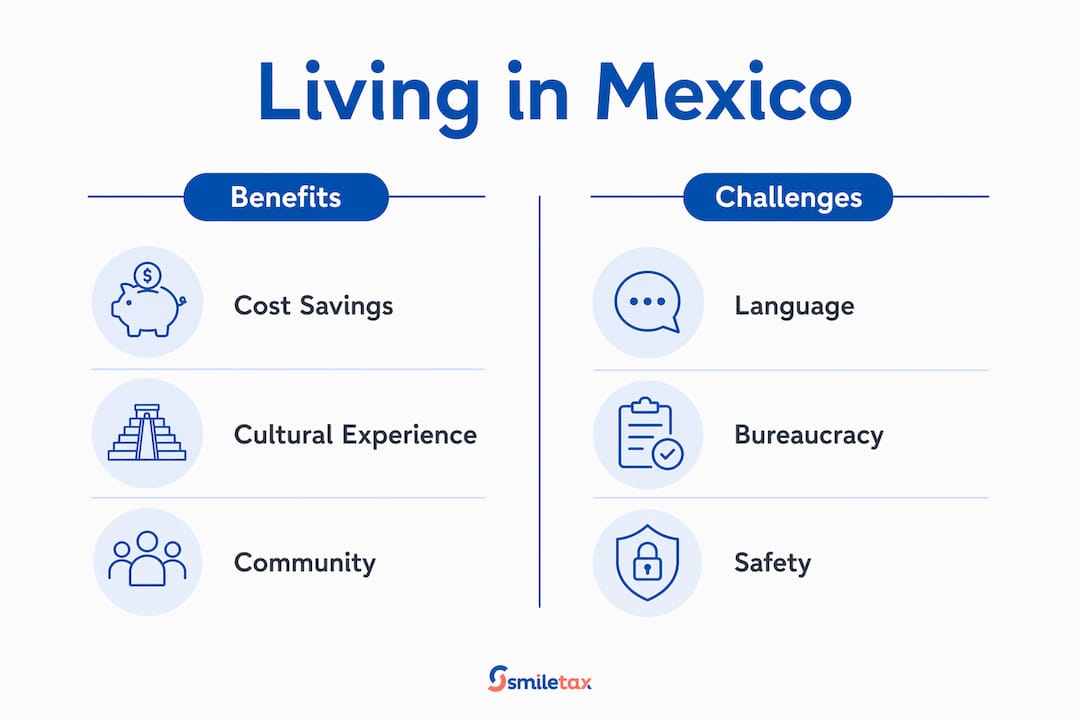
The single biggest draw for American expats in Mexico is cost. Living costs run 30 to 70% lower than comparable US cities, which means a lifestyle that would require $6,000 a month in San Francisco or New York becomes achievable on $2,000 or less in cities like Mérida or Oaxaca. That gap is not marginal. It fundamentally changes what retirement, remote work, or a career pivot looks like.
Here is what the financial picture looks like in practice:
- Singles typically budget $1,000 to $2,000 per month for a comfortable life, including rent, food, and transportation
- Couples generally spend $2,500 to $4,000 depending on location and lifestyle preferences
- Rent runs 65 to 75% cheaper than US equivalents in most mid-size Mexican cities
- Healthcare costs 30 to 60% less than US private care, with many expats accessing quality private clinics for a fraction of what they paid at home
Beyond cost, Mexico offers geographic variety that few countries match. You can live in the highland city of San Miguel de Allende with its cool evenings and cobblestone streets, on the Pacific coast in Puerto Vallarta, or in the colonial grandeur of Mexico City, one of the largest urban centers in the world. Each city has a distinct character, climate, and cost profile.
Expat communities across these cities provide a ready-made social network for new arrivals. Facebook groups, expat meetups, and community organizations in places like Puerto Vallarta and San Miguel de Allende mean you rarely have to start from zero socially. The proximity to the US also matters. Direct flights from Mexico City to major US hubs take two to four hours, making family visits and cross-border logistics far simpler than expat life in Southeast Asia or Europe.
What challenges and downsides should Americans expect?
The challenges of living in Mexico are real, and underestimating them is the most common mistake new expats make. Bureaucracy tops the list. Obtaining a Temporary Resident Visa, which allows stays of up to four years and requires proof of approximately $51,000 in annual income or equivalent savings, involves multiple in-person appointments, document notarization, and waiting periods that can stretch weeks. Visa costs range from $700 to $2,700 in the first year depending on your consulate and processing path.
Infrastructure inconsistency is the second major adjustment. Water pressure drops, power outages occur without warning, and internet installation timelines that should take a week can stretch into months. These are not rare edge cases. They are standard features of daily life in many neighborhoods, even in major cities.
Other challenges worth knowing before you move:
- Language barriers outside of expat hubs like Playa del Carmen or Mexico City are significant. In smaller towns and rural areas, English is rarely spoken, and basic Spanish becomes a functional necessity rather than a nice-to-have
- Safety varies dramatically by region. Mérida consistently ranks as one of Mexico’s safest cities, while other areas carry genuine security concerns that require research and local knowledge
- The “gringo price” effect means foreigners are often quoted higher prices at markets, by contractors, and for services. Building rapport and speaking basic Spanish reduces this over time, but it takes months of consistent presence in a neighborhood
- Currency fluctuation affects your purchasing power directly. A strengthening peso against the dollar means your US income buys less locally, and veteran expats recommend keeping a 15 to 20% budget buffer to absorb exchange rate swings
Tip: Open a Charles Schwab or Wise account before moving. Both offer fee-free international ATM withdrawals and competitive exchange rates, which saves meaningful money over months of daily transactions.
What unexpected cultural and social aspects do American expats encounter?
The cultural differences in Mexico catch most Americans off guard not because they are extreme, but because they are subtle and pervasive. The most disorienting is the mañana attitude, a cultural orientation that prioritizes relationships over rigid schedules. A plumber who says he will arrive at 10 a.m. may arrive at noon, or the next day. A government office that opens at 9 a.m. may not process your paperwork until 11 a.m. This is not rudeness. It reflects a different relationship with time that values human connection over transactional efficiency.
The most common cultural surprises American expats report, roughly in order of impact:
- Noise levels in Mexican neighborhoods are higher than most Americans expect. Fireworks at 6 a.m. for local festivals, music from nearby events, and street vendors with loudspeakers are part of daily life in many areas
- Social warmth and physical closeness in greetings, including cheek kisses and extended handshakes, feel unfamiliar at first but become one of the most appreciated aspects of Mexican social culture
- Punctuality norms differ sharply. Arriving 30 minutes late to a social gathering is not considered rude. Arriving exactly on time can actually feel abrupt to local hosts
- Integration pace is slower than expats expect. Forming genuine friendships with Mexican nationals takes time and language investment. Many expats find themselves spending most of their social time within expat circles, which is comfortable but limits the depth of cultural experience
“The expat who thrives in Mexico is the one who stops measuring Mexican life against American standards and starts appreciating it on its own terms.” — Mexico Daily Post, 2025
Learning Spanish, even at a conversational level, is the single most effective way to accelerate integration. It reduces the gringo price effect, opens up neighborhoods beyond the expat bubble, and earns genuine respect from locals who recognize the effort.
How to choose the best places to live in Mexico as an American expat
Location shapes everything about your experience living in Mexico as a foreigner. The most popular expat cities each offer a distinct combination of cost, climate, safety, and community. Here is a direct comparison:
| City | Cost level | Climate | Safety | Expat community |
|---|---|---|---|---|
| Mexico City | Moderate to high | Mild, 7,000 ft elevation | Varies by neighborhood | Very large, diverse |
| San Miguel de Allende | Moderate | Warm days, cool nights | Generally safe | Large, arts-focused |
| Mérida | Low to moderate | Hot and humid | Consistently high | Growing rapidly |
| Puerto Vallarta | Moderate | Tropical, coastal | Generally safe | Large, beach-oriented |
| Playa del Carmen | Moderate | Tropical, humid | Moderate | Large, younger crowd |
Mérida stands out for safety and affordability, making it a strong choice for retirees and families. San Miguel de Allende attracts artists, writers, and retirees who want a walkable colonial city with a well-established American expat scene. Mexico City offers urban energy, world-class food, and cultural depth, but requires more careful neighborhood selection. For Americans comparing expat destinations globally, Mexico consistently ranks among the most accessible and cost-effective options.
Tip: Spend at least four to six weeks in any city you are seriously considering before signing a lease. Seasons, local events, and neighborhood noise patterns only reveal themselves over time.
What practical steps help Americans transition successfully to life in Mexico?
A successful move to Mexico depends less on enthusiasm and more on preparation. The Temporary Resident Visa process starts at a Mexican consulate in the US before you arrive, so begin the paperwork at least three months before your intended move date. Gather proof of income, bank statements, and passport photos in advance, since consulates have specific and sometimes varying document requirements.
On the housing side, never sign a long-term lease sight-unseen. Experienced expats consistently recommend renting month-to-month through Airbnb or a short-term rental for the first one to three months. This lets you evaluate water pressure, neighborhood noise, proximity to markets, and the actual safety feel of a street before committing to a 12-month contract.
Additional steps that make a real difference:
- Budget for setup costs beyond rent. Deposits, furniture for unfurnished apartments, internet installation fees, and household supplies add up to several thousand dollars in the first month
- Get private health insurance before you arrive. Mexico’s private healthcare system is high quality and affordable by US standards, but walking in without coverage still adds up. Companies like Cigna Global and GeoBlue offer expat-specific plans
- Build a local support network early. Facebook groups like “Expats in Mérida” or “Americans in Mexico City” are genuinely useful for finding trusted plumbers, doctors, and landlords through community recommendations
- Learn basic Spanish before you go. Apps like Duolingo and Babbel are fine starting points, but pairing them with a tutor through iTalki accelerates practical conversational ability significantly
- Manage currency exposure actively. Many expats keep a portion of their savings in pesos to reduce exposure to exchange rate swings, particularly if they have fixed monthly expenses in Mexico
For Americans exploring healthcare options abroad, Mexico’s private clinic system offers a strong combination of quality and affordability that compares favorably with many other expat destinations.
Key takeaways
Living in Mexico as an American rewards preparation, flexibility, and genuine cultural curiosity, and the expats who thrive are those who research the specifics before they arrive.
| Point | Details |
|---|---|
| Cost advantage is real | Singles live comfortably on $1,000 to $2,000 per month; couples on $2,500 to $4,000 depending on location. |
| Visa planning takes time | The Temporary Resident Visa requires US consulate appointments and costs $700 to $2,700 in the first year. |
| Location determines experience | Mérida offers safety and low cost; Mexico City offers urban depth; San Miguel de Allende suits arts-focused expats. |
| Cultural adjustment is gradual | The mañana mindset and different punctuality norms require patience and a willingness to reset expectations. |
| Trial living prevents costly mistakes | Renting short-term for one to three months before signing a lease protects against noise, infrastructure, and safety surprises. |
What the expat guides don’t tell you
Most articles about moving to Mexico focus on the obvious wins: the food, the weather, the savings. What they underplay is the emotional arc of the first year. The first three months feel like an extended vacation. Months four through eight are often the hardest, when novelty fades and the friction of bureaucracy, language gaps, and infrastructure failures accumulates. By month twelve, most expats who stay have found their rhythm.
The expats who struggle most are those who arrived expecting Mexico to function like the US at a lower price point. It does not. The country operates on different assumptions about time, relationships, and the role of community in daily life. Those who adapt to that reality, rather than resist it, consistently report that Mexico gave them something they did not know they were missing: a slower, more connected way of living.
Patience with the process is not optional. It is the core skill of expat life in Mexico.
Living abroad comes with US obligations too
Moving to Mexico is an exciting step, and staying on top of your US filing requirements does not have to be complicated. SmileTax works specifically with Americans living abroad, including retirees, remote workers, and long-term expats in Mexico, who need their US taxes handled accurately and without the stress of navigating it alone. Every client works directly with an experienced US tax professional. No generic software, no handoffs to unknown preparers. If you are settling into life in Mexico and want your US obligations handled with confidence, explore SmileTax expat tax services or book a consultation to get started.
FAQ
How much does it cost to live in Mexico as an American?
Singles typically spend $1,000 to $2,000 per month and couples $2,500 to $4,000, depending on city and lifestyle. Rent runs 65 to 75% cheaper than comparable US cities.
What visa do Americans need to live in Mexico long-term?
The Temporary Resident Visa allows stays of up to four years and requires proof of approximately $51,000 in annual income or equivalent savings. The process starts at a Mexican consulate in the US before arrival.
Is Mexico safe for American expats?
Safety varies significantly by region. Mérida is consistently rated among Mexico’s safest cities, while other areas require more careful research. Choosing your neighborhood carefully and connecting with local expat communities provides the most reliable safety guidance.
What are the biggest cultural differences Americans face in Mexico?
The mañana attitude toward time, higher ambient noise levels, and different social punctuality norms are the most commonly reported adjustments. Learning basic Spanish significantly improves daily life and community integration.
Should I rent before buying property in Mexico?
Experienced expats strongly recommend renting short-term for one to three months before signing any long-term lease or purchasing property. This allows you to evaluate infrastructure, noise, and neighborhood safety in ways that listings and photos cannot capture.