

Panama is one of the most practical relocation destinations for Americans, combining a US dollar economy, accessible residency visas, affordable healthcare, and a well-established expat community in a single country. For retirees and remote workers evaluating a move abroad, living in Panama as an American means skipping currency conversion headaches entirely, qualifying for residency on a modest income, and finding a lifestyle that costs significantly less than comparable comfort in the US. The Pensionado and Friendly Nations visas are two of the most accessible residency pathways in the Americas, and Panama City offers urban amenities that rival major US metros at a fraction of the price.
What visa options are available for Americans moving to Panama?
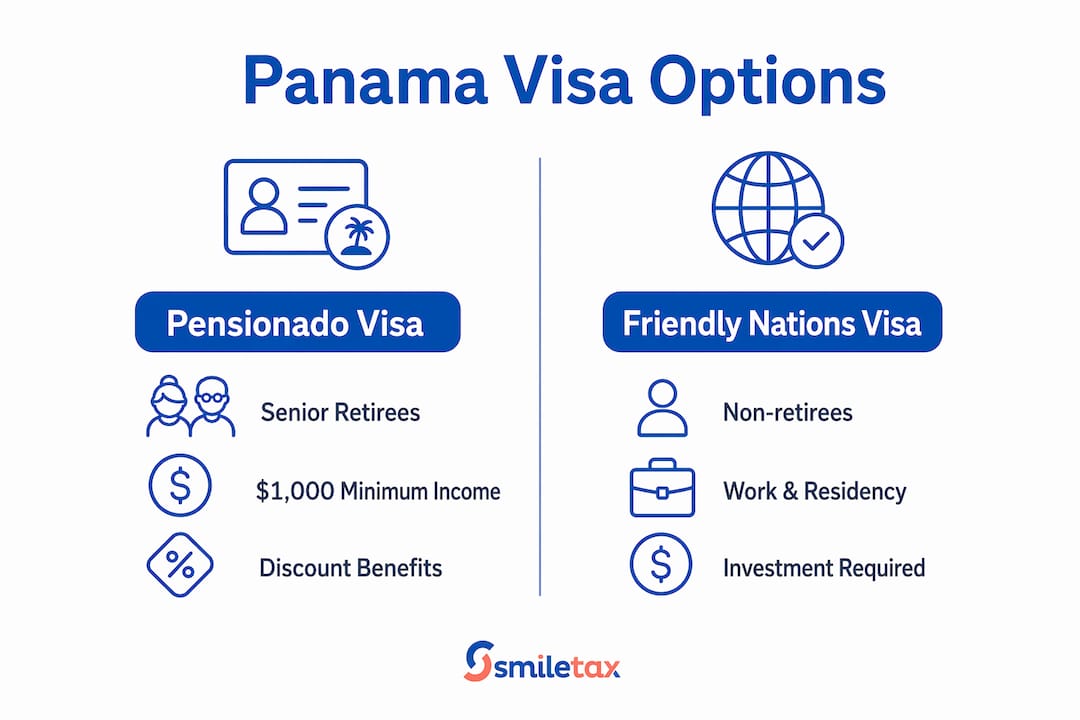
Panama offers several clear residency pathways for Americans, and two stand out as the most practical for retirees and remote workers.
The Pensionado visa
The Pensionado visa is widely considered one of the most generous retirement programs in the Americas. It requires a minimum of $1,000 per month in pension income, a threshold that most US Social Security recipients exceed comfortably. In return, it grants permanent residency and a package of ongoing discounts.
Those discounts include:
- 25% off restaurant meals
- 15% off hospital bills
- 20% off medical consultations
- 50% off hotel stays on weekdays
- 25% off airline tickets
One practical detail worth knowing: Pensionado discounts are not applied automatically at the point of sale. You need to present your ID card proactively to receive them. This is a small habit that saves real money over time.
The Friendly Nations visa
The Friendly Nations visa suits Americans who are not yet retired or who do not have pension income. It targets citizens of countries with strong diplomatic and economic ties to Panama, and the US qualifies. Applicants can qualify through property purchase, a local bank deposit, or proof of employment with a Panamanian company. This visa also leads to permanent residency and is a popular route for remote workers and younger expats.
Digital nomad visa
Panama introduced a short-term digital nomad visa for remote workers employed by foreign companies. It allows stays of up to nine months and is renewable. It does not lead directly to permanent residency, but it gives remote workers a legal framework to live and work from Panama while evaluating a longer-term move.
Tip: Hire a reputable Panamanian immigration attorney before starting any visa application. Paperwork requirements change, and a local attorney prevents costly delays.
What is the cost of living in Panama for Americans?
Panama is not the cheapest country in Latin America, but it delivers high-value living for Americans because of its stability, dollarization, and strong infrastructure. Real savings come from local services and housing, not from across-the-board low prices on imported goods.
Monthly budget ranges
| Household | Panama City | Interior towns (e.g., Boquete) |
|---|---|---|
| Single person | $2,000–$3,000/month | $1,200–$1,800/month |
| Couple | $2,500–$4,000/month | $1,600–$2,500/month |
A single person living comfortably in Panama City typically spends $2,000–$3,000 per month, while couples generally need $2,500–$4,000. Interior towns like Boquete run 30–50% cheaper than the capital, making them attractive for retirees on fixed incomes.
What drives the biggest expenses?
- Housing: A modern one-bedroom apartment in Panama City neighborhoods like Punta Pacifica or Costa del Este rents for $800–$1,500 per month. In Boquete, similar quality runs $500–$900.
- Groceries: Local produce, meat, and dairy are affordable. Imported US brands cost close to US retail prices, so shopping at local markets cuts the bill significantly.
- Utilities: Air conditioning is the main cost driver in coastal cities. Expect $100–$200 per month in Panama City. Mountain towns like Boquete rarely need AC, keeping utility bills low.
- Transportation: Public buses cost under $1 per ride. Taxis and ride-share apps are inexpensive. Owning a car adds fuel and insurance costs but is manageable.
- Dining out: Local restaurants serve full meals for $5–$10. International restaurants in upscale neighborhoods cost more, closer to US prices.
Because Panama uses the US dollar, no currency conversion fees apply to your spending. Your budget stays predictable month to month, which is a genuine advantage over countries where exchange rate swings can erode purchasing power.
How does healthcare work in Panama for American expats?
Healthcare in Panama is one of the strongest arguments for choosing the country over other expat destinations. Private hospitals in Panama City offer quality care at a fraction of US costs, and English-speaking doctors are widely available in major urban centers.
Hospital Punta Pacífica, affiliated with Johns Hopkins Medicine, is the most recognized private hospital in Panama City. It attracts medical tourists from across the region and maintains international accreditation standards. For expats, having access to a Johns Hopkins-affiliated hospital at local prices is a meaningful advantage.
Typical costs for American expats:
- Private health insurance (couple): $150–$400 per month
- Doctor consultation: $30–$80 per visit
- Specialist visit: $60–$150 depending on specialty
- Overall cost savings vs. the US: 60–80% less expensive for comparable private care
Private insurance is not optional for most expats. Panama’s public healthcare system (the CSS, or Caja de Seguro Social) is available to residents who contribute through employment, but it is not designed for expat use. Private insurance gives you access to the best private hospitals and eliminates out-of-pocket uncertainty.
Tip: Compare international health insurance plans designed for expats alongside locally issued Panamanian private plans. Local plans are often cheaper but may not cover you outside Panama. For a full breakdown of your options, the expat health insurance guide at SmileTax covers the key differences.
What is Panama’s climate like and how does it shape daily life?
Panama’s climate divides into two main zones, and the one you choose shapes your daily routine, housing costs, and wardrobe more than almost any other factor.
- Tropical coastal climate (Panama City and beach towns): Hot and humid year-round, with temperatures averaging 86–90°F. The dry season runs from december through april, bringing clear skies and lower humidity. The rainy season runs from may through november, with heavy afternoon showers that typically clear by evening. Air conditioning is a necessity, not a luxury, in coastal areas.
- Mountain climate (Boquete, El Valle, Cerro Azul): Temperatures stay in the 60–75°F range year-round, earning Boquete the nickname “City of Eternal Spring.” Rainfall is more frequent but lighter. Air conditioning is rarely needed, which cuts utility bills and makes outdoor living comfortable in any month.
- Pacific beach towns (Coronado, Pedasi, Azuero Peninsula): Hot and dry during the dry season, with strong Pacific breezes that make the heat bearable. Popular with expats who want beach access without Panama City prices.
- Caribbean coast (Bocas del Toro): Warm and very wet, with rain distributed more evenly across the year. The Caribbean side attracts a younger, more adventurous expat crowd and has a distinct Afro-Caribbean cultural character.
The climate you prefer should guide your region choice before you consider anything else. Retirees with respiratory conditions or heat sensitivity consistently report better quality of life in the mountains. Active remote workers who want urban infrastructure tend to choose Panama City despite the heat.
What American expat communities exist in Panama?
Panama has one of the most established American expat networks in Latin America, and that network makes the transition from the US far smoother than moving to a country where you are starting from scratch.
The main expat hubs each have a distinct character:
- Panama City: The largest expat population, concentrated in neighborhoods like El Cangrejo, Clayton, and Albrook. Strong professional networks, international schools, English-language services, and direct flights to the US make it the default choice for remote workers and families.
- Boquete: The largest concentration of American and Canadian retirees in Panama. The town features organized social clubs, English-language churches, volunteer organizations, and the well-known Tuesday Market, a weekly gathering where expats shop, socialize, and connect with new arrivals.
- Coronado: A Pacific beach community about 90 minutes from Panama City. Popular with retirees who want beach access, a slower pace, and proximity to the capital’s medical facilities.
- Azuero Peninsula: Less developed and more authentically Panamanian than Boquete or Coronado. Attracts expats who want to integrate more deeply into local culture rather than live within a primarily English-speaking bubble.
Engaging with expat social activities like Boquete’s Tuesday Market accelerates social integration and dramatically improves quality of life in the first year. Isolation is the most common reason expats struggle after a move. Showing up to community events consistently solves that problem faster than any other approach.
For Americans comparing Panama against other destinations, the best countries for Americans to retire abroad resource offers a useful side-by-side perspective on what each country offers.
Key takeaways
Panama delivers a high-value lifestyle for American expats through its dollar economy, accessible Pensionado and Friendly Nations visas, affordable private healthcare, and strong expat communities in both urban and mountain settings.
| Point | Details |
|---|---|
| Dollar economy advantage | No currency conversion fees; your US income and savings hold their value directly. |
| Pensionado visa accessibility | A $1,000/month pension qualifies most Social Security recipients for permanent residency and discounts. |
| Regional cost differences | Interior towns like Boquete cost 30–50% less than Panama City for comparable comfort. |
| Healthcare affordability | Private insurance for couples runs $150–$400/month, with doctor visits at $30–$80 each. |
| Community integration | Boquete’s Tuesday Market and organized social clubs are the fastest path to building a social life. |
Panama is worth it, but go in with clear eyes
Panama consistently ranks near the top of retirement destination lists, and the reasons are real. The dollar economy removes a genuine source of financial stress. The Pensionado visa is one of the most accessible retirement residency programs anywhere. The healthcare quality at private hospitals is legitimately good.
That said, a few misconceptions trip up Americans who move without doing the homework. Panama is not cheap across the board. Imported goods, international restaurants, and upscale neighborhoods cost close to US prices. The savings are real, but they come from local produce, local services, and housing, not from a wholesale reduction in your cost of living. Expecting everything to be cheap leads to budget surprises in the first few months.
The region you choose also matters more than most people realize. Moving to Panama City for the urban energy and then discovering you hate the heat is a fixable mistake, but it costs time and money. Visiting Boquete, Coronado, and Panama City before committing to a lease is the single best investment you can make before the move.
Finally, Americans living in Panama remain subject to US tax reporting obligations regardless of where they reside. That reality should be part of your financial planning from day one. It does not have to be complicated, but ignoring it creates problems that are far harder to fix later. The common mistakes Americans make abroad resource at SmileTax covers this and other first-year pitfalls worth reading before you pack.
Your US taxes, handled while you live in Panama
Moving to Panama simplifies a lot of things. US tax filing is not one of them, but it does not have to be stressful either. Americans living abroad are still required to file a US return each year, and the rules for expats have specific requirements that generic tax software often handles poorly. SmileTax works directly with Americans living overseas, including retirees and remote workers in Panama, to handle US filing accurately and without drama. Every client works with an experienced US tax professional, not a call center or automated system. If you want your US filing handled properly while you focus on enjoying life in Panama, SmileTax was built for exactly that situation.
FAQ
What is the minimum income needed for the Pensionado visa?
The Pensionado visa requires a minimum of $1,000 per month in pension income. Most US Social Security recipients qualify without additional documentation.
How much does a couple need to live comfortably in Panama?
A couple living in Panama City typically needs $2,500–$4,000 per month. In interior towns like Boquete, the same comfort level costs $1,600–$2,500 per month.
Do Americans need private health insurance in Panama?
Private health insurance is strongly recommended. Panama’s public system is not designed for expat use, and private coverage for a couple costs $150–$400 per month, far less than comparable US premiums.
What is the best area in Panama for American retirees?
Boquete is the most popular choice for American retirees, offering a mild mountain climate, a large English-speaking expat community, and organized social activities. Coronado suits those who prefer beach access close to Panama City.
Does Panama use the US dollar?
Yes. Panama’s official currency is the balboa, but the US dollar circulates freely and is accepted everywhere. There are no currency conversion fees for Americans living or spending in Panama.