

Why Taiwan works so well for American expats
Taiwan delivers something rare: a genuinely affordable, safe, and well-organized life that Americans can step into without years of planning. As of 2026, around 11,232 American citizens call Taiwan home, drawn by low living costs, world-class public healthcare, and a visa system that actively courts skilled foreign workers. Whether you’re an English teacher eyeing your first overseas post or a tech professional looking to stretch your salary further, the fundamentals here are hard to argue with.
The core case for living in Taiwan as an American comes down to a few concrete facts:
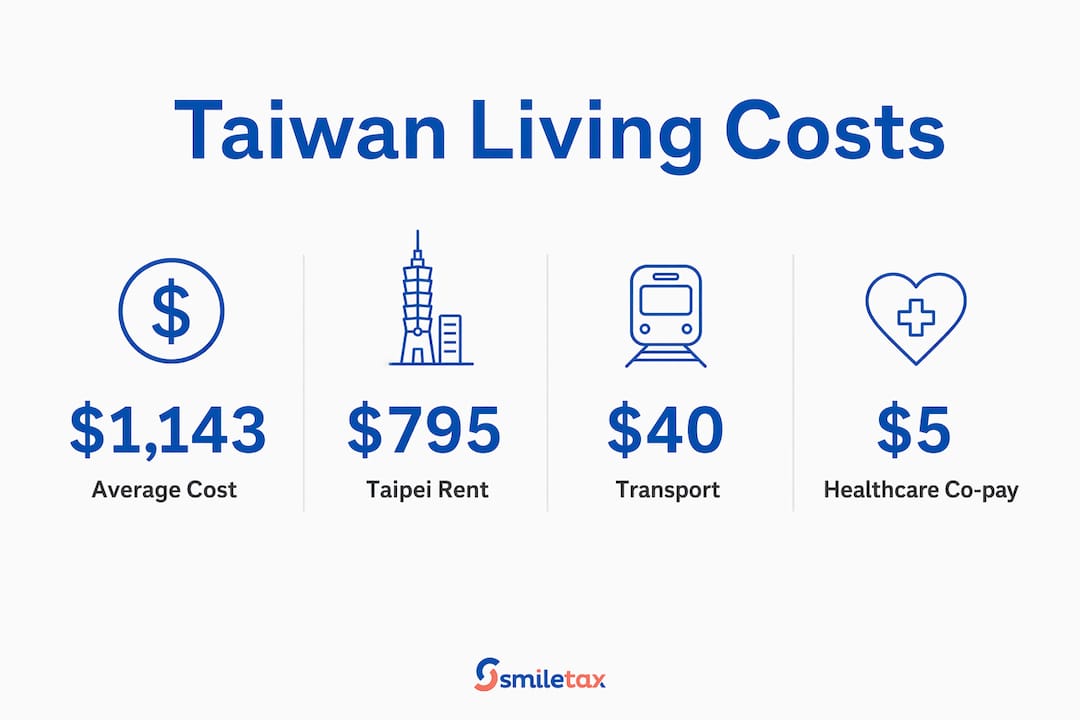
- Cost of living: A single person in Taiwan spends around $1,143 per month including rent, well below what most American cities demand.
- Healthcare: Taiwan’s National Health Insurance (NHI) system charges a premium rate of 5.17%, with co-pays for doctor visits running about $5.
- Visa options: Americans can qualify for an Alien Resident Certificate (ARC) through employment, the Employment Gold Card for skilled professionals, or the newer Digital Nomad Visitor Visa.
- Safety: Taipei consistently ranks among the safest cities worldwide, making it a comfortable landing spot for families and solo movers alike.
- Infrastructure: Fast, reliable internet and an efficient public transit network make daily life genuinely convenient.
The process of settling in takes some paperwork and patience, but the payoff is a high quality of life at a fraction of what you’d spend back home.
How much does it actually cost to live in Taiwan?
Taiwan’s cost of living sits comfortably below the global median. Overall monthly costs average $1,143, which is 14% below the global median of $1,336. That figure includes rent, and it covers a realistic, comfortable lifestyle rather than a bare-bones one.
Rent and housing
Rent is the biggest variable. A central one-bedroom apartment in Taipei averages around $795 per month, while the national average across all cities sits at $451. Move to Taichung or Kaohsiung and you’ll typically pay 25–35% less than Taipei prices for comparable space. Chang-hua, one of the most affordable cities in the country, comes in at just $310 per month for a central one-bedroom.
| Expense category | Taipei (monthly) | Outside Taipei (monthly) |
|---|---|---|
| 1BR apartment, city center | ~$795 | $310 |
| Groceries | — | — |
| MRT/bus monthly pass | ~$40 | $40 |
| Utilities + internet | — | — |
| Dining out (mid-range) | — | — |
Day-to-day expenses
Groceries, transit, and dining out are all genuinely affordable. A monthly transit pass on Taipei’s MRT runs about $40, and that covers most of your commuting needs without a car. Night market meals and local lunch spots cost just a few dollars per meal. Cooking at home keeps grocery bills low, while eating out regularly is still far cheaper than in any major American city.
For a single American expat, a comfortable monthly budget in Taipei lands in the $1,200–$1,800 range including rent. Outside Taipei, that same lifestyle often costs noticeably less.
Healthcare costs after NHI enrollment
Once you’re enrolled in the NHI system, healthcare costs drop sharply. Doctor visits carry a co-pay of roughly $5, and most prescriptions and specialist visits are covered at low cost. The NHI premium rate is 5.17% of your insured salary, which most employers split with you. For Americans used to paying hundreds of dollars a month for health coverage, this is one of the most pleasant surprises of life in Taiwan.
What American expats should know about Taiwanese culture
Taiwan’s culture rewards patience and curiosity. The social fabric here is shaped by Confucian values, which means respect for elders and awareness of social hierarchy matter in ways that can catch Americans off guard. Calling someone by their first name immediately, or being blunt in a disagreement, can read as rude even when no offense is intended.
Social norms and daily life
Taiwanese people tend to be warm and genuinely helpful to foreigners, but social interactions often follow unspoken rules. Saving face matters. Direct confrontation is generally avoided, and a polite, indirect approach works better in most situations. Gift-giving is common and appreciated, especially when visiting someone’s home for the first time.
Food is central to daily life in a way that goes beyond just eating. Night markets like Shilin in Taipei and Liuhe in Kaohsiung are social spaces as much as dining ones. Locals gather there in the evenings, and joining in is one of the fastest ways to feel at home. Street food is cheap, varied, and genuinely excellent.
Language landscape
Mandarin is the primary language, and while English is widely spoken in Taipei’s expat neighborhoods, international schools, and tech hubs, you’ll hit a wall quickly once you step outside those zones. Menus, apartment listings, government forms, and local shops often operate entirely in Mandarin or Traditional Chinese characters.
Tip: Learning even 200–300 basic Mandarin phrases transforms daily life. Apps like HelloChinese or Pimsleur are solid starting points, and many community centers in Taipei offer affordable group classes for foreigners.
Building a social life
American expats often find that community comes faster than expected, especially in Taipei. InterNations hosts regular events across Taiwan, connecting American expats in cities like Taipei, Hsinchu, and Kaohsiung. English-speaking Facebook groups, local running clubs, and international church communities also provide easy entry points. For English teachers especially, the school community itself often becomes a ready-made social network within weeks of arrival.
Visa and residency options for Americans in Taiwan
Taiwan does not offer a simple tourist-to-resident pathway, but it does have several well-defined routes for Americans who qualify. Understanding which visa fits your situation saves months of confusion.
Alien Resident Certificate (ARC)
The ARC is the standard long-term residency document for foreigners living in Taiwan. Most Americans obtain it through employer sponsorship, which means your employer files the paperwork with the National Immigration Agency on your behalf. English teachers at licensed schools and tech professionals hired by Taiwanese companies typically go this route. The ARC ties your residency to your employment, so changing jobs requires updating your status.

Employment Gold Card
The Employment Gold Card is the most flexible option for skilled Americans. It combines four permits into one document: a visa, work permit, resident certificate, and re-entry permit. The qualification threshold is a monthly salary of NT$160,000 (or equivalent in your field), and the application is done entirely online through the Gold Card portal. The fee runs about $120, and processing typically takes 4–8 weeks. Gold Card holders qualify for NHI immediately upon enrollment, unlike most other visa categories.
Key Gold Card benefits:
- Open work permit: you can work for any employer or freelance without additional permits
- Immediate NHI eligibility
- Valid for up to three years, renewable
- Spouse and dependents can accompany you under the same application
Digital Nomad Visitor Visa
Taiwan launched a Digital Nomad Visitor Visa for remote workers who want to live in Taiwan while working for foreign employers. It allows stays beyond the standard 90-day visa-exempt period. One important limitation: Digital Nomad Visitor Visa holders are not eligible for NHI enrollment, so you’ll need private international health insurance for the duration of your stay. This visa suits Americans who want to try Taiwan for six months to a year without committing to full residency.
What Taiwan does not offer
Taiwan currently has no retirement visa and no passive income visa. If you’re not employed, self-employed in a qualifying field, or running a business, long-term legal residency is difficult to obtain. Retirees and those living on investment income face real limitations here, and it’s worth planning around that reality before you commit to a move.
Common visa questions:
- Can I stay in Taiwan on a tourist visa indefinitely? No. Americans get 90 days visa-free, but extensions are limited and “visa runs” are increasingly scrutinized.
- Does the Gold Card let me freelance? Yes. It’s an open work permit, so you can take on multiple clients or employers without additional paperwork.
- How long before NHI kicks in on a standard ARC? Generally six months from the date your residency is established, unless you hold a Gold Card.
Where should you live in Taiwan?
Taiwan is compact enough that no city is truly inconvenient, but the right location depends heavily on your priorities. Taipei is the obvious anchor for most American expats, but it’s not the only option worth considering.
City-by-city overview
Taipei is where most of the action is. The expat community is largest here, English is most widely spoken, and the job market for English teachers and tech professionals is strongest. Monthly costs run higher than elsewhere, with total expenses for a single person averaging $1,497 per month. The MRT system covers most of the city efficiently, and neighborhoods like Da’an, Xinyi, and Zhongshan offer a mix of international restaurants, coworking spaces, and green parks.
Taichung sits in the center of the island and offers a slower pace with lower costs. The arts scene is active, cycling infrastructure is excellent, and the weather is slightly warmer than Taipei. A growing number of international schools and tech companies have established a presence here.
Kaohsiung is Taiwan’s second-largest city and the most affordable of the major urban centers. It has a port-city energy, excellent street food, and a light rail system that makes getting around easy. The expat community is smaller than Taipei’s but tight-knit.
Tainan is the cultural and historical heart of Taiwan. Costs are the lowest of the four major cities, and the food scene is widely considered the best in the country. It’s a strong choice for teachers and those who prefer a quieter, more local lifestyle.
| City | Monthly cost (single person) | Expat community | English job market |
|---|---|---|---|
| Taipei | $1,200–$1,800 | Large | Strong |
| Taichung | Lower than Taipei | Medium | Growing |
| Kaohsiung | Affordable | Medium | Moderate |
| Tainan | Lowest | Small | Limited |
Housing practicalities
Finding an apartment in Taiwan as an American takes more effort than back home. English-language listings on platforms like 591.com.tw tend to carry a markup compared to local Mandarin listings. Getting help from a Taiwanese colleague or a local real estate agent who speaks English can save you real money and spare you from signing a lease you don’t fully understand. Most leases run 12 months, and landlords typically ask for one to two months’ deposit upfront.
Older apartments often lack central heating, which matters more than you’d expect. Taiwan’s winters are mild but humid, and indoor temperatures in unheated apartments can feel colder than the thermometer suggests. A portable electric heater is a standard purchase for first-year expats.
Practical insights for settling into life in Taiwan
The first few months in Taiwan involve a learning curve, but Americans who approach it with some preparation tend to settle in quickly. The administrative steps are front-loaded; once they’re done, daily life becomes genuinely easy.
Building your network
For English teachers and tech professionals, professional networks form fast. InterNations is the most established expat networking platform in Taiwan, with active groups in Taipei, Hsinchu, and Kaohsiung. Beyond that, Meetup.com hosts regular English-language events, and Facebook groups like “Expats in Taipei” have tens of thousands of members sharing housing tips, job leads, and local recommendations.
Tech workers in particular benefit from Taiwan’s thriving startup and semiconductor ecosystem. Hsinchu, home to the Hsinchu Science Park, has a dense concentration of tech companies and a smaller but active expat professional community.
Healthcare enrollment and supplemental insurance
NHI enrollment is straightforward once your residency is established, but the six-month waiting period on a standard ARC leaves a gap. During that window, private international health insurance is a practical necessity. After enrollment, NHI covers the vast majority of medical needs at very low cost. For Americans who want coverage closer to what they’re used to at home, supplemental private insurance is available and relatively affordable. The health insurance options for expats abroad guide covers both NHI and private alternatives in detail.
Weather and housing adjustments
Taiwan’s climate varies significantly by region and season. Taipei gets hot and humid from May through September, with typhoon season running June through October. Winters are mild but damp. Air conditioning is standard in most apartments; central heating is not. Budget for a dehumidifier as well as a heater, especially if you’re renting an older unit. Mold can be an issue in poorly ventilated apartments during the wet season, so checking ventilation before signing a lease is worth the extra time.
Tip: The administrative effort of the first three months, getting your ARC, opening a bank account, registering your address, and enrolling in NHI, feels like a lot at once. Build a checklist and tackle one item per week. Once it’s done, you’ll rarely think about it again.
Education options for families with children in Taiwan
Taiwan is a genuinely family-friendly destination, and the education options for American children are better than most expats expect. The choice comes down to three main paths: international schools, bilingual schools, and local Taiwanese schools.
International schools
International schools are the most common choice for American families. They teach in English, follow curricula like the American Common Core or International Baccalaureate (IB), and offer a familiar social environment for kids who are new to the country. Taipei has the highest concentration, including well-regarded institutions affiliated with major international school networks. Tuition runs high, typically in the range of $15,000–$25,000 per year, so it’s worth confirming whether your employer offers an education allowance as part of your package.
The Taipei European School is one example of a well-established international institution in the city, though American families typically gravitate toward schools with English-medium American or IB programs.
Bilingual and local schools
Bilingual schools offer instruction in both English and Mandarin, which appeals to families who want their children to gain real language fluency. Costs are lower than full international schools, and the social integration with Taiwanese peers tends to be deeper. Local public schools are free and high-quality by global standards, but instruction is almost entirely in Mandarin, which makes them a realistic option only for children who already have some language foundation or families planning a long-term stay.
For families relocating for a year or two, international or bilingual schools are the practical choice. For those committing to five or more years, a bilingual or local school path can give children a genuine bilingual advantage.
How safe is Taiwan for Americans?
Taiwan is one of the safest places in the world for Americans to live. Crime rates are low, violent crime against foreigners is rare, and the general social environment is orderly and respectful. Taipei in particular ranks consistently among the safest cities globally, and that reputation holds up in day-to-day experience.
Emergency services
Emergency services in Taiwan are reliable and well-organized. The emergency number is 119 for fire and ambulance, and 110 for police. Response times in urban areas are fast. Hospital emergency departments are equipped to handle serious cases, and NHI covers emergency treatment once you’re enrolled. Before enrollment, having private insurance that covers emergency care is important.
English-speaking staff are available at major hospitals in Taipei, including National Taiwan University Hospital and Taipei Veterans General Hospital. Outside major cities, English availability in hospitals drops, so carrying a translation card with your medical history and any known conditions is a practical precaution.
Natural hazards
Taiwan sits in an active seismic zone and experiences regular earthquakes, most of them minor. Typhoons affect the island from june through october, occasionally causing school and office closures. The government’s emergency alert system sends warnings directly to mobile phones, including those with foreign SIM cards. Knowing your building’s evacuation plan and keeping a small emergency kit at home are standard practices for long-term residents.
Getting around Taiwan: transportation and commuting
Taiwan’s public transportation system is one of the best arguments for living here. It’s affordable, punctual, and covers the island thoroughly enough that most expats never need a car.
Taipei MRT and city transit
The Taipei MRT is the backbone of daily commuting in the capital. It’s clean, air-conditioned, and runs from early morning until midnight. A monthly pass costs about $40, covering unlimited MRT and bus rides within the city. The EasyCard, Taiwan’s reloadable transit card, works on MRT, buses, YouBike (the city’s bike-share system), and even some convenience stores.
Buses fill in the gaps the MRT doesn’t reach, and the network is dense enough that most neighborhoods have frequent service. Uber operates in Taipei and other major cities as well, offering a convenient backup for late nights or trips to less-connected areas.
Intercity travel
Taiwan High Speed Rail (THSR) connects Taipei to Kaohsiung in about 90 minutes, making weekend trips between cities genuinely easy. Regular train service (TRA) covers the east coast and smaller towns that the high-speed line doesn’t reach. For most intercity travel, the train is faster and more comfortable than driving.
Driving and scooters
Scooters are the dominant personal vehicle in Taiwan, and many expats eventually get one. A Taiwanese driver’s license is required, and Americans can convert their US license without taking a full driving test, though the process involves a written exam and a visit to the Motor Vehicles Office. Scooters are cheap to run and park, and they open up parts of the island that public transit doesn’t reach easily.
Driving a car in Taipei is generally not worth the trouble. Parking is expensive and scarce, traffic can be heavy, and the MRT covers most destinations more efficiently. Outside Taipei, a car or scooter becomes more useful, especially for exploring rural areas or the east coast.
Key Takeaways
Living in Taiwan as an American in 2026 is practical, affordable, and well-supported by a visa system that rewards skilled workers with genuine flexibility and access to excellent public healthcare.
| Point | Details |
|---|---|
| Cost of living | A single person in Taiwan spends $1,200–$1,800 per month including rent, below the global median. |
| Healthcare access | NHI covers most medical needs at a 5.17% premium rate and ~$5 co-pays; Gold Card holders qualify immediately. |
| Visa options | ARC via employment, Employment Gold Card for skilled professionals, and Digital Nomad Visitor Visa are the main routes for Americans. |
| Best cities for expats | Taipei offers the largest expat community and strongest job market; Taichung, Kaohsiung, and Tainan offer lower costs and a quieter pace. |
| SmileTax support | SmileTax handles US tax filing for Americans living in Taiwan, so your stateside obligations stay current while you focus on life abroad. |
Your US taxes, handled while you live in Taiwan
Living abroad doesn’t pause your US filing obligations, and Taiwan’s expat life moves fast enough that tax paperwork can easily slip down the priority list. SmileTax was built for exactly this situation: Americans living and working overseas who need their US returns filed accurately, by a real tax professional who understands expat realities, without the cost or impersonal service of a large firm.
Whether you’re teaching English in Taipei, working in tech in Hsinchu, or freelancing on a Gold Card, SmileTax offers expert tax planning services for American expats tailored to your situation. Every client works directly with an experienced professional. No generic software, no handoffs. If you want your US obligations handled with confidence while you get on with life in Taiwan, SmileTax is ready to help.