

Vietnam is one of the most affordable and culturally rich destinations for American expats, offering a high quality of life at a fraction of US costs. Living in Vietnam as an American means navigating a distinct visa landscape, absorbing a deeply rooted culture, and choosing between the electric energy of Ho Chi Minh City, the historic charm of Hanoi, and the beach-town ease of Da Nang. For teachers and digital nomads especially, the combination of low costs, fast internet, and vibrant urban life is hard to match anywhere in Southeast Asia. The catch is that visa rules are evolving fast, and cultural integration takes genuine effort.
What does living in Vietnam as an American actually cost?
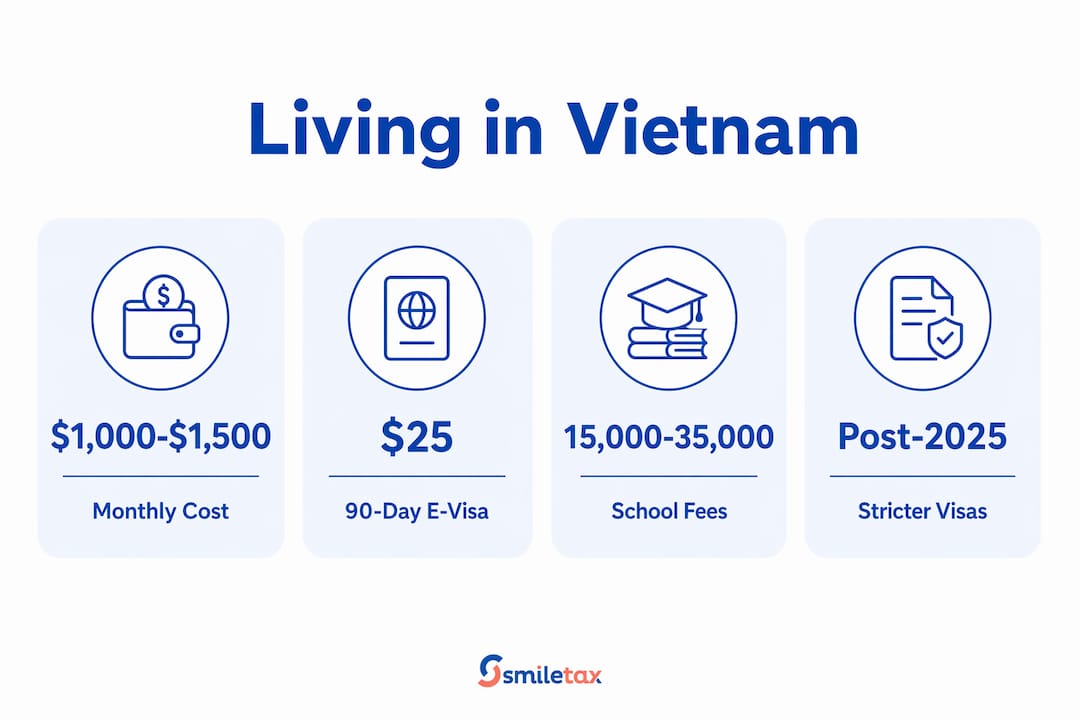
A comfortable expat lifestyle in Ho Chi Minh City, Hanoi, or Da Nang runs between $1,000 and $1,500 per month. That figure covers rent, food, transport, utilities, and basic health insurance. Lean budgets start closer to $600–$900 monthly, while expats who favor Western restaurants, international gyms, and serviced apartments can easily spend $2,000 or more.

Here is a realistic monthly cost breakdown for a single American expat:
| Expense | Budget range |
|---|---|
| Rent (1-bedroom apartment) | $350–$800 |
| Food (mix of local and Western) | $200–$400 |
| Transport (motorbike or ride apps) | $30–$80 |
| Utilities and internet | $50–$100 |
| Health insurance | $80–$150 |
| Total estimate | $710–$1,530 |
Housing varies the most. A modest local-style studio in a residential neighborhood costs far less than a modern serviced apartment in a central expat district. Da Nang consistently ranks as the most affordable city of the three, while Ho Chi Minh City offers the richest urban experience at a slightly higher price point.
Food is where Vietnam genuinely shines. Street food meals cost $1–$3, and a bowl of pho or banh mi from a local stall is both excellent and filling. Western-style cafes and restaurants are plentiful in expat neighborhoods, but eating out at them daily adds up fast.
Healthcare deserves a separate mention. Private international clinics in major cities are well-equipped and staffed by English-speaking doctors. Costs are a fraction of US prices, but expats should carry private health insurance rather than rely on the public system. A standard doctor visit at a reputable private clinic typically runs $30–$60 without insurance.
Families face one significant additional cost. International and private schools charge between $15,000 and $35,000 per child annually. That single line item reshapes the entire family budget and deserves careful planning before committing to a move.
Tip: Budget conservatively in your first year. Lifestyle creep causes expat spending to rise from $1,500 to $3,500 per month within 18 months as Western comforts gradually replace local habits. Starting lean gives you room to adjust.
How do visa options affect Americans living and working in Vietnam?
Vietnam’s visa system is the single biggest practical challenge for American expats. The primary entry option is a 90-day e-visa, which costs $25 and takes about three business days to approve. The critical limitation is that the 90-day e-visa cannot be extended inside Vietnam. When it expires, you must leave the country and re-enter on a fresh visa.
That exit-and-reentry process is called a visa run. Here is how it works in practice:
- Plan your exit date. The 90-day clock starts on your entry date, not your visa issue date. Mark it clearly.
- Choose a border crossing or flight. Common destinations for visa runs include Cambodia, Thailand, and Laos. Flights to Bangkok or Phnom Penh are frequent and affordable.
- Budget for the trip. Each visa run costs roughly $165–$285 when you factor in transport, accommodation, and fees. Amortized across four runs per year, that adds $70–$100 to your effective monthly cost of living.
- Apply for the new e-visa before you leave. The online application is straightforward, but apply at least five business days ahead to avoid delays.
- Re-enter Vietnam on the new visa. The cycle then resets.
The bigger concern is enforcement. Stricter immigration rules since 2025 have made the visa run model less reliable and less sustainable as a long-term strategy. Authorities have increased scrutiny of foreigners who appear to be working on tourist visas. The border-run approach is becoming obsolete for anyone planning a multi-year stay.
Work permits and business visas exist but carry complex, frequently changing requirements. Teachers at accredited international schools typically receive employer-sponsored work permits, which is the most stable legal path. Remote workers and freelancers face a grayer area. Working on a tourist visa carries real risk, and regulations can shift with little warning.
Tip: If you plan to stay longer than six months, consult a local immigration lawyer before you arrive. The rules change often, and a $150 consultation can save you from a costly overstay or forced departure.
What cultural differences should American expats understand?
Vietnamese culture is built around collective harmony, respect for hierarchy, and the concept of saving face. Avoiding public confrontation is not just polite; it is the social default. Raising your voice, expressing frustration openly, or correcting someone in front of others creates discomfort that can damage relationships permanently.
Key cultural norms every American expat should know:
- Deference to elders is non-negotiable. Offer your seat, greet older people first, and use respectful language. Vietnamese has a layered honorific system; locals appreciate any attempt to use it correctly.
- Saving face matters in every direction. Locals will often agree with you rather than admit they do not know something. Read between the lines and ask questions gently.
- Political topics are off the table. Vietnam’s one-party political system shapes daily life. Political expression is restricted, and internet access to certain platforms is limited. Expats who engage in political commentary online or in public can face serious consequences.
- Patience is a social currency. Bureaucratic processes move slowly. Frustration is understandable but rarely productive. A calm, respectful approach gets better results.
- Learning basic Vietnamese pays off immediately. Even ten phrases, including greetings, thank you, and numbers, signal respect and open doors. Locals respond warmly to foreigners who make the effort.
Engaging genuinely with local communities is the fastest path to real integration. Expats who treat Vietnam as a backdrop for their Western lifestyle tend to stay in expat bubbles. Those who attend local festivals, eat where locals eat, and build genuine friendships report far richer experiences.
Tip: Download a Vietnamese language app before you arrive and practice the tones daily. Vietnamese is tonal, meaning the same syllable has six different meanings depending on pitch. Even imperfect attempts earn significant goodwill.
What is daily life like for American teachers and digital nomads?
Ho Chi Minh City, Hanoi, and Da Nang each attract different types of expats. Ho Chi Minh City moves at a relentless pace with world-class restaurants, rooftop bars, and a dense coworking scene. Hanoi feels more traditional, with tree-lined streets, French colonial architecture, and a slower rhythm. Da Nang sits between beach and mountains, drawing surfers, cyclists, and remote workers who want space without isolation.
Daily life in any of these cities shares common threads:
- Motorbikes dominate the roads. Grab, the regional ride-hailing app, makes getting around cheap and easy without owning a vehicle. A cross-city ride rarely costs more than $2–$3.
- Coworking spaces are plentiful and affordable. Monthly memberships in Ho Chi Minh City and Hanoi run $80–$150, with fast fiber internet standard. Many cafes also offer reliable Wi-Fi and tolerate laptop workers for hours.
- Street food culture is a daily pleasure. Breakfast pho, banh mi for lunch, and grilled meats from a sidewalk stall for dinner is a genuinely satisfying and affordable routine.
- Expat social life is active. Facebook groups, expat meetups, and international school communities make it easy to build a social network quickly. Weekend trips to Ha Long Bay, Hoi An, or Mui Ne are common and inexpensive.
- Air quality is a real concern. Ho Chi Minh City and Hanoi both experience periods of poor air quality, particularly in dry season. Many expats use air purifiers at home and track AQI readings before outdoor exercise.
The pace of Vietnamese cities can feel overwhelming in the first few weeks. Traffic is dense and follows its own logic. Noise levels are high. The adjustment period is real, but most expats find their rhythm within a month.
Key takeaways
Living in Vietnam as an American offers genuine affordability and cultural depth, but visa unpredictability and lifestyle creep require honest planning from day one.
| Point | Details |
|---|---|
| Monthly cost range | A comfortable lifestyle costs $1,000–$1,500 monthly; families add $15,000–$35,000 per child for schooling. |
| Visa reality | The 90-day e-visa requires quarterly exit-and-reentry trips costing $165–$285 each. |
| Lifestyle creep risk | Expat budgets can rise from $1,500 to $3,500 monthly within 18 months without active management. |
| Cultural integration | Respecting hierarchy, saving face, and avoiding public confrontation are the foundations of social success. |
| Work permit path | Teachers at accredited international schools have the clearest legal work authorization route. |
What I have learned from watching Americans settle in Vietnam
Vietnam rewards the adaptable and frustrates the rigid. The expats who thrive long-term are not necessarily the ones with the biggest budgets or the most travel experience. They are the ones who treat visa uncertainty as a planning problem rather than a personal affront, and who invest time in understanding Vietnamese culture rather than working around it.
The cost of living advantage is real, but it is not automatic. Lifestyle creep is the quiet budget killer that catches most expats off guard. The first six months feel affordable because everything is new and local options feel exciting. By month twelve, the Western grocery store, the international gym membership, and the air-conditioned restaurant habit have quietly doubled the monthly spend. Tracking expenses from week one is not excessive caution. It is the difference between a sustainable life abroad and an expensive one.
On the visa front, the honest advice is this: do not build a life plan around the visa run model. It worked reliably for years, but enforcement has tightened and the rules keep changing. Anyone planning to stay in Vietnam for more than a year should be actively researching work permit eligibility or longer-term visa pathways, not assuming the quarterly exit trip will always be available.
The cultural learning curve is steeper than most Americans expect, and more rewarding than most anticipate. Vietnam has a history, a social fabric, and a set of values that are genuinely different from American norms. Approaching that difference with curiosity rather than judgment changes everything about the experience.
US taxes for Americans living in Vietnam
Living abroad does not end your US tax filing obligations, and Vietnam is no exception. SmileTax works specifically with Americans overseas, including teachers at international schools and digital nomads, to handle US filing accurately and without the stress of figuring it out alone. Every SmileTax client works directly with an experienced US tax professional. There is no generic software and no handoff to an unknown preparer. If you are building a life in Vietnam and want your US filing handled properly, SmileTax offers clear pricing and real human support built for exactly this situation.
FAQ
How much does it cost to live comfortably in Vietnam as an American?
A comfortable single-person lifestyle in Ho Chi Minh City, Hanoi, or Da Nang costs between $1,000 and $1,500 per month. Lean budgets start at $600–$900, while Western-heavy lifestyles can exceed $2,000.
What visa options are available for Americans living in Vietnam?
The primary option is a 90-day e-visa costing $25, which requires exit-and-reentry every 90 days. Work permits are available through employers, and teachers at accredited international schools typically receive employer-sponsored authorization.
Can Americans work remotely in Vietnam on a tourist visa?
Working on a tourist visa carries increasing legal risk following stricter enforcement since 2025. Remote workers should consult an immigration lawyer and explore work permit or business visa options for long-term stays.
What are the biggest cultural adjustments for Americans in Vietnam?
Saving face, deferring to elders, and avoiding public confrontation are the most significant cultural shifts. Political topics are sensitive and restricted, and learning basic Vietnamese phrases significantly improves daily interactions.
Is healthcare good for expats in Vietnam?
Private international clinics in major cities offer quality care with English-speaking staff at costs well below US prices. Expats should carry private health insurance rather than relying on the public healthcare system.