

Belgium is one of the most practical relocation destinations in Europe for Americans, and the path forward is clearer than most people expect. The core legal pathway for working Americans is the Single Permit, a combined work and residence authorization processed through Belgium’s regional authorities. Start that application at least 4–6 months before your planned arrival date. Once you land, registering with your local municipality is the single most important first task. That registration unlocks your national registration number, which you need for everything from opening a bank account to accessing healthcare.
Here is what every American relocating to Belgium needs to know upfront:
- Visa timeline: Your Belgian employer initiates the Single Permit process. Give it 4–6 months minimum.
- Regional differences matter: Flanders, Wallonia, and Brussels each handle certain immigration procedures differently.
- Local registration is mandatory: You must register with your commune within a tight deadline after arrival.
- Cost of living: Brussels is significantly cheaper than New York, particularly for rent.
- Language: Belgium has three official language communities. Where you live determines which one dominates daily life.
- No digital nomad visa exists in Belgium. Remote workers need proper employment authorization.
This guide covers moving to Belgium from the US across every practical dimension: visas, housing, registration, regional culture, healthcare, banking, shipping, and transportation.
What are your visa and work permit options as a US citizen?
The Single Permit is the standard route for Americans taking up employment in Belgium. Introduced in 2019, it merges work authorization and residence into one application, which your Belgian employer submits to the relevant regional authority. Processing takes longer than in neighboring countries, so the 4–6 month lead time is not a suggestion.
How the Single Permit works
- Your employer files the application with the regional authority (Brussels, Flanders, or Wallonia, depending on where the company operates).
- The regional authority reviews the labor market test and approves or denies the work component.
- The federal immigration office then processes the residence component.
- Once approved, you apply for a long-stay D visa at the Belgian embassy or consulate in the US.
- You enter Belgium on the D visa and complete registration at your local commune.
Other pathways worth knowing
Professional Card: If you are self-employed or freelancing, this is your route. Processing typically takes 3–4 months. You will also need to register with a social insurance fund and pay quarterly social contributions.
EU Blue Card: Available for highly qualified non-EU professionals meeting a minimum salary threshold. It functions similarly to the Single Permit but is specifically designed for skilled workers and carries some additional mobility rights within the EU.
No digital nomad visa: Belgium does not offer a dedicated remote work visa. Working remotely while on a tourist or visa-free stay is legally unclear and carries real risks. You cannot access healthcare, open a bank account, or claim any legal protections without proper authorization. For legitimate remote work, you need either a Professional Card or a Single Permit.
US citizens can visit Belgium visa-free for up to 90 days within a 180-day period under the Schengen Area rules. That clock starts the moment you enter any Schengen country, not just Belgium.
Key documents you will need for the Single Permit application:
- Valid US passport (at least 12 months remaining validity)
- Signed employment contract with your Belgian employer
- Proof of qualifications (diplomas, transcripts, professional certifications)
- Apostilled birth certificate and, if applicable, marriage certificate
- Criminal background check from the FBI or relevant state authority
- Passport-size photos meeting Belgian specifications
Tip: Belgium’s immigration system varies by region, and processing timelines differ between Flanders, Wallonia, and Brussels. Ask your employer’s HR team which regional authority handles your permit and confirm the specific document requirements for that region before you compile your file.
What does it actually cost to move to and live in Belgium?
Moving from the US to Belgium is a real financial commitment. Sea freight is the most common and affordable shipping method, with costs varying significantly depending on the size of your shipment and specifics of your move. Air freight is faster but priced by weight, making it practical only for essentials.
Monthly cost of living snapshot
Brussels is the reference point for most American expats, and the numbers are encouraging if you are coming from a major US city. Rent for a one-bedroom apartment in the city center runs around $1,157 per month, compared to over $4,000 in New York. Americans relocating from New York can expect to save more than 38% on overall cost of living, with rent prices roughly 71% lower.
| Expense | Brussels | New York | Houston |
|---|---|---|---|
| Meal at an inexpensive restaurant | — | — | — |
| Pint of beer | — | — | — |
| Dozen eggs | — | — | — |
| Single public transport ticket | $2.55 | — | — |
| 1-bedroom apartment, city center | $1,157 | over $4,000 | — |
Source: Sirelo cost of living comparison data
Housing by region
Brussels is the most international option and the most expensive. Expats working for EU institutions, NATO, or multinational corporations tend to cluster in neighborhoods like Ixelles, Etterbeek, and Uccle. English is widely spoken, and the international community is large enough that settling in feels manageable from day one.

Flanders (Antwerp, Ghent, Leuven) offers a lower cost of living than Brussels with excellent quality of life. Antwerp in particular has a thriving expat scene and strong English proficiency. Ghent is popular with academics and young professionals.
Wallonia (Liège, Namur, Charleroi) is the most affordable region. French is the dominant language, and the pace of life is noticeably slower. Liège has a university city energy that appeals to some expats.
Apartment searching can start remotely via Immoweb.be, Belgium’s main property platform. The market moves more slowly than Amsterdam or London, so remote viewings via video call are increasingly common and accepted by landlords.
- Budget for a security deposit of two to three months’ rent
- Most leases are three-year contracts with a break clause at year one or three
- Furnished apartments exist but carry a premium, typically 20–30% above unfurnished rates
- Utility setup (gas, electricity, water) requires 4–6 weeks’ lead time; internet takes 6–8 weeks
How do you register locally and get your national registration number?
Your national registration number is the key that unlocks Belgian life. Without it, you cannot open a bank account, register with a health insurance fund, or set up utilities in your name. The process starts at your local commune (municipality) and follows a set sequence.
The registration sequence:
- Arrive at the commune’s population register desk with your passport, proof of address (rental contract), and your D visa or Single Permit documentation
- Complete the household registration form
- Receive a confirmation of registration
- A local police officer will visit your declared address to verify that you actually live there. This is standard procedure for all new residents, not an investigation. The visit typically happens within two weeks of registration.
- Once the police confirm your residency, the commune issues your national registration number
- Your electronic identity card (eID) follows, usually within a few weeks of receiving the number
Non-EU nationals must complete this process promptly after arrival. The legal deadline for registering a change of address is eight working days. Missing it creates downstream delays across every other administrative task.
Regional differences in practice
Belgium’s immigration procedures vary between Flanders, Wallonia, and Brussels. The core steps are the same, but the specific forms, language of communication, and processing speeds differ. Brussels communes tend to have longer wait times due to higher demand. Flemish communes often communicate in Dutch, even with foreign residents, so having a translation ready helps. Walloon communes operate in French.
Documents requiring apostille and professional translation before you leave the US:
- Birth certificate
- Marriage certificate (if applicable)
- Divorce decree (if applicable)
- Criminal background check
- Educational diplomas (if required for your work permit)
The apostille must be obtained from the US Secretary of State’s office in the state where the document was issued. Translation must be done by a certified translator recognized in Belgium.
Tip: Prepare your apostilled documents before you leave the US. Belgian administration relies heavily on physical paper documents, and waiting for apostilles after arrival adds weeks of delay to every subsequent step.
What is daily life like across Belgium’s three language regions?
Belgium has three official language communities, and where you live determines the language of your daily life. This is not a minor detail. It shapes your commute, your children’s schooling, your interactions with local government, and your social circle.
Dutch (Flemish) is spoken in Flanders, which covers the northern half of the country and includes Antwerp, Ghent, Bruges, and Leuven. Flemish Belgians generally have strong English skills, particularly in cities, but making an effort to learn basic Dutch goes a long way socially and professionally.
French dominates Wallonia in the south and is one of the two main languages of Brussels. If you are based in Brussels or working for EU institutions, French is the language you will encounter most in formal settings, restaurants, and daily errands.
German is spoken in a small eastern region bordering Germany. Very few American expats settle there, but it is worth knowing it exists.
Brussels is genuinely multilingual. The city’s multicultural environment draws people from across the world, and English functions as a practical working language in international organizations, corporate offices, and much of the service sector. Still, greeting someone in the local language (bonjour in French-speaking areas, goeiedag in Flemish areas) before switching to English is a small gesture that Belgians genuinely appreciate.
Practical cultural notes for Americans:
- Work culture tends toward consensus and collaboration, with decisions made more slowly than in US corporate environments
- Punctuality is expected in professional settings
- Belgians value privacy and personal space; friendships develop more gradually than in the US
- Work-life balance is taken seriously, with generous vacation time and strong labor protections
- The food culture is a genuine highlight: Belgian cuisine goes far beyond waffles and chocolate, with a strong tradition of local markets, seasonal cooking, and neighborhood restaurants
For social integration, expat networks like InterNations operate actively in Brussels, Antwerp, and Ghent. International schools often serve as community anchors for families, and many EU institutions run their own social and cultural programs.
How does healthcare work, and what are the schooling options?
Belgium’s healthcare system ranks among Europe’s best. Coverage is universal and mandatory. Once you have your national registration number, you register with a mutuelle (health insurance fund), which handles reimbursements for medical expenses. The system works on a reimbursement model: you pay the doctor or specialist upfront, then claim back a portion from your mutuelle. For a standard GP visit, reimbursement typically covers around 75% of the set tariff.
Unlike the US system, pre-existing conditions cannot affect your coverage or costs. You can also see any doctor or specialist directly without a referral, which many Americans find refreshing. For health insurance enrollment details specific to Americans abroad, the process starts as soon as your national number is issued.
Key healthcare steps after arrival:
- Register with a mutuelle as soon as you receive your national registration number
- Arrange interim private health insurance to cover the waiting period before mutuelle coverage activates (this can take up to six months)
- Register with a local GP (called a huisarts in Flemish areas, médecin traitant in French areas)
- Pharmacies are widely available and operate on a prescription system similar to the US
Schooling options for families
Belgium offers both local public schools and a strong network of international schools, particularly in Brussels. The International School of Brussels is one of the most established options for English-speaking families, offering an international curriculum from early years through secondary. Tuition at international schools is significant, and many employers with expat packages cover it.
Local Belgian schools are free and high quality, but instruction is in the regional language (Dutch in Flanders, French in Wallonia). For children who will be in Belgium long-term, local schooling accelerates language acquisition and social integration. For shorter assignments, international schools offer continuity and an English-language environment.
Belgium’s central location is one of its most practical lifestyle advantages. Paris is 1 hour 22 minutes by Thalys train. London is 2 hours by Eurostar. Amsterdam, Cologne, and Luxembourg City are all reachable in under two hours. Weekend travel across Europe is genuinely easy from Brussels.
Document preparation: what experts know that first-timers miss
The most common source of delay in Belgian relocations is document preparation, specifically apostilles and certified translations that were not obtained before departure. Belgian administration relies on physical documents, and the system does not make exceptions for paperwork that is “in progress.”
Critical documents to prepare before leaving the US:
- FBI criminal background check (apostilled at the US Department of State)
- Birth certificate (apostilled at the issuing state’s Secretary of State office)
- Marriage or divorce certificates if applicable (apostilled)
- University diplomas and transcripts if required for your work permit
- Certified translations of all apostilled documents into French, Dutch, or German depending on your region
Timing the Single Permit correctly is the other major pitfall. Your employer must initiate the application, but you need to provide your documents promptly. Any gap in your document file resets the clock. Build in buffer time for FBI background checks, which can take 8–12 weeks.
Common mistakes Americans make:
- Assuming the digital nomad visa exists and planning around it
- Underestimating commune wait times in Brussels, which can run several weeks for an initial appointment
- Not arranging internet service early enough. Providers need 6–8 weeks to process a new connection, and being offline in your first week creates real problems.
- Bringing a US-registered vehicle without researching the homologation process, which is time-consuming and expensive
- Forgetting to arrange interim health insurance for the gap before mutuelle coverage activates
Tip: Keep a dedicated folder (physical and digital) logging every interaction with Belgian authorities: dates, names, reference numbers, and copies of everything submitted. When a file goes quiet, you have a paper trail to follow up with.
Your practical checklist for the move to Belgium
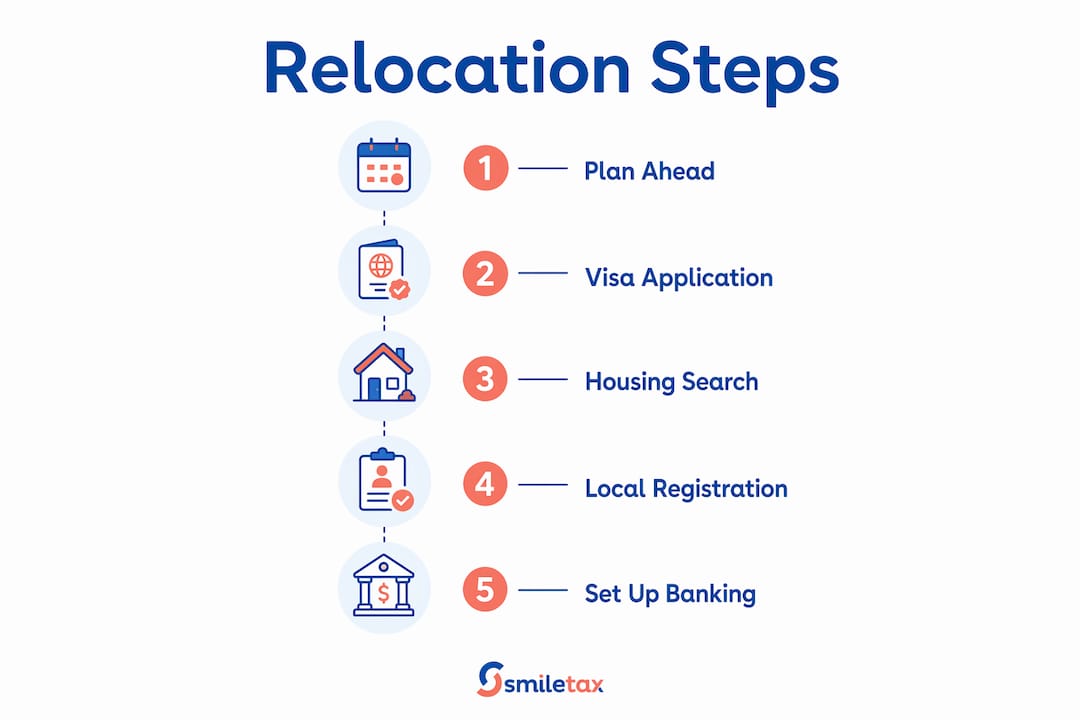
Getting the sequence right matters more than getting everything done at once. Here is a realistic timeline.
4–6 months before arrival:
- Confirm your employer has initiated the Single Permit application
- Begin apostille process for all required US documents
- Research neighborhoods and start remote apartment search on Immoweb.be
- Research international schools if you have children and begin inquiry process
2–3 months before arrival:
- Secure housing and sign your rental contract
- Book international shipping (sea freight from the US takes 4–8 weeks via the Port of Antwerp-Bruges)
- Arrange interim health insurance for the gap period
- Open a Wise or N26 account for international transfers during the setup period
4–6 weeks before arrival:
- Arrange utility setup (gas, electricity, water)
- Order internet service. This is the one most people leave too late.
- Confirm your D visa has been issued at the Belgian embassy
Week 1 after arrival:
- Register at your local commune within eight working days
- Arrange temporary accommodation if permanent housing is not yet ready
- Begin the police residency check process
Weeks 2–4 after arrival:
- Receive national registration number after police confirmation
- Open a Belgian bank account
- Register with a mutuelle for health insurance
- Apply for your eID
Belgium rewards Americans who prepare carefully. The bureaucracy is real, but it is navigable. The quality of life, the central location, and the international community make it one of the most genuinely livable countries in Europe for US expats.
How to set up banking in Belgium as an American
Opening a Belgian bank account requires your national registration number, so banking setup happens in weeks 2–3 after arrival, not before. The main retail banks are BNP Paribas Fortis, KBC, ING Belgium, and Belfius. All four operate English-language services and have branches across the country.
The process is straightforward once you have your number. You will need your passport, your national registration number, and proof of address. Most banks can open an account within a few days of your visit. For a detailed walkthrough of opening a bank account as an American abroad, the process has a few US-specific considerations worth understanding before you walk in.
For the gap period before your Belgian account is active, a Wise or N26 account opened before departure handles international transfers and daily spending without excessive fees. Wire transfers from your US bank to a Belgian account are straightforward once both accounts are active, though exchange rates and transfer fees vary. Wise typically offers better rates than traditional bank wire transfers for USD to EUR conversions.
Belgian banks do not charge monthly fees for basic accounts in the same way US banks often do. Direct debit is the standard payment method for rent, utilities, and subscriptions. Set this up as soon as your account is active to avoid missed payments during your first month.
Tax obligations for Americans living in Belgium
US citizens are required to file US federal tax returns regardless of where they live. Living in Belgium does not end your US filing obligation. Belgium and the United States have a bilateral tax treaty that prevents double taxation, and most Americans in Belgium find that Belgian taxes paid offset their US liability.
Belgium’s income tax rates are among the highest in Europe. The Impatriate Special Tax Status (IESSP), introduced in january 2022, allows qualifying expats to receive a portion of their compensation tax-free, which can significantly reduce the effective rate for those who qualify. Eligibility requires meeting specific criteria around prior residency and salary thresholds.
For Americans working locally in Belgium, the intersection of Belgian and US tax obligations is genuinely complex. SmileTax works specifically with Americans abroad who need their US filing handled accurately and without unnecessary complexity. If you are working on the local economy in Belgium, understanding what you owe and to whom is the starting point.
Shipping your belongings and understanding customs rules
Sea freight via the Port of Antwerp-Bruges is the standard route for Americans shipping household goods from the US. Transit time runs 4–8 weeks. Air freight is available for essentials and takes 3–7 days, but costs are based on weight and add up quickly for anything beyond documents and small valuables.
Household goods may qualify for duty-free import under Belgium’s Transfer of Residence relief, provided you have owned and used the items for at least six months. You apply for this exemption through Belgian Customs and must provide documentation proving ownership and the duration of use. Without this exemption, standard EU import duties and VAT apply.
Practical customs notes:
- Non-EU vehicles require homologation (technical compliance testing), registration through the DIV (Vehicle Registration Authority), and Belgian insurance before they can be driven legally
- Pets traveling from the US need a microchip, rabies vaccination, and a specific health certificate issued by a USDA-accredited veterinarian
- Standard EU prohibitions apply to certain food products, plants, weapons, and products derived from endangered species
- Major international moving companies with established Belgian operations include Gosselin, Allied Pickfords, Crown Relocations, and AGS
Get at least three quotes from international movers and confirm whether the price includes customs clearance assistance. Some companies handle the Transfer of Residence paperwork as part of their service; others charge separately.
Getting around Belgium: public transit and vehicle registration
Belgium’s public transportation network is genuinely good, particularly by American standards. The national rail operator SNCB/NMBS connects all major cities with frequent service. Brussels, Antwerp, Ghent, and Liège all have tram and bus networks. A single public transport ticket in Brussels costs around $2.55, and monthly passes offer significant savings for daily commuters.
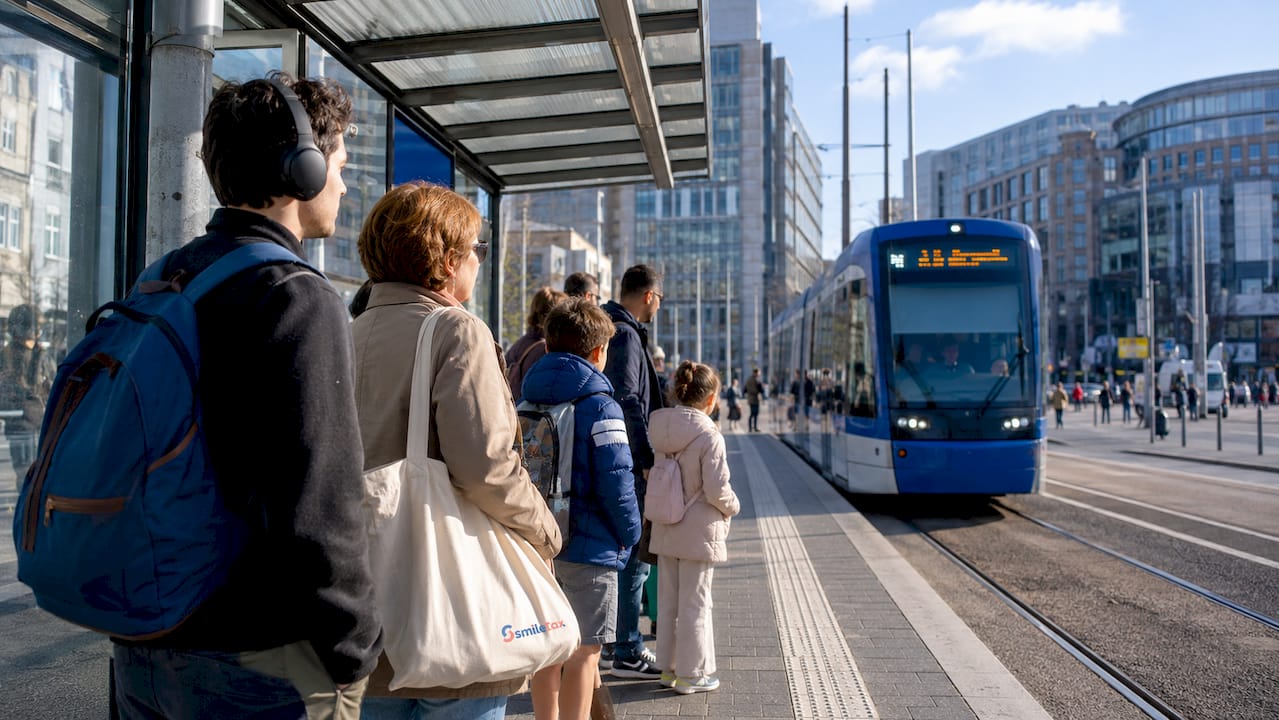
Within Brussels, the metro, tram, and bus network covers most neighborhoods efficiently. The STIB/MIVB app handles trip planning and ticket purchase. For travel between cities, the SNCB app or website handles rail bookings. Thalys and Eurostar services for Paris and London require separate booking.
Driving in Belgium is common outside Brussels, where parking is limited and expensive. A US driving license is valid for the first six months after you register as a resident. After that, you must exchange it for a Belgian license. Exchange agreements exist between Belgium and the US, meaning most Americans can exchange without retaking a driving test, but you should confirm the current process with your commune since procedures can vary.
If you bring a US-registered vehicle, budget time and money for the homologation process. EU-registered vehicles transfer with far less friction. Many expats find it simpler to sell their US vehicle before departure and purchase or lease a car in Belgium after arrival.
SmileTax keeps your US filing on track while you build your life in Belgium
Americans in Belgium still carry a US tax filing obligation every year, regardless of how long they have lived abroad. For most expats working locally, the combination of Belgian taxes and US filing requirements sits in exactly the space where generic software falls short and large accounting firms feel like overkill.
SmileTax works with Americans living and working abroad, including those employed locally in Belgium, to handle US filing accurately and without drama. Every client works directly with an experienced US tax professional. No handoffs, no generic software, no guesswork. If you are settling into life in Belgium and want your US tax filing handled by someone who understands the expat reality, SmileTax was built for exactly that situation.
Key Takeaways
Moving to Belgium from the US requires starting the Single Permit process at least 4–6 months before arrival, registering with your commune within eight working days of landing, and working through a clear sequence of administrative steps to unlock banking, healthcare, and residency.
| Point | Details |
|---|---|
| Single Permit timeline | Your employer must initiate the application 4–6 months before your planned arrival date. |
| Local registration is mandatory | Register at your commune within eight working days; this triggers your national registration number. |
| Cost advantage over major US cities | Brussels rent runs around $1,157/month for a city-center one-bedroom, versus over $4,000 in New York. |
| Internet setup lead time | Order internet service 6–8 weeks before arrival to avoid being offline in your first week. |
| SmileTax for US filing | Americans in Belgium still file US returns annually; SmileTax handles expat filing with direct professional support. |