

Italy has a way of making relocation sound simple. Cobblestone streets, fresh pasta, and a slower pace of life. But Americans who have actually made the move know the reality is richer and more complicated than the fantasy. This moving to Italy from the US lifestyle cost and culture guide covers what you genuinely need to know before you pack your bags: realistic budget figures for 2026, the administrative steps that gate your access to healthcare and services, and the cultural adjustments that catch most Americans off guard. No glossing over the hard parts.
Table of Contents
- Key takeaways
- Visas, residency, and healthcare access
- Cost of living breakdown for 2026
- Cultural adjustments Americans should expect
- Choosing where to live in Italy
- What the move really demands of you
- Staying on top of your US obligations while living in Italy
- FAQ
Key takeaways
| Point | Details |
|---|---|
| Residency unlocks services | Legal residency registration and a codice fiscale are required before you can access healthcare, banking, and most public services. |
| Budget for inflation volatility | Energy costs rose 9.6% and food 5.9% year-on-year in early 2026, so build flexibility into your first-year budget. |
| City choice shapes your costs | Monthly budgets range from €1,600 for singles in smaller towns to over €4,000 for families in major cities. |
| Culture shock is in the details | Daily rhythm, bureaucratic pace, and language nuance cause more friction than big cultural differences. |
| Integration takes time | Expect 3 to 6 months for administrative settling and up to 12 months for genuine social integration. |
Visas, residency, and healthcare access
The first thing to understand about life in Italy for US citizens is that your legal status determines almost everything else. You can stay visa-free for 90 days, but anything beyond that requires a formal residency process. Most Americans who relocate long-term apply for either an Elective Residency Visa (for those with passive income or savings) or a work-related permit. Both require documentation prepared before you leave the US, so plan well ahead.
Once in Italy, you register your residence at your local municipality (the comune). This step is not optional. Residency documentation gates access to nearly every public service, and even authorized visa holders can face delays if their registration is incomplete. The process involves presenting your lease or property documents, passport, and visa, and then waiting for a local police verification visit to your address.
Your codice fiscale (Italy’s equivalent of a Social Security number) is the other non-negotiable. You can get this from the Italian Consulate before you leave the US, and you should. Without it, you cannot sign a lease, open a bank account, or register with a doctor.
Healthcare access follows a similar logic. Access to Italy’s SSN (Servizio Sanitario Nazionale) requires both legal residency and municipal registration. Once enrolled, you choose a general practitioner from a local list and receive free primary care. Specialist visits and diagnostics involve modest co-payments. Wait times for specialists can be long, particularly in southern regions, where public healthcare quality varies more noticeably than in the north.
Many American expats carry private health insurance for the first several months while their residency registration processes, and some continue with a private plan long-term for faster specialist access and English-language support.
- Apply for your visa at the Italian Consulate in the US at least 3 months before your move date
- Get your codice fiscale before departure if at all possible
- Bring certified copies of all documents, not originals
- Register at your comune within 8 days of arrival as required by Italian law
- Budget for private health insurance during the administrative gap period
Tip: Ask your landlord or a local relocation agent to accompany you to the comune registration appointment. Language barriers and procedural quirks at municipal offices are real, and having someone familiar with the process saves significant time.
Cost of living breakdown for 2026
Getting your budget right before you move is the single most practical thing you can do. The good news is that Italy is meaningfully more affordable than most major US cities. The more nuanced reality is that costs vary sharply by region, and 2026 inflation has made some categories less predictable than they used to be.
Italy’s consumer price inflation hit 2.7% year-on-year in April 2026, but that headline number hides the detail that matters most to new arrivals. Energy costs rose 9.6% and food prices climbed 5.9%. These are exactly the categories that fluctuate most in your first months before you establish routines and find local markets.
Housing costs by city
Rent is your largest fixed expense and, once under contract, generally more stable than utilities or groceries. Here is what you can expect in major cities based on current market data:
| City | Average rent per m² | One-bedroom city center |
|---|---|---|
| Milan | €22.8/m² | €1,400–€1,800/month |
| Florence | €20.7/m² | €1,200–€1,600/month |
| Rome | €18.7/m² | €1,100–€1,500/month |
| Bologna | ~€16/m² | €900–€1,300/month |
| Naples | ~€11/m² | €600–€900/month |
Rental prices in smaller towns and rural areas can drop significantly further, with comfortable apartments available for €400 to €700 per month in parts of Calabria, Sicily, and Abruzzo.
Monthly budget overview
Beyond rent, a single person’s monthly expenses excluding housing run approximately $1,041 (around €950 to €1,000). For a family of four, non-rent costs average around €3,662 per month. Full budget estimates including rent look like this:

| Household type | Smaller city/town | Major city (Rome, Milan) |
|---|---|---|
| Single person | €1,600–€2,000/month | €2,300–€3,200/month |
| Family of four | €3,200–€3,800/month | €4,000–€5,500/month |
These expat budget ranges reflect 2026 conditions. Utilities for a standard apartment run €100 to €200 per month depending on season, with winter heating costs pushing toward the higher end. Internet service typically costs €25 to €40 per month. Groceries for a single person average €200 to €300 monthly when shopping at local markets and supermarkets rather than specialty or imported goods stores.
Transportation in Italian cities is well-developed and affordable. Monthly transit passes in Rome or Milan cost €35 to €51. Many expats find a car unnecessary in city centers but useful for exploring smaller towns or rural areas.
Cultural adjustments Americans should expect
Understanding Italian culture for expats goes well beyond knowing that lunch is the main meal or that shops close in the afternoon. The adjustments that genuinely affect daily life are subtler and more persistent than most Americans expect.
Culture shock for Americans in Italy most often comes from small daily details rather than big cultural symbols. The pace of bureaucracy, the way time is perceived in social settings, and the unwritten rules of neighborhood life are where friction tends to build up.
A few realities worth knowing before you arrive:
- Meal times are non-negotiable social structures. Lunch runs from roughly 1:00 to 3:00 PM and dinner rarely starts before 8:00 PM. Eating at American hours marks you as a tourist immediately, and many restaurants will not seat you outside these windows.
- Shops and offices close midday. The riposo (afternoon rest period) is still observed in most of Italy outside major tourist centers. Plan your errands around it.
- Relationships precede transactions. Italians build trust slowly. Your landlord, doctor, and even your local shopkeeper will respond better to you once you have invested time in the relationship. Showing up, being consistent, and learning even basic Italian phrases accelerates this significantly.
- Bureaucracy moves at its own pace. Appointments get rescheduled. Documents need additional documents. This is not inefficiency in the American sense. It is a different relationship with time and process, and fighting it creates more stress than accepting it.
Language is the other major factor. English is spoken widely in tourist areas and by younger Italians in cities, but daily life in a neighborhood, at the comune, or with an older landlord will require Italian. Even basic conversational Italian changes your experience dramatically.
Tip: Enroll in an Italian language course before you move, even an online one. Arriving with 200 to 300 words of functional vocabulary reduces anxiety at every stage of the administrative process and opens doors socially that would otherwise stay closed for months.
Choosing where to live in Italy
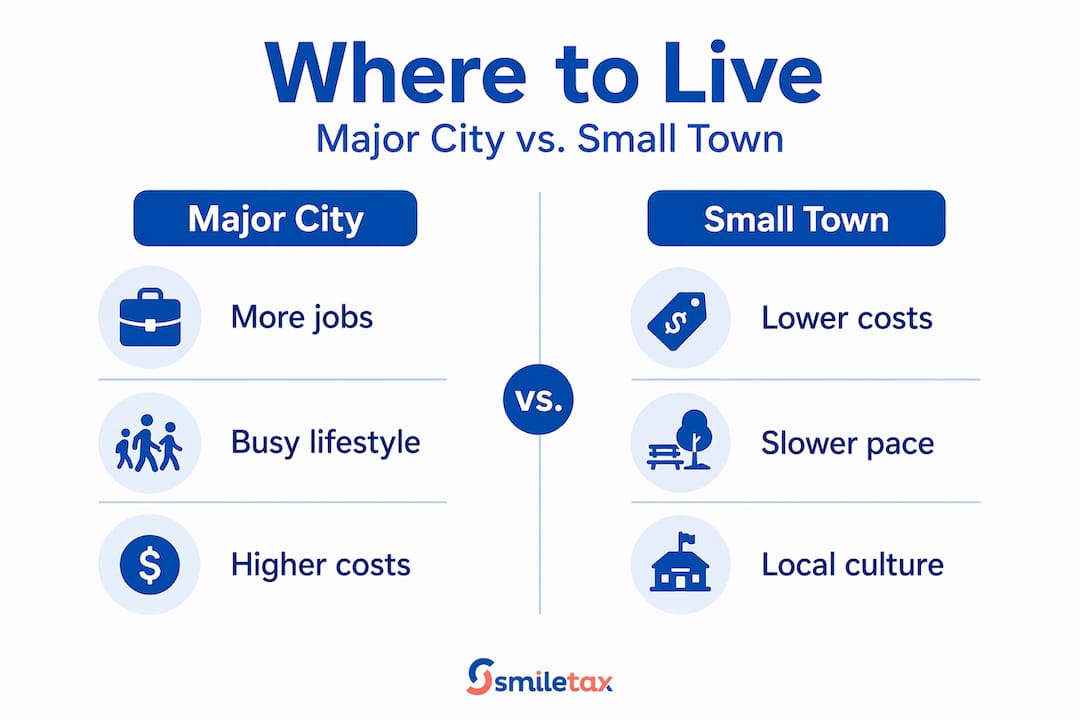
Location choice is one of the most consequential decisions in your Italy expat lifestyle guide, and it deserves more than a quick comparison of famous cities. Where you live shapes your cost of living, your social opportunities, and how quickly you integrate.
| City/Region | Best for | Key consideration |
|---|---|---|
| Milan | Career-focused expats, design/fashion industry | Highest costs; strong expat community |
| Rome | History lovers, families, diverse expat scene | Bureaucracy can be slower; traffic significant |
| Florence | Art, culture, smaller city feel | Tourist density affects daily life and prices |
| Bologna | University town, food culture, central location | Excellent quality of life; smaller English-speaking community |
| Naples | Authentic Italian experience, affordability | Adjustment curve steeper; strong local identity |
| Southern Italy/Sicily | Retirees, remote workers, maximum affordability | Fewer English speakers; slower services |
For families, schooling is a major factor. International schools exist in Rome, Milan, and Florence, offering English-language curricula that ease the transition for children. Smaller cities have fewer options, which may push families toward Italian public schools, a rewarding but linguistically demanding experience.
The most practical advice for anyone serious about moving to Italy from the US is to rent before you commit. Spend one to three months in your target city before signing a long-term lease. Neighborhoods vary enormously within cities, and what looks ideal on a map can feel very different at street level.
Administrative integration typically takes 3 to 6 months, with fuller social and lifestyle integration closer to 12 months. Choosing a location with an existing expat community, or at least a welcoming local community, shortens that timeline considerably.
What the move really demands of you
Moving to Italy from the US is genuinely rewarding, but it asks more of you than most lifestyle articles suggest. The administrative process is not a one-time hurdle you clear and then forget. It is an ongoing relationship with a system that operates on different assumptions than the American one.
The Americans who adapt most successfully tend to share a few traits. They treat bureaucratic setbacks as information rather than obstacles. They invest in language learning early and consistently. And they budget with real numbers rather than optimistic ones, particularly in the first 90 days when energy and food costs are most volatile and routines are not yet established.
The cultural adjustment is also cumulative. Small daily differences, the timing of meals, the pace of a conversation, the expectation that you will greet your neighbors by name, add up. They are not problems to solve. They are the texture of a different way of living, and learning to read them is what integration actually means.
Before you move, working through a thorough moving abroad checklist helps you catch the practical details that are easy to overlook when you are focused on the exciting parts of the transition.
Staying on top of your US obligations while living in Italy
Relocating to Italy does not end your responsibilities as a US citizen. Americans living abroad are still required to file US tax returns each year, regardless of where they live or work. This is one of the most commonly overlooked aspects of expat life, and it catches people off guard years into their move.
SmileTax works specifically with Americans living abroad, including retirees, remote workers, and locally employed professionals in Italy. If you need support with US tax filing abroad, SmileTax offers direct access to experienced US tax professionals who understand the realities of expat life. No generic software, no handoffs to unknown preparers. For those who want to talk through their specific situation before committing, expat tax consultations are also available. SmileTax exists for exactly the Americans that most firms overlook.
FAQ
How long can a US citizen stay in Italy without a visa?
US citizens can stay in Italy for up to 90 days without a visa under the Schengen Area rules. Stays beyond 90 days require a long-stay visa and formal residency registration.
What does it cost to live in Italy as an American expat in 2026?
A single person can expect to spend €1,600 to €2,300 per month in a mid-sized city, including rent. Families of four typically budget €3,200 to €4,000 or more, with higher costs in Rome and Milan.
Can Americans access Italy’s public healthcare system?
Yes, but only after completing residency registration and obtaining a codice fiscale. Once enrolled in the SSN, primary care is free, with small co-payments for specialists and diagnostics.
What are the biggest cultural differences Americans face in Italy?
Daily rhythm, meal timing, bureaucratic pace, and language are the most common adjustment points. Culture shock tends to come from small daily habits rather than large cultural differences.
Is it better to live in a major Italian city or a smaller town?
It depends on your priorities. Major cities offer larger expat communities, international schools, and more English speakers. Smaller towns and southern regions offer significantly lower costs and a more authentic local experience, but require stronger Italian language skills and more patience with limited services.