

Japan draws Americans in with vivid images: cherry blossoms, futuristic cities, and a culture so different it feels electric. But an American’s guide to living in Japan has to go beyond the postcard version. The daily reality involves navigating a housing system unlike anything back home, learning unspoken social rules that govern nearly every interaction, and building a life in a country where patience and humility matter more than confidence alone. Whether you are moving to Japan as an American for work, love, or adventure, the experience rewards those who go in with clear, honest expectations.
Table of Contents
- Key takeaways
- Cultural etiquette every American needs to know
- Housing in Japan: what Americans should expect
- Practical daily life: the essentials that catch people off guard
- Building your life: connections, community, and culture shock
- What long-term satisfaction in Japan actually requires
- Your US taxes do not stop when you move abroad
- FAQ
Key takeaways
| Point | Details |
|---|---|
| Cultural etiquette runs deep | Small behaviors like shoe removal and quiet public conduct signal respect and ease social acceptance. |
| Housing costs start high | Move-in costs in Japan can reach 4 to 6 months’ rent upfront due to key money and deposits. |
| Register within 14 days | New residents must register at their local municipal office to access health insurance and the My Number card. |
| Language takes real time | Conversational Japanese proficiency typically requires 18 to 24 months of dedicated study. |
| Integration beats assimilation | Thriving long-term means adapting to local rhythms while keeping your own identity intact. |
Cultural etiquette every American needs to know
Japan operates on a set of social norms that are rarely written down and almost never explained to newcomers. Most Americans living in Japan describe their first months as a cycle of small, surprising missteps. The good news is that most Japanese people are forgiving of foreigners who show genuine effort. The key is observing before acting.
Bowing replaces handshakes as the default greeting. You do not need to master the exact degree of bow for every situation, but a modest, sincere nod of acknowledgment goes a long way. Reciprocating a bow is more important than getting the angle perfect.
Shoes come off at the entrance of homes, many traditional restaurants, and some temples. The rule is simple: when you see a step up and a row of shoes by the door, yours come off too. Wearing clean socks every day becomes a practical habit, not a suggestion.
Gift-giving is woven into Japanese social life at a level most Americans do not expect. Bringing omiyage, which are small regional gifts, when visiting someone’s home or returning from a trip is standard practice. The wrapping often matters as much as the gift itself. Presenting something carelessly can send an unintended message.
Public behavior follows a quiet, considerate code. Talking loudly on public transit is frowned upon. Eating while walking is generally avoided in most urban neighborhoods. Queuing is treated with almost ceremonial seriousness. These are not rigid laws but strong social expectations, and ignoring them stands out.
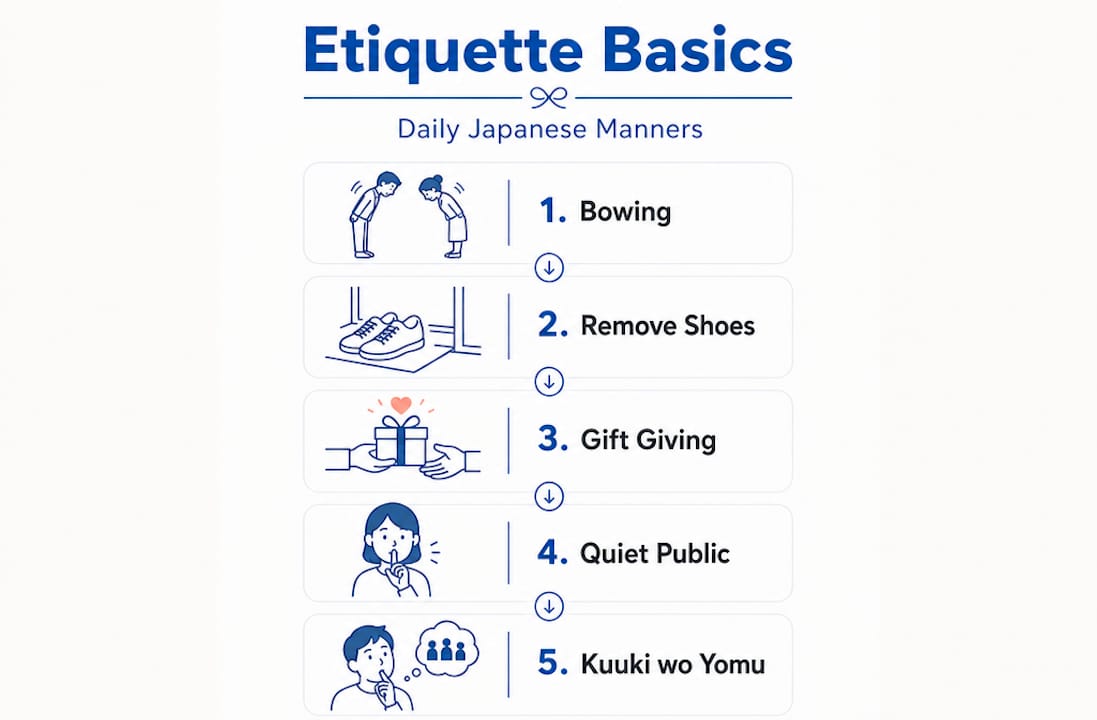
Perhaps the most important concept for Americans to understand is kuuki wo yomu, which translates loosely as “reading the atmosphere.” It refers to picking up on the unspoken mood of a situation and adjusting your behavior accordingly. Americans are often raised to say what they mean directly. Japanese communication tends to work in the opposite direction. Learning to notice hesitation, silence, and indirect refusals will improve your relationships more than almost anything else.
As Japanese hospitality reflects, mutual consideration underpins most interactions. If you have dietary restrictions or specific needs, communicate them in advance rather than assuming accommodation in the moment.
Tip: Spend your first few weeks observing how people around you behave in public spaces, shops, and social settings before attempting to mirror it. Observation is the fastest teacher.
Housing in Japan: what Americans should expect
Finding an apartment in Japan as a foreigner is one of the most friction-filled parts of the entire move. It is not impossible, but going in without realistic expectations leads to real frustration.
The biggest shock for most Americans is the upfront cost. Japanese apartments typically require key money (reikin), which is a non-refundable payment to the landlord equal to one or two months’ rent, plus a refundable security deposit, a real estate agent fee, and the first month’s rent. Total move-in costs can reach four to six months’ rent before you have spent a single night there.
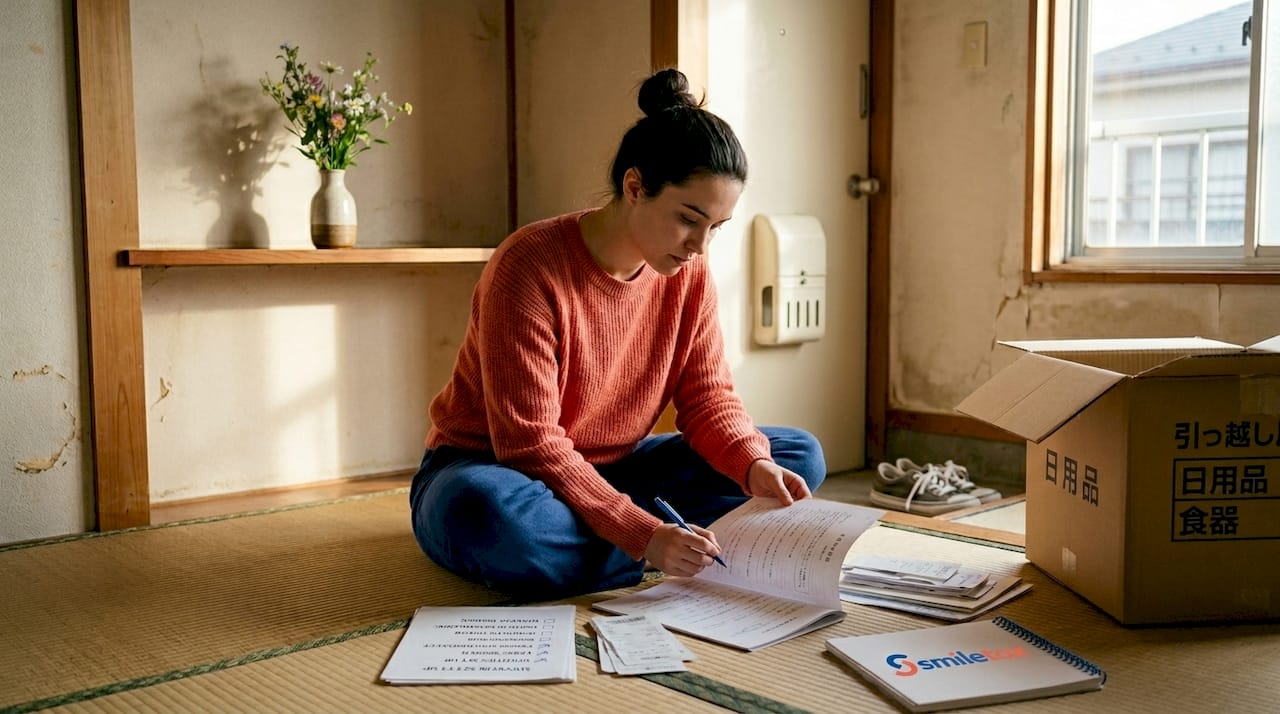
Beyond the cost, many apartments arrive completely bare. No stove. No light fixtures. No curtains. Many units lack basic appliances that Americans assume are standard. This means budgeting for a second wave of spending right after signing the lease.
Here is what to clarify before signing anything:
- What appliances are included, specifically whether there is a stove, air conditioning, and hot water unit
- Whether light fixtures are installed, since many apartments have bare wiring on the ceiling
- The exact dimensions of the unit, as Japanese square meters often include spaces like corridors and closets
- Guarantor requirements, since most landlords require a Japanese guarantor or a paid guarantor company if you do not have one
The guarantor question trips up many new arrivals. Most landlords want a Japanese national or resident to co-sign. If you do not have that connection, there are paid guarantor agencies that fill the role for a fee, and many real estate agents who work with foreigners can connect you with them.
Property in Japan is treated as a depreciating expense rather than an investment, which means renting is not just the practical choice for expats. It is also the financially sensible one, particularly for stays under ten years.
Tip: Confirm in writing exactly what is included in the apartment before signing the rental agreement. Walk through the unit with your agent and document every fixture, appliance, and fitting on arrival.
Practical daily life: the essentials that catch people off guard
Getting settled in Japan involves a set of administrative tasks that are easy to underestimate and surprisingly time-consuming. Working through them in the right order saves significant stress.
- Register your residence within 14 days. New residents must register at the local municipal office (shiyakusho or kuyakusho) within two weeks of arrival. This registration is the foundation for almost everything else, including enrolling in national health insurance, obtaining your My Number card, and opening a bank account.
- Enroll in national health insurance. Japan’s universal healthcare system covers residents, including foreigners on long-term visas. Enrollment happens at the same municipal office. Premiums are income-based, and the coverage is genuinely good, including dental for basic procedures.
- Open a bank account. Most major banks require your residence registration certificate and My Number card. Japan Post Bank (Yucho) is often the easiest option for newcomers and has branches in nearly every post office across the country.
- Set up utilities thoughtfully. Gas, electricity, and internet are separate contracts. Many providers have limited English support. Having a Japanese-speaking friend or colleague help with setup calls saves significant time and reduces errors.
- Learn survival Japanese before you arrive. Japanese public services at ward offices and hospitals often have limited English support, and achieving conversational fluency typically takes 18 to 24 months. Even basic phrases for numbers, directions, and polite requests make daily life considerably smoother in the early months.
- Prepare for the climate seriously. Japanese summers in most major cities are intensely humid, with Tokyo regularly reaching the mid to upper 30s Celsius. A quality air conditioner, lightweight clothing, and hydration habits matter more than most Americans anticipate before their first summer.
Building your life: connections, community, and culture shock
The cultural adjustment in Japan does not happen in a single moment of realization. It builds slowly, and it often gets harder before it gets easier. Many Americans describe a honeymoon period of excitement followed by a period of genuine isolation, particularly if they cannot yet communicate well in Japanese.
Authentic connection comes from long-term, respectful presence rather than tourist-style checklists. Joining a local sports club, taking a cooking class, or volunteering at a community event puts you into real situations where genuine relationships can form over time.
Here are the types of community connections that tend to work best for Americans in Japan:
- Language exchange groups, where you practice Japanese and help someone practice English. These are common in every major city and are genuinely two-way relationships.
- International community centers, which most large cities operate and which host events for both expats and locals.
- Neighborhood associations (chonaikai), which organize local cleanup events and festivals. Participating signals that you are a resident, not just a visitor.
- Online expat groups specific to your city, which offer practical help, housing leads, and social events for Americans living in Japan.
The risk most expats face is retreating into a foreign bubble, spending all their time with other Americans and never building any real local life. That is comfortable but ultimately leaves people feeling like permanent outsiders. Integration, not assimilation, is the goal. You do not need to become Japanese. You need to engage with genuine curiosity and respect while staying grounded in who you are.
Homesickness is real and does not follow a predictable schedule. Building even a few local routines, a favorite coffee shop, a regular market vendor who knows your name, creates the kind of small anchor points that make a place feel like home.
Tip: Small, consistent efforts in community engagement compound over time. Showing up regularly to the same places and events matters more than grand gestures of participation.
What long-term satisfaction in Japan actually requires
The Americans who thrive long-term in Japan are not the ones who master every etiquette rule in the first year. They are the ones who give up the need to feel comfortable quickly. Cultural adjustment takes longer than most guides suggest, and the temptation to measure progress by milestones, fluent Japanese by month six, a Japanese best friend by year one, leads to unnecessary frustration.
Patience is not a personality trait in this context. It is a skill that gets built through repeated small experiences of discomfort followed by gradual understanding. The expats who struggle most are often the ones with the highest initial enthusiasm, because enthusiasm without patience tends to burn out fast.
Maintaining your own identity matters as much as cultural respect. Japan is a country that values harmony and conformity, which can quietly pressure foreigners into abandoning parts of themselves that feel inconvenient. Keeping your American directness, your sense of humor, and your own social rhythms, while adapting your behavior to fit Japanese contexts, is the real balance that sustains people over years, not months.
The richest expat experiences come not from treating Japan as a backdrop for personal reinvention but from building steady, respectful relationships with the actual people who live there.
Your US taxes do not stop when you move abroad
Living in Japan is an incredible experience. The administrative side of being an American abroad, particularly US tax filing obligations, can feel like an unwelcome reminder that some ties to home do not simply disappear.
SmileTax works specifically with Americans living abroad who need their US tax returns handled accurately and without unnecessary complexity. Whether you are locally hired in Japan, working for a foreign employer, or teaching at an international school, SmileTax offers straightforward, personal support from experienced professionals who understand expat realities. Visit SmileTax to explore how they help Americans in Japan stay compliant with confidence.
FAQ
What is key money and do I have to pay it in Japan?
Key money (reikin) is a non-refundable payment to the landlord, typically equal to one or two months’ rent. It is a customary practice in Japan and is separate from the security deposit, meaning you do not get it back when you leave.
How soon do I need to register my address after arriving in Japan?
New residents are required to register within 14 days of moving into their residence at the local municipal office. This registration is required to access health insurance, open a bank account, and obtain your My Number card.
How long does it take to learn enough Japanese to manage daily life?
Reaching conversational proficiency for daily living typically takes 18 to 24 months of consistent study. Basic phrases for greetings, shopping, and directions can be learned much faster and make a meaningful difference from day one.
How do Americans find community and avoid isolation in Japan?
Language exchange groups, international community centers, and neighborhood associations are the most reliable paths to genuine connection. Consistent, respectful participation over time builds relationships far more effectively than one-off events or staying within expat-only circles.
Is it better to rent or buy property in Japan as an expat?
Renting is the practical and financially sensible choice for most expats. Japanese property depreciates rather than appreciates, and purchasing only makes sense if you plan to stay for more than ten years and are comfortable with the local property market.