
Living in South Korea as an American means navigating a highly organized, tech-forward society with its own distinct rules around visas, housing deposits, healthcare enrollment, and daily communication. This guide covers the practical realities that matter most: which visa gets you there legally, how the rental system actually works, what healthcare costs, and what daily life looks like once the novelty wears off. Whether you are heading to Seoul to teach English at an international school or relocating for a remote work arrangement, the information below gives you a clear picture of what to expect before you land.
What visa options do Americans have for living and teaching in South Korea?
The two most relevant visa categories for Americans are the E-2 teaching visa and the F-1-D workcation visa. Each serves a different type of expat, and choosing the wrong one creates real problems with your legal status, your ability to sign a lease, and your access to banking.
The E-2 teaching visa
The E-2 visa is the standard route for Americans hired to teach English in South Korea. It requires a bachelor’s degree, a clean criminal background check, a health check, and a signed contract with a Korean employer. Most international schools and language academies, known as hagwons, sponsor the visa directly. The visa is tied to your employer, which means changing jobs requires a new visa process. Duration is typically one year with annual renewals.

The F-1-D workcation visa
The F-1-D workcation visa requires a minimum annual income of $66,000 and allows a stay of up to two years. It targets remote workers who earn income from outside South Korea. This visa does not permit you to work for a Korean employer, so it suits digital nomads and location-independent professionals rather than teachers.
The Alien Registration Card
ARC processing takes 3–6 weeks after your appointment at the local immigration office. Every foreigner staying longer than 90 days must apply for the Alien Registration Card within that window. Without the physical card, you cannot open a full bank account, sign a standard lease, or access most government services. Plan your first weeks around getting this card. Delays are common, so apply as soon as you are eligible.
Tip: Book your ARC appointment at the nearest Hi Korea immigration office online before you arrive. Appointment slots fill up fast in Seoul, and a two-week wait is normal.
How does South Korean housing work for American expats?
South Korea’s rental system is unlike anything most Americans have encountered. Two structures dominate the market: jeonse and wolse. Understanding the difference before you start apartment hunting saves you from expensive surprises.
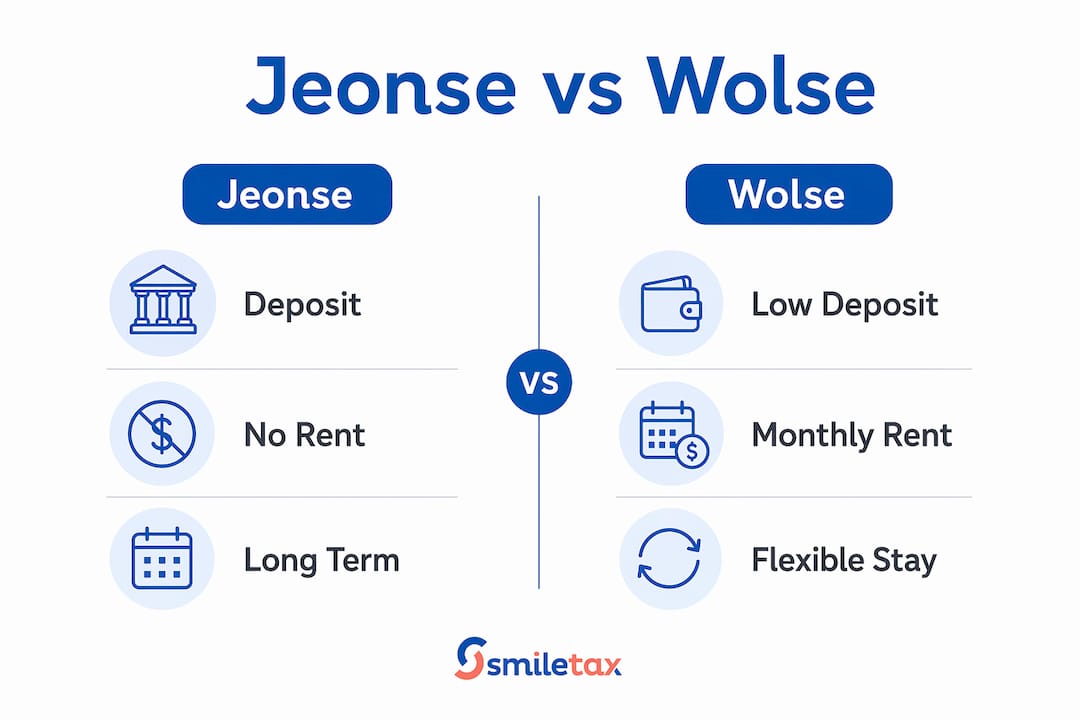
Jeonse vs. wolse: what Americans need to know
| Feature | Jeonse | Wolse |
|---|---|---|
| Deposit amount | 50–80% of property value | ₩5–20 million ($3,750–$15,000) |
| Monthly rent | None | ₩500,000–₩1,500,000 ($375–$1,125) |
| Practical for new expats? | Rarely | Yes |
| Typical contract length | 2 years | 1–2 years |
Jeonse requires a lump-sum deposit equal to 50–80% of the property’s value, with no monthly rent in return. The landlord uses your deposit as an interest-free loan. When the contract ends, you get the full amount back. For most new expats, this system is financially out of reach. A modest Seoul apartment under jeonse could require $100,000 or more upfront.
Wolse is the practical choice for American expats. You pay a smaller deposit, typically between ₩5 million and ₩20 million, plus monthly rent. The deposit is refundable at the end of your lease. Monthly rent for a one-bedroom in Seoul ranges from ₩500,000 to ₩1,500,000, which translates to roughly $375–$1,125 per month.
Finding foreigner-friendly housing
- Search platforms like Zigbang and Dabang for listings, though most are in Korean.
- Facebook groups such as “Seoul Expats” and “Korea Expats Housing” post English-language listings regularly.
- Many international schools provide housing or a housing allowance as part of the employment package. Confirm this before signing your contract.
- Real estate agents in Itaewon, Mapo, and Yongsan districts are accustomed to working with foreigners and often speak basic English.
Tip: Never sign a lease before your ARC is in hand. Most landlords require it, and attempting to lease without one puts you in a weak negotiating position.
What does it cost to live in South Korea as an American?
South Korea is significantly more affordable than the United States for most daily expenses, but Seoul is not cheap by regional standards. A comfortable monthly budget for a single expat in Seoul runs between $1,500 and $2,500, covering rent, utilities, food, and a social life. That figure drops considerably outside the capital.
Monthly cost breakdown
| Expense | Seoul | Smaller cities (Busan, Daegu, Gwangju) |
|---|---|---|
| Rent (1-bedroom) | $375–$1,125 | $250–$700 |
| Utilities | ~$110 | ~$80 |
| Public transit pass | ~$46 | ~$35 |
| Groceries | $250–$400 | $200–$300 |
| Eating out (per meal) | $5–$15 | $4–$10 |
Public transit in Seoul is genuinely world-class. A monthly pass costs around ₩62,000, roughly $46, and covers the subway and most buses. Taxis are cheap by American standards, and the KakaoTaxi app makes hailing one simple.
English-friendly neighborhoods like Itaewon and Gangnam offer more imported goods, Western restaurants, and English-speaking services, but they come at a premium. Living in Mapo or Seodaemun cuts costs while keeping you close to central Seoul. Cities like Busan and Daegu offer a noticeably lower cost of living, though English services and expat infrastructure are less developed.
How does healthcare work for American expats in South Korea?
South Korea’s National Health Insurance system, administered by the National Health Insurance Service (NHIS), is one of the most affordable and high-quality systems in the world. Korea’s healthcare system scores 82.8 out of 100 on Numbeo’s 2026 index. That score reflects fast access, modern facilities, and low out-of-pocket costs compared to the United States.
Enrollment and costs
Most employed foreigners, including E-2 visa holders, are automatically enrolled in the NHIS through their employer. NHI costs approximately 3.5% of income, split between employee and employer. For a teacher earning ₩2.5 million per month, the employee contribution is around ₩44,000, or roughly $33. That covers doctor visits, hospital stays, prescriptions, and most specialist care.
- Doctor visits at a local clinic typically cost ₩5,000–₩15,000 out of pocket after insurance.
- Emergency room visits are far less expensive than in the US.
- Dental and vision care require separate private coverage or out-of-pocket payment.
Navigating language and paperwork
The main challenge is not cost or quality. It is communication. Outside of international hospitals like Severance Hospital in Seoul or Busan’s Inje University Haeundae Paik Hospital, most medical staff speak limited English. Bring a Korean-speaking colleague or use a translation app for appointments. The NHIS website has an English portal, but many administrative forms remain in Korean only.
Tip: Download the Naver Papago app before your first medical appointment. It handles Korean medical terminology better than Google Translate and works offline.
What practical challenges do Americans face day-to-day in South Korea?
Daily life in South Korea runs on a few systems that are invisible to tourists but critical for residents. Getting these right early makes everything else easier.
- Get a Korean SIM card at the airport. A local phone number is required for KakaoTalk, banking apps, and most online verification systems. Your US number will not work for Korean SMS verification. KT, SKT, and LG Uplus all have airport kiosks.
- Download KakaoTalk immediately. KakaoTalk functions as a digital passport for daily life in Korea. Landlords, employers, government offices, and delivery services all communicate through it. Not having it marks you as someone who does not know how things work.
- Open a bank account as soon as your ARC arrives. KEB Hana Bank and Shinhan Bank both have English-language services and are experienced with foreign account holders. Some branches in Itaewon and Gangnam have English-speaking staff. Without a Korean bank account, receiving your salary and paying rent becomes complicated.
- Prepare for the language barrier outside expat areas. Language barriers outside international districts are significant. Grocery stores, local clinics, government offices, and neighborhood restaurants often have no English signage or staff. Learning 50 to 100 basic Korean phrases makes a real difference. Apps like Duolingo and Pimsleur Korean are solid starting points.
- Understand the work culture before you commit. Korea’s hyper-efficient convenience culture and high-pressure work environment surprise many Western expats. International schools generally offer a more familiar professional environment, but hagwons and Korean corporate employers often expect long hours and high availability. Ask direct questions about working hours during your interview.
Tip: Join the Seoul Expats Facebook group and the r/korea subreddit before you arrive. Both communities answer practical questions quickly and honestly, and many members are American teachers who have been through the same process.
Key takeaways
Living in South Korea as an American requires securing the right visa, understanding the wolse rental system, enrolling in the NHIS, and building your daily life around the ARC and KakaoTalk from day one.
| Point | Details |
|---|---|
| Visa choice matters | E-2 is for teachers; F-1-D suits remote workers earning over $66,000 annually. |
| ARC is non-negotiable | Apply within 90 days of arrival; without it, banking and leasing are blocked. |
| Choose wolse over jeonse | Wolse deposits of $3,750–$15,000 are realistic for expats; jeonse is not. |
| Healthcare is affordable | NHIS costs roughly 3.5% of income and covers most medical needs. |
| KakaoTalk is essential | A Korean SIM and KakaoTalk account unlock banking, housing, and daily services. |
What surprised me most about living in South Korea
The paperwork is the part nobody warns you about clearly enough. You read that you need an ARC, and you think, fine, I will get a card. What you do not fully appreciate until you are standing in an immigration office is that every single thing you want to do, from opening a bank account to signing a gym membership, waits behind that one document. The 3–6 week processing window is not a formality. It is a real gap in your ability to function normally.
The housing deposit system is the second thing that catches Americans off guard. Most people arrive expecting something like a US security deposit, one or two months of rent. The wolse deposit being potentially $10,000 or more is a genuine financial planning issue. Teachers whose schools provide housing are lucky. Everyone else needs to arrive with that capital ready.
What genuinely impressed me was the healthcare system. Americans are conditioned to expect either high cost or long waits. South Korea delivers neither. The facilities are modern, the costs are low, and the speed of care is remarkable. The language barrier at clinics is real, but it is manageable with preparation.
The honest advice is this: do not underestimate the first 90 days. They are logistically demanding. Once the ARC is in hand and the bank account is open, daily life in South Korea is genuinely excellent.
Americans abroad still need to file US taxes
Moving to South Korea simplifies many things, but US tax obligations follow you regardless of where you live. Every American citizen must file a US federal tax return annually, even while living and working overseas. For international teachers and expats with straightforward situations, the process does not need to be complicated or expensive. SmileTax specializes in US tax filing for Americans abroad, working directly with expats, international school staff, and foreign-employed professionals. No generic software, no handoffs to unknown preparers. If you want your US taxes handled accurately and without drama, SmileTax was built for exactly that situation. Visit SmileTax to learn more.
FAQ
What visa do American teachers need to work in South Korea?
American teachers need an E-2 visa, which requires a bachelor’s degree, a criminal background check, a health check, and a contract with a Korean employer. The visa is employer-sponsored and typically valid for one year with annual renewals.
How long does it take to get the Alien Registration Card in South Korea?
ARC processing takes 3–6 weeks after your immigration appointment. You must apply within 90 days of arrival, and the physical card is required to open a bank account and sign a lease.
Is South Korea affordable for American expats?
A single expat in Seoul can live comfortably on $1,500–$2,500 per month, covering rent, utilities, food, and social activities. Smaller cities like Busan and Daegu cost noticeably less.
Do American expats in South Korea get health insurance?
Employed foreigners on E-2 visas are automatically enrolled in South Korea’s National Health Insurance system. The cost is approximately 3.5% of income, split between employee and employer, and covers most medical care.
What is the difference between jeonse and wolse in South Korea?
Jeonse requires a large lump-sum deposit equal to 50–80% of the property’s value with no monthly rent, while wolse requires a smaller deposit plus monthly rent. Most American expats use the wolse system because the jeonse deposit is financially impractical for newcomers.